Donors make dream reality

Construction of the 7, 281-square-foot Simulation Center & Clinical Learning Lab began in 2010 and was completed in spring 2012, with $3.9 million in funding from the following:
- $1 million grant from the U.S. Economic Development Administration;
- $850,000 from Methodist Healthcare Ministries of South Texas (MHM). This gift is a portion of a $3.9 million gift from MHM to the School of Nursing that positions the school as the leader of a new, collaborative nursing education and leadership pipeline to address the nursing shortage in South Texas.
- $750,000 in construction support from University Health System;
- $500,000 in equipment donated by KCI;
- $300,000 from the School of Nursing;
- $290,000 grant from the U.S. Health Resources and Services Administration;
- $100,000 from the family of alumna and former faculty member Ruth Ann Baldwin
- $100,000 from Donna Block; and
- $25,000 from the School of Nursing’s Nursing Advisory Council.


Baldwin’s legacy honored in new simulation center
Teaching and nursing were Ruth Ann Baldwin’s life. Baldwin, who earned her bachelor’s (1979) and master’s (1985) degrees in nursing from the UT Health Science Center San Antonio, later taught clinical skills in the School of Nursing for 15 years, retiring in 2001.

"She took her work very seriously," said longtime colleague, Willie Hayak, M.S.N., RN. "She was very dedicated to helping her students learn to develop the psychomotor skills, such as giving injections, but also to applying theory and using available data to make good decisions on behalf of the patient," Hayek said. "She expected perfection from her students, and they admired her for her specificity and her interest in their learning."
Physically fit and a competitive runner alongside her husband, retired Air Force Capt. Gary Baldwin, Ruth Ann Baldwin surprisingly had a stroke in 1996. "She was very persistent in her rehab and she was able to regain a majority of her mobility. She came back to work in the clinical skills lab. Through those efforts and because the students knew her and admired her, she was quite an inspiration," Hayek said.
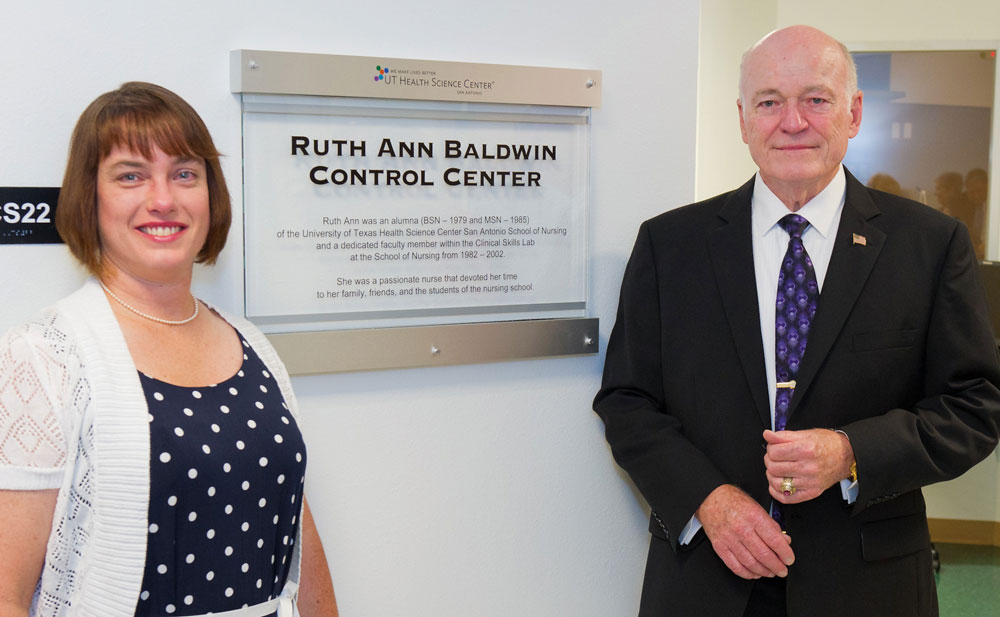
Gary Baldwin recently gave the School of Nursing an endowment of $300,000 — $200,000 for student scholarships and $100,000 for the School of Nursing’s new Simulation Center & Clinical Learning Lab. The Ruth Ann Baldwin Control Center in the simulation center is named in her honor.
"The nursing school was her life. That’s why I decided to do something therein her memory," Gary Baldwin said. "Ruth Ann was very dedicated to nursing and to her students. I have a feeling that even if Ruth Ann hadn’t passed away that we would have been making this gift," he said. He also has included the university in his estate plans to supplement the endowment.
Dental hygiene graduate receives 2012 Alumna of the Year award
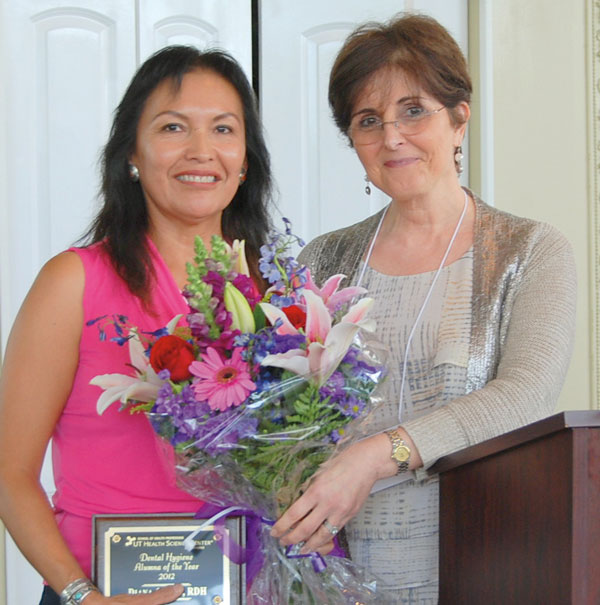
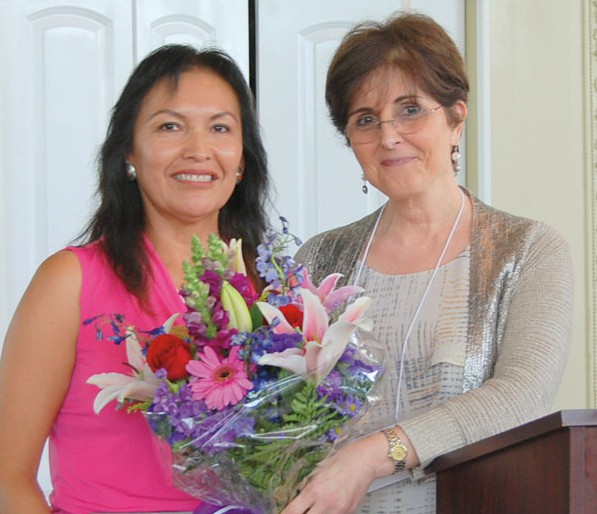
Receiving the 2012 Alumna of the Year award from the Department of Dental Hygiene is not only a major professional achievement, but one that brings special pride to Diana Cudeii, an enrolled member of the Navajo Nation.
Having grown up on a reservation in Shiprock, N.M., known as the "Four Corners" of the Southwest, Cudeii experienced firsthand the economic and educational challenges faced by many Native Americans. But she possessed a strong interest in science, the desire to receive an education and a responsibility to her people.
After earning a dental assisting certificate from the University of New Mexico in 1984, she entered private practice. Three years later, she moved to San Antonio and decided to continue her education at the UT Health Science Center at San Antonio. In the university’s School of Health Professions, Cudeii found a positive, supportive environment. "They challenged me in every way to expand my knowledge and to go one step beyond my own expectations," she said. In 1992, Cudeii received a dental hygiene certificate with honors.
Cudeii worked as a dental hygienist in private practices but found working with federal, state, county, city and tribal organizations to be more rewarding. She and her husband, who is a dentist in public health service and a member of the Turtle Mountain Band of Chippewa, settled in Flagstaff, Ariz., where Cudeii established her own dental consulting business. She later completed an early childhood education program at Coconino Community College, earned her bachelor’s degree with honors in liberal studies and psychology and a master’s with distinction in applied communications from Northern Arizona University (NAU) while working part time as a clinical instructor in NAU’s dental hygiene program.
Cudeii said, "The American Indian populations are still struggling to reduce the health disparities within their communities. The dynamic interplay of culture, economic, education, and social factors need to be considered if the health of people is to be improved."
Today Cudeii is the study coordinator and tribal liaison for a community-based oral health project that is studying two different intervention models utilizing trained community members to provide dental education and services to prevent early childhood caries. The National Institute of Dental and Craniofacial Research funds the seven-year program, based at the University of Colorado-Denver’s Centers for American Indian and Alaska Native Health.
"As a native person, woman, daughter, sister, aunt and grandmother, Diana has shown strength, commitment, activism, confidence and optimism while critically observing and expressing the urgent need for ways to improve overall health of all Native American nations," said Maxine Janis, RDH, M.P.H., who nominated her for the alumna award. Janis, a member of the Lakota Nation, is assistant professor of dental hygiene at NAU.
Cudeii said, "For the contemporary Native American women, it is often a negotiation between several western and indigenous social institutions. Education and effective tribal leadership are critical aspects in sustaining traditional philosophy and cultural identity to ensure tribal survival. Traditional tribal teaching says that life’s journey should have meaning and purpose."
She added, "My overall experience at the UT Health Science Center was exceptional in its academics and influential in my embracing a stronger commitment to succeed and contribute. The dental hygiene program helped me become an effective advocate in my chosen work, and to stay true and strong to the principles of dental hygiene which include social responsibility, professionalism, compassion and ethics — and most importantly, to challenge the way things have always been done."

Neonatal and pediatric respiratory therapists fly into action

When the phone rings in pediatric and neonatal transport units of San Antonio area hospitals, chances are good that a UT Health Science Center respiratory care alumnus will be called upon to help save a life.
Respiratory therapists work as part of a hospital’s medical team, providing care during transport for critically ill or injured children from throughout South Texas. Therapists travel to the patient by ambulance, helicopter, propeller plane or jet to provide assistance with respiratory issues.
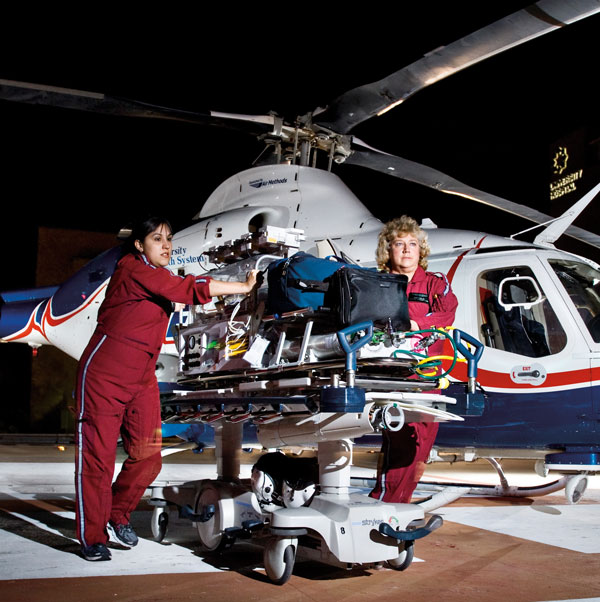
Lori Craft, B.S.R.C., RRT, a graduate of the inaugural UT Health Science Center respiratory care program in 1996, is a senior member of the pediatric transport team at CHRISTUS Santa Rosa Children’s Hospital. Alumni Mayra Fernandez, B.S.R.C., RRT, a 2006 graduate, and Chris Tolentino, B.S.R.C., RRT, who graduated in 2009, also work there.
Craft recalled a recent incident when she was called on to fly to El Paso in a twin-engine airplane retrofitted with medical equipment. She only knew that she would be providing care for a very sick child on a ventilator.
An hour later at the border city hospital, Craft examined the 3-year-old’s X-rays. The School of Health Professions graduate knew this was a very serious case. The little girl had necrotizing pneumonia, flesh-eating bacteria in the lungs.
Her job - along with her teammates - a critical care nurse and physician - was to stabilize the patient by providing intensive-care during transport until the child could receive care at the hospital.
"We provide care for children who are just a few days old to age 18 with any type of medical problem. They could have complex medical issues, critical care issues, trauma or congenital heart issues," she said.
Another alumna, Melissa Treviño-Alvarez, M.S., RRT-NPS, (class of 2001) is a member of the University Health System transport team that includes graduates Mandy Livingston, B.S.R.C., RRT, (class of 2000) and Andy Rodriguez, RRT, a 2007 graduate. At Methodist Children’s Hospital, Ali Soujoudi, B.S.R.C., RRT, a 1999 graduate, serves on the pediatric transport team.
Treviño-Alvarez already had a degree in chemistry and was working as a pharmacy technician when she learned of the respiratory care program at the Health Science Center. "I became interested in respiratory care when I realized that my grandfather had died from an occupational illness called silicosis," she said. The disease is caused by longtime exposure to silica dust and is sometimes called stonemason’s disease. "I wanted to know more about how to prevent such illnesses and how to treat the patients who suffer from them," she said, "but as soon as I began my neonatal/pediatric class, I was hooked. I knew that I wanted to work in the Neonatal Intensive Care Unit after graduation.
"Neonatal respiratory therapists are responsible for all infants who are receiving any type of oxygen therapy, whether it is through a device as simple as a nasal cannula (an oxygen delivery system) or as complex as a ventilator," said Treviño-Alvarez, who has worked at University Health System for 11 years. She was the lead respiratory therapist in the Neonatal Intensive Care Unit before becoming senior educator for the Department of Respiratory Care.
"We attend all high-risk deliveries, and most of our therapists are certified for transport. Our neonatal transport team at University Hospital is composed of a nurse, respiratory therapist and either a physician or neonatal nurse practitioner. We can be called to pick up babies as close as across town or as far away as McAllen," she said.
Donna "De De" Gardner, M.S.H.P., chair and associate professor of respiratory care at the Health Science Center, noted that respiratory therapists are integral members of the medical team and work directly with the physician regarding the cardiopulmonary health care of patients. "They are experts at managing patients receiving mechanical ventilation in intensive care units," she explained.
A unique neonatal and pediatric specialty area where respiratory therapists utilize their skills is with extra corporeal membrane oxygenation (ECMO), a machine that helps oxygenate the blood while giving the lungs a rest. In fact, Health Science Center alumna Casey Howard, B.S.R.C., RRT, a 2002 graduate, is the first respiratory therapist in San Antonio to become an ECMO coordinator, Gardner said. "He also was the first respiratory therapist in San Antonio to join the ECMO team at Santa Rosa. He received the 2010 Alumni Award for his leadership in the city and the excellent care he provides," Gardner said.
Respiratory therapists also work with children who have been involved in motor vehicle accidents or other trauma involving lung injury, she said.
Speaking of the Health Science Center’s program, Gardner said, "The first-attempt exam pass rate for 2011 graduates on the entry level examination — the CRT (certified respiratory therapy exam) — was 100 percent, and the overall pass rates on the advanced practitioner examination — the RRT (Registered Respiratory Therapy examination) — was also 100 percent," Gardner said. "Over the last 12 years, our graduates are employed before they graduate due to the quality of the program and credentials they obtain prior to graduation," she said.
At the UT Health Science Center San Antonio, bachelor's degree completion program is available to registered respiratory therapists with an associate's degree from a regionally accredited program. "Affiliations are in place with St. Philip’s College, Howard College, South Texas College and Fort Sam Houston’s associate degree program for graduates who have earned their RRT credential. This means that students are able to earn their bachelor’s degree in respiratory therapy after they obtain an associate’s degree," Gardner explained.
As part of the program, prior to graduation, respiratory care students can enter internships in settings throughout the U.S. Recent students have had internships in top medical centers in Texas and throughout the country including Massachusetts General Hospital in Boston, Texas Children's Hospital in Dallas and Johns Hopkins University in Baltimore.
For Lori Craft, who completed the program 15 years ago and has become an expert in pediatric critical respiratory care, the profession offers an adrenalin rush that frequently has a happy ending. "I like critical care and pediatric critical care. It’s very challenging and it tests a lot of my abilities," she said. "It keeps me on my toes. For anyone who is interested in a job that is never the same, day to day, this is the job for you."
For more information about the Health Science Center's respiratory care program, visit uthscsa.edu/shp/rc/.
Physician Assistant Studies celebrates 10th anniversary
10 years of excellence
 1995
1995
School of Health Professions (SHP) begins participating in a collaborative Physician Assistant Studies (PAS) program with the U.S. Army at Fort Sam Houston in San Antonio. Students receive classroom instruction through the Army and complete clinical rotations through the SHP. They graduate with a certificate of completion from the Army and a bachelor’s degree in PAS from the UT Health Science Center.
2000
SHP initiates its own PAS program with 20 students.
 2002
2002
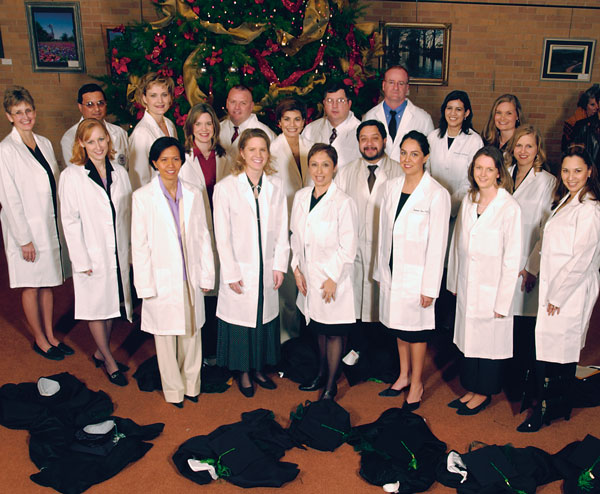
First class of physician assistant students graduates from the UT Health Science Center.
2003
SHP launches the three-year master’s program.
2005
Planned gift from Dr. A. David Mangelsdorff establishes the program’s first endowment.
2006
First master’s degree class graduates.
2007
SHP extends the PAS program to the Regional Campus in Laredo through distance learning with a cohort of six students.
2010
First cohort in Laredo graduates.
2011
U.S. News & World Report ranks PAS program 18th in the nation.
2012
SHP streamlined the PAS program to a two-year master’s degree without sacrificing quality, and expands the overall cohort to 40 students; 1,389 potential students compete for 40 slots in the PA program.

Mangelsdorff establishes PAS program’s first endowed professorship
When McAllen native Darrell Alviar was leaving the military, he drew on his background as a Navy corpsman to seek his civilian profession. "It was a natural progression. I had already been seeing patients and dispensing medications," he said, in a Marine Corps Infantry Unit in Iraq and Afghanistan.
Alviar will be entering the Physician Assistant Studies (PAS) program in the School of Health Professions this fall as part of the first class to complete the master’s degree in two years instead of three. The recent changes also expand the class size from 30 students to 40, so additional graduates can move more quickly into the workforce.
"I liked the idea that several of the faculty members are former military and that San Antonio is so military friendly. I thought I would fit right in," Alviar said.
As the PAS program celebrates its 10th anniversary in 2012 — ranked 18th nationally by U.S. News & World Report — it’s appropriate to look at its beginnings, which coincidentally began with the military.
"During the Vietnam War, there were few doctors on the battlefield," explained, J. Glenn Forister, M.S., M.P.A.S., PA-C, interim chair of the Department of PAS and an Army Reserve veteran. "Medics were the closest you’d come to having a doctor."
In 1965, Duke University started the first civilian PAS program. Many of the students in the early days of the profession were former medics, including Dennis Blessing, Ph.D., PA-C, who served as a surgical technician in Vietnam and later became a founding faculty member of the Health Science Center program. He now is a professor and associate dean of the School of Health Professions.
After the success of a pilot program that placed civilian students in unfilled slots in an Army PAS program at Fort Sam Houston, the School of Health Professions received approval from the Texas Higher Education Coordinating Board in 2000 to start its own bachelor’s degree program. This quickly developed into a three-year master’s degree in 2003. And by extending rotations throughout South and Central Texas, the program has become well known for its emphasis on primary care and providing culturally competent health care services to underserved populations, Forister said.
"Since our students are often in rural settings, we challenge them to become independent thinkers and active contributors to the health care team. This comes from our origins as a military program where service to others is paramount," Forister explained. The changes to the program in January, which streamline the classroom portion of the programs will help bring more PAs into communities throughout the state.
Julie Dylla, PA-C, was president of the first PAS class. Looking back on her studies, she recalled: "The didactics (classroom portion) were very intense. They told us that we were going to learn three-fourths of what a medical student would learn in half the time. I don’t know if that was actually true, but I can tell you that it sure felt like it!"
After graduation, Dylla entered the neurosurgery specialty at Audie L. Murphy Veterans Hospital. She compares her career to that of a medical resident. "I am the first line of contact with the patient," she said. "I see them in the exam room, in the emergency room and in the operating room. The only thing I don’t do is perform surgery, but I do assist," she said. "It’s a very satisfying career."
The military initially drew psychologist and PAS donor A. David Mangelsdorff, Ph.D., M.P.H., to the UT Health Science Center. While planning a conference to be held on campus he became reacquainted with one of his former students, Judy Colver, who was a PAS faculty member at that time.
In 2005, Dr. Mangelsdorff established the first endowed professorship for the PAS program as part of a charitable remainder trust. The retired colonel, who has four degrees including three master’s degrees and a doctorate, has dedicated much of his life to education, and despite his military retirement he continues as a professor and civilian health psychologist with the Army-Baylor University Graduate Program in Health and Business Administration at the Academy of Health Sciences at Fort Sam Houston.
"The School of Health Professions mission overlapped with my philanthropic interests in support of multidisciplinary educational programs and in support of community preparedness and homeland defense," Dr. Mangelsdorff said.
He also has given smaller gifts to the PAS and Clinical Laboratory Sciences (CLS)programs including a gift to support an exchange program for CLS students with the renowned Karolinska Institutet in Stockholm, Sweden.
"I was fortunate to study abroad as a student at Oxford University and later in Germany on a faculty Fulbright scholarship. Being exposed to different cultures and educational systems broadened my perspectives," he said.
Linda Smith, Ph.D., chair of Clinical Laboratory Sciences, said: "The exchange program has been an exceptional learning experience for everyone concerned. Our students who go to Karolinska Institutet experience firsthand a different system of health care and health care education. And for our students here who host the Swedish students, it provides an opportunity to get to know their global counterparts in a very personal way."
As intertwined as the PAS program has been with the military, it serves the civilian population well and the student body is well diversified, with 50 percent of incoming students of Hispanic, African American and Asian descent. "One of our goals is to provide ‘culturally competent care.’ We want our PAs to understand and be familiar with the culture of those they serve," Forister said.
Looking to the future, Forister added: "We plan to grow our program over time to better serve our expanding service area in South Central Texas. Although we have had cutbacks in state funding, being a state institution also has advantages. Our students benefit from more affordable tuition and many of them take advantage of government loan repayment programs by following our vision of working in health profession shortage areas such as South Texas."
That is what entering student Darrell Alviar plans to do.
Follow us on Facebook
Look for upcoming Department of Physician Assistant Studies activities and the 10-year anniversary celebration planned for this fall. facebook.com/UTHSCSAPAalumni
NURSES ROCK! Nurses champion children, education through clinics
Having asthma can be scary, but when your child has it, it can be even more distressing. There are often multiple trips to a health care provider to get the breathing problems under control and establish a treatment plan. This was the case for Selma Hernandez, whose children, ages 2, 4, 7 and 11, have asthma.
"Sometimes getting an appointment with their primary-care provider was difficult. In order to take them to the doctor I would sometimes have to miss a full day of class or my husband would have to miss a full day of work," said Hernandez, because the family had one car to take the children to day care and school, her husband to work and Hernandez to school for her medical assistant classes.
Fortunately, Hernandez was able to take all her children to the AVANCE Community Outreach Clinic at 2642 Castroville Road, where her two younger children were attending day care at the AVANCE Early Head Start Center.
"I am so thankful that the clinic at AVANCE is open to all of my children. They are able to see Mrs. Mary (Mary Maffei, M.S.N., RN, PNP) at a time that is convenient for my family," Hernandez said. Maffei provides health care services at the clinic and is a clinical instructor in the School of Nursing’s Department of Family and Community Health Systems.
The nurse-led, nurse-managed clinic is one of seven operated by the School of Nursing’s clinical enterprise, which includes a number of pediatric clinics in partnership with community agencies, as well as the Employee Health and Wellness Clinic and Student Health Center on the UT Health Science Center’s Joe R. and Teresa Lozano Long campus.
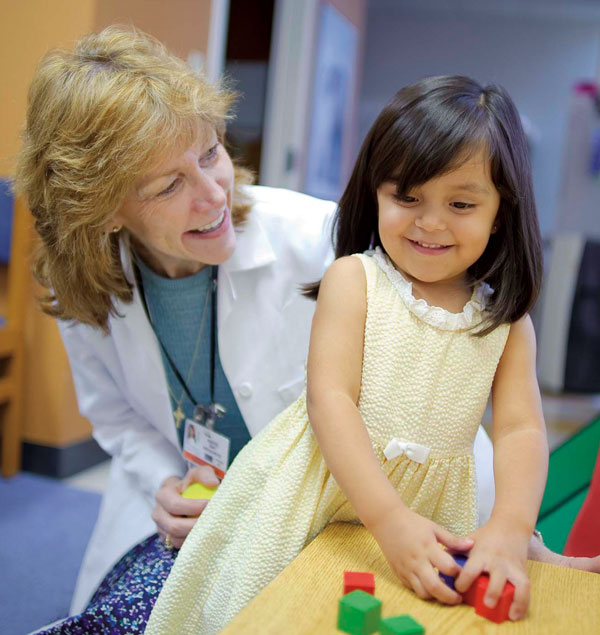
Tabitha Hernandez, 3, benefits from care provided by UT Health Science Center nurses at the AVANCE Community Outreach Clinic on San Antonio’s West Side. Mary Maffei, M.S.N., RN, PNP, is among the School of Nursing faculty who provide care at seven nurse-led, nurse-managed clinics throughout the city.
The pediatric clinics provide an accessible, high-quality, efficient and cost-effective system of care that establishes a "health home" for children enrolled in Early Head Start (birth to age 3) and Head Start (ages 3-5) programs offered through several AVANCE-San Antonio and Family Service Association locations. Health care services and education are also offered for pregnant teens, teen parents and their children through the Healy-Murphy Center, an alternative high school for at-risk students and its accompanying day care center.
"These clinics create learning, research and practice ‘collaboratories’ for faculty members and students in the School of Nursing and in other health care disciplines at the Health Science Center," explained Julie Novak, D.N.Sc., RN, CPNP, FAANP, associate dean for practice and engagement in the School of Nursing.
Dr. Novak, who joined the School of Nursing in September of 2009, is director of the fast-growing School of Nursing clinical enterprise that provides care for more than 12,000 adults and children. More clinics are expected to open this year through partnerships with local agencies and school districts.
The clinics are led by nurse practitioners who work in collaboration with physicians. The physicians review 10 percent of the charts and are available for phone consultation per Texas state law. "We are fortunate to have two excellent collaborating physicians, Dr. Miguel Ramirez-Colon and Dr. Mark Nadeau," Dr. Novak said, who are Health Science Center School of Medicine faculty members.
The clinical enterprise team works closely with the Long School of Medicine and the Dental School, referring patients for specialty care. A grant is under review that would create a collaborative school health model with the Division of Community Pediatrics, Department of Psychiatry, Dental School and other subspecialties.
All of the clinics offer preventive care, including immunizations and a variety of services tailored to the population served. For example, all of the children at the AVANCE Head Start and Early Head Start Child Development Centers have been immunized and receive health screenings mandated by the federal government, which provides funding for the AVANCE program. Well-child check-ups, treatment for common health issues and a dental sealant program are provided.
In December, Dr. Novak created a partnership with Family Service Association (FSA) at eight screening sites. School of Nursing team members have provided nearly 1,000 comprehensive assessments for FSA Head Start enrollees. In January, Dr. Novak opened a second AVANCE clinic site at Fenley Center at 934 Flanders in the Harlandale Independent School District.
In collaboration with the missions of the community partners, Dr. Novak is integrating the Brazelton Touchpoints Approach into the pediatric clinic practices. The approach involves educating and enhancing the competence of parents as their children move through developmental milestones, in order to build strong families.
Dr. Novak completed predoctoral work at the Brazelton Touchpoints Center associated with Harvard University and Children’s Hospital Boston with renowned pediatrician Dr. T. Berry Brazelton to learn more about this approach, which she integrated into the nurse-led clinical enterprise she directed at Purdue University. Dr. Novak was a faculty member at Purdue from 2000 through 2009, where she also served as professor, head of the School of Nursing, director of the Doctor of Nursing Practice program, and director of four nurse-managed clinics. Dr. Novak secured funding from the American Recovery and Reinvestment Act and Federally Qualified Health Clinic status for two of the clinics.
In March, Dr. Novak’s career achievements were acknowledged when she received the Henry K. Silver Memorial Award from the National Association of Pediatric Nurse Practitioners. The biannual award is presented to an individual who has contributed to the expansion or improvement of pediatric health care and the advancement of the profession of pediatric nurse practitioners at the national and/or international level.
"It is a tremendous honor to receive this award, especially now, while I am working to expand the School of Nursing clinical enterprise," Dr. Novak said. "Dr. Silver’s focus on holistic approaches to the care and empowerment of children and families, and his wisdom in guiding the development of the nurse-practitioner movement set the stage for the critical role that advanced-practice nurses are playing in health care reform and the creation of patient and family-centered clinics."
For Hernandez, whose children receive care at the AVANCE Community Outreach Clinic, the benefits of the School of Nursing clinical enterprise are obvious. In addition to having well children who spend more time in school, Hernandez herself was able to maintain a 4.0 grade point average while earning her medical assistant certificate. The family has just moved into a Habitat for Humanity home and she is seeking employment as a medical assistant.
"The staff at AVANCE and the AVANCE Clinic are awesome!" she said.
Delving into diversity
Nurses are known for being the caregivers in the trenches, providing knowledgeable, one-on-one care to patients and population-focused care in community settings. In addition to responsibility for managing care delivery systems, the nursing profession engages in improving the quality of care by conducting research and by promoting diversity in the workforce.
Two School of Nursing professors are at the forefront of these missions: Carrie Jo Braden, Ph.D., RN, FAAN, associate dean for research in the School of Nursing and Norma Martinez Rogers, Ph.D., RN, FAAN, a professor in the Department of Family & Community Health Systems

$3.9 million gift paves way for nursing education and leadership pipeline in South Texas
Michelle Johnston, M.S.N., has been a caregiver almost her entire life. She began as a little girl, helping her father care for her younger brother who had a congenital heart condition, after her mother abandoned the family.
"As I got older and began to understand the relationship between healing and the type of care that facilitates healing, I knew that I wanted to make a difference in people's lives in that way, as a nurse," Johnston said.
She earned her associate's degree in nursing from San Antonio College, and in December graduated with her master's degree from the UT Health Science Center School of Nursing, all while working full time and raising a family. The educational journey took 10 years.
Students like Johnston, who have big dreams and high goals, will benefit from a three-year, $3.9 million gift from Methodist Healthcare Ministries of South Texas Inc. that will position the School of Nursing as the leader of a new, collaborative nursing education and leadership pipeline to address the nursing shortage in South Texas.
The gift provides:
- $2.7 million for faculty and curriculum specialists to design and teach three new degree programs including:
- An accelerated Bachelor's Degree in Nursing for students who have a bachelor's degree in another field and wish to join the nursing profession. The program will begin in May 2010 with 70 students. Nurses with a bachelor's degree provide bedside care and fill entry-level management positions in hospitals.
- An accelerated online master's degree for nurses with an associate's degree in nursing. This program will begin in January 2011 with 46 students. Nurses with a master's degree can advance their careers in hospitals, become clinical faculty members or enter research.
- A Doctorate in Nursing Practice (DNP) degree to provide highly educated clinical nursing specialists, executive leaders and full clinical faculty members

"Methodist Healthcare Ministries is a pivotal partner in our plan to graduate more nurses at all educational levels," said Eileen T. Breslin, Ph.D., RN, FAAN, dean of the School of Nursing, and the Dr. Patty L. Hawken Nursing Endowed Professor in the Department of Family Nursing Care. "A limiting factor in admitting more students has been hiring and supporting qualified nursing faculty. Many faculty members are retiring, and state dollars do not cover all of our expenses. We greatly appreciate Methodist Healthcare Ministries' philanthropic investment to bring new nurses into the workforce."
Roy R. Campbell III, chairman of the board of directors of Methodist Healthcare Ministries, said, "We are so pleased to help build the nursing pipeline. This fits perfectly with our goal of enhancing our gift to the Alamo Colleges that is at the beginning of the nursing education pipeline. The Health Science Center's new degree programs will help nurses continue their education to improve health care throughout South Texas."
Johnston's master's degree has opened a whole new range of professional opportunities, including a new job as a kidney transplant coordinator with CHRISTUS Santa Rosa Health System. But her vision doesn't stop there.
"I want to be an influence on future nurses," she said. "I will use my degree in the Administration in Community and Healthcare Systems in Nursing to focus on health care, and I plan to be an advocate for nurses and patients. I also would like to become an educator at the university level, where I can give my students what my professors gave me - a great knowledge base, continuous encouragement and support, and a confident sense of self."
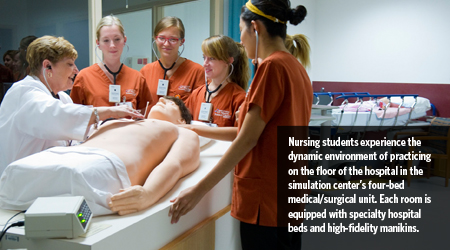
(Top photo) Nursing students learn about patient care from a clinical faculty member by using a manikin programmed to simulate various patient scenarios. The Methodist Healthcare Ministries grant will provide more manikins and state-of-the-art equipment to assist with clinical education.
Speaking the language of nursing through service
In performing blood pressure checks and other health screenings during their clinical training, nursing students occasionally come across patients who need follow-up care. Finding a 2-year-old who has out-of-control diabetes, however, was highly unusual.
Without intervention, "he could have gone blind, or lost his fingers or his feet," said Gena Zarosky, who worked with a group of senior nursing students who discovered the severity of the Somalian toddler's health condition last fall. Their teacher, Roseann Vivanco, M.S.N., RNC, put it more plainly: "His glucose level was 500 when it should have been less than 100. He could have died before he was 5 years old."
The students were participating in a pilot service-learning project to assess health needs, offer screenings and provide follow-up referrals for 200 refugee families who live in an apartment complex about two miles from the UT Health Science Center.
"These are families who have been brought to San Antonio by Catholic Charities to find a better life," Vivanco said. "Most of them were persecuted in their homelands and were living in refugee camps." Many of them have unaddressed health issues because they are still learning English, are trying to find jobs and are not very familiar with the American culture.
Tapping into their diverse backgrounds, the students found ways to connect with the refugees. Zarosky and Andrea Johnson paired up with Ugochinyere Otuonye, originally from Nigeria, to teach the diabetic boy's mother about proper nutrition, how to check his blood sugar level and the importance of giving him insulin on a regular basis. They gave her hope that the opportunities here include health care that can help her son live a much longer life than he would have in Africa.
The service-learning project is part of Vivanco's community health class. She hopes to build on the progress made last fall to eventually provide a neighborhood health clinic for the refugees. "Obesity and related problems present a major health concern for the refugees," Vivanco said. "We want to provide a multidisciplinary, comprehensive screening and education program for them in collaboration with our community partners and our colleagues in the Department of Family & Community Medicine. We are seeking funds for supplies for our work this spring."
"This is a perfect example of the high caliber of education our nursing students receive while providing uncompensated care for the community," explained Julie Novak, D.N.Sc., RN, CPNP, FAANP, the Thelma and Joe Crow Endowed Professor and associate dean for practice and engagement in the School of Nursing.
"Service learning is different from a one-time community service project," said Dr. Novak, a new faculty member whose expertise is service learning. "Service learning exposes students to a variety of situations that challenge them intellectually, incorporate the learning objectives of their course and give them the opportunity for reflection and assimilation."
Vivanco added, "Learning how to communicate with people who speak other languages and how to be respectful of their culture is great preparation for the students' future careers. You have to gain the patient's trust before you can address their health concerns. And after all, caring is the international language of nursing."