

Geriatric care offers a niche for nurses
Just as Baby Boomers initiated a cultural revolution in the 1960s, they are now redefining health care as they enter their golden years.
Due to medical advances, this generation is expected to live longer and in generally better health than previous generations, despite an increased risk for chronic illness and disability. Because of these health issues and the sheer number of people entering the 65-and-older age range, nursing schools around the country are responding by placing more emphasis on geriatric nursing.
At the UT Health Science Center San Antonio, Anthia Murray, R.N., M.P.H., M.S.N., a clinical instructor in the Department of Chronic Nursing Care, has been adjusting the School of Nursing's curriculum to include national geriatric nursing competencies. The results are innovative programs that include gerontology in all levels of the curriculum.
"I would say we are ahead of the pack because we provide gerontology content and clinical practice at both graduate and undergraduate levels, we have well-prepared faculty with specialization and great interest in aging, and we have a 100 percent pass rate among graduate nursing students taking the certification exam to become gerontological nurse practitioners," said Kelly Dunn, R.N., Ph.D., PHCNS-BC, who teaches the graduate minor in gerontology.
"This is an important indicator of a great academic nursing program," added Dr. Dunn, who is an associate professor and holder of the William F. Castella Distinguished Professorship in the Department of Family Nursing Care.
One way gerontology is being incorporated into the curriculum is the Senior Health Management Project. The pilot, conducted in fall 2007 and spring 2008, was part of the undergraduate Community Health Nursing course, but involved graduate nursing students as well. The undergraduates provide a variety of screenings and health education to help the elders improve their health and safety. The screenings were conducted at two San Antonio minority-based senior centers with funding from the Nursing Advisory Council and in partnership with the Alamo Area Council of Governments and the city of San Antonio Department of Elderly Services.
Graduate students led the undergraduates in collecting data on the types of issues the seniors face regarding safety and management of their health.
"Although this wasn't formal research, we did collect data about the seniors' needs and are planning to return this fall to follow up on the elders' progress and continuing health needs," said Murray, who organized the project in consultation with Dr. Dunn. "We plan to continue collecting data in hopes of receiving funding for more in-depth elder research in the future."
The experience also helped change the students' perceptions about older adults and their health. "We found that students demonstrated an increased understanding of elder health issues, more insight into their daily lives and greater sensitivity to elders' needs,"Murray explained.
Undergraduates kept journals reflecting their thoughts. One wrote, "I think this has helped me to understand how to care for seniors. In clinical practice, I have seen people speak louder than normal to seniors or not teach them at all because they feel that they won't understand. I was very impressed with how knowledgeable the seniors were and that they like to be proactive and informed."
Dr. Dunn, Murray and Della Wagner, M.S.N., RN, assistant professor in the Department of Chronic Nursing Care, are preparing a manuscript describing the project for publication and are evaluating the project for future integration into the curriculum.
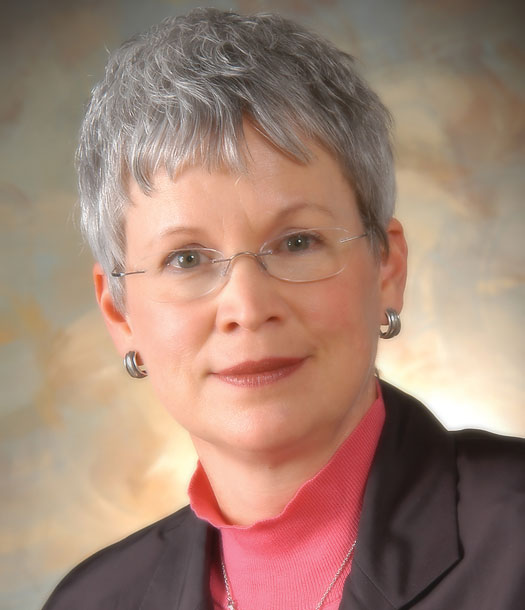
Call to care brings Dr. Peggy Francis into the nursing profession
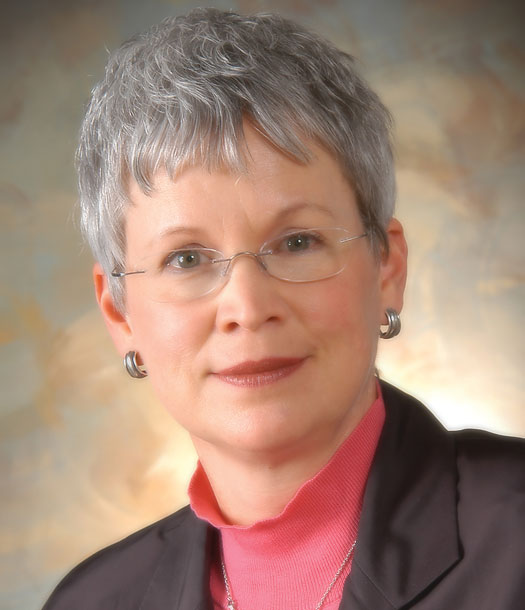 The daughter of a Methodist minister, Peggy Francis, D.N.P., RN, FNP, always knew she would someday enter a caring profession. "Because of my background growing up, I’ve always wanted to make a difference," she said. "I can’t imagine being any other way."
She found her calling in the nursing profession after volunteering in a nursing home as a young college student. She has been passionate about the profession ever since.
Quick with inspirational quotes and lessons she’s learned from people she’s met along the way, Dr. Francis said that knowing all the nursing theory in the world won’t make a great nurse. "I believe the art of nursing is caring," she said as the guest speaker at the 2008 Friends of the School of Nursing Annual Breakfast. "Patients don’t care how much you know if they don’t know how much you care."
Following this call to service, Dr. Francis has worked in a variety of nursing fields, from neonatal nursing to school nursing. Twelve years ago, after graduating with her master’s degree in nursing and a Family Nurse Practitioner certificate from the UT Health Science Center School of Nursing, she entered the field of obstetrics and gynecology. Three years ago she followed a new path into urologic nursing at Urology San Antonio, a private urology practice.
As director of the practice’s Center for Urinary Control, Dr. Francis helps women with urinary leakage problems. She also is co-director of the Center for Female Sexual Medicine, where she has the delicate task of diagnosing sexual dysfunction, which can at times be a complicated diagnosis, with many factors coming into play. Occasionally, past traumas play a role, such as sexual abuse or rape.
"There is a saying, ‘Sorrow that has no vent in tears will make other organs weep,’" Dr. Francis said. "I think that is a powerful theory for all the major negative emotions such as stress, anxiety, fear, worry, anger and sadness. If you don’t get them out of your body they will come out somewhere. And very often I see them in pelvic floor dysfunction or in painful bladder syndrome."
Dr. Francis credits her time attending the UT Health Science Center San Antonio for being "an absolute superglue or cementing that I am a nurse through and through. I really did enjoy falling in love with my profession all over again and realizing that I had made the right choice. I met some incredible people," she said, including former nursing Dean Beverly Robinson and former faculty members Glenda Butnarescu (now deceased), Ed Gruber, Mary Jones and Judy Longworth. "They respected the fact that we [nursing professionals] had been out there working in the trenches and we brought something of value to the table," she said.
Completing her Doctor of Nursing Practice degree in May 2008 calls Dr. Francis to more active leadership in national nurse practitioner organizations. One critical change she plans to promote is flexible scheduling, so that young nurses can raise a family while continuing their career. "This one change would go a long way toward reducing the national nursing shortage," she said.
"I would like to see nurses take better care of each other and nurture each other," she said. "I’m not sure yet where I’ll go from here, but I know that I wouldn’t be here without the love, encouragement and support of a lot of people."

Contagious Smiles
 Peering into the mouth of a little girl, Sarah Payne, a dental student at the UT Health Science Center at San Antonio, was surprised to find something rather alarming.
"I was painting the little girl’s teeth with fluoride varnish and as she looked toward the ceiling I noticed what looked like an abscess or sinus tract." She called over her supervising faculty member. The abnormality was a small tumor known as a fibroma. Fortunately it was benign.
"I was so relieved to find out that it wasn’t something more serious," Payne said. The child was referred for follow-up care and would be fine.
Payne was among a group of UT Health Science Center dental and dental hygiene students who were spending the morning at a Head Start Center in San Antonio, a day care for preschoolers who come from low-income families. Supervised by faculty members, they provided basic oral health assessments, applied a fluoride varnish and taught the youngsters how to care for their teeth.

The community oral health project is a joint effort involving the Health Science Center’s Department of Dental Hygiene, the San Antonio Metropolitan Health District and Parent/Child Incorporated, which operates 20 Head Start Centers. Although the project is helping the preschoolers learn how to take better care of their teeth, it also provides a hands-on learning experience for the Health Science Center students while they offer a valuable public service.
"This is a collaborative effort all around," explained Kathy Geurink, M.A., associate clinical professor of dental hygiene and coordinator of the oral health community project. "Not only are the students learning from their supervising faculty members, they also are getting advice from the public health dentists and dental hygienists there who may see some of these children later for urgent-care issues."
The students are also learning from each other. Geurink and David Cappelli, D.M.D., Ph.D., M.P.H., associate professor in the Department of Community Dentistry, have worked together on community health projects for years. They also combine a few sessions of their classes each semester. "We want to help our students learn how dentists and dental hygienists work together in complementary roles and how both professions have a shared responsibility to provide oral health care for the underserved in our community," Dr. Cappelli said.
Funded by a $300,000 grant from the Administration of Children and Families Office of Head Start, the underlying purpose of the initiative is to address the critical oral health care needs of families who live below the poverty level. The grant provides money for education, prevention and access to care. It also provides supplies for the weekly rotation of dental and dental hygiene students to the Head Start Centers.
According to the Department of Health and Human Services’ "Oral Health in America: a Report of the Surgeon General":
- • Dental caries (tooth decay) is the single most common chronic childhood disease — five times more common than asthma and seven times more common than hay fever.
- • More than half of 5- to 9-year-old children have at least one cavity or filling, and that proportion increases to 78 percent among 17-year-olds.
- • There are striking disparities in dental disease according to income. Children from low-income families suffer twice as many dental caries as their more-affluent peers, and their disease is more likely to be untreated.
In a February 2008 article Geurink wrote for Access, a publication of the American Dental Hygiene Association, she explained the difficulties low-income families experience with dental care:
"This population has numerous challenges and barriers to receiving these dental examinations and needed dental care. While the majority of Head Start families are enrolled in Medicaid, many dentists do not accept Medicaid patients. There is a shortage of dentists who are willing to see young children, and often there isn’t even one dentist located in the geographic region near the Head Start Center," Geurink wrote. "There is also the barrier of a lack of oral health education for Head Start parents, staff and children. The preventive procedures necessary to reduce oral disease in this population are often not available or even known."
While all of these problems cannot be easily solved through the Health Science Center’s community oral health project, it is a start. "We still see many children in classrooms with pain and infections in their mouths because they don’t have access to care," Geurink said. "Our hope is that when our students graduate, they will know about the needs in this segment of the community so that they will agree to see some of these patients in their offices and will consider volunteering some of their time to help them in the future."
Dental hygiene student Megan Bridges believes the program is accomplishing this goal. "The rotations at Head Start Centers have given me an open perspective in regard to considering working in a public health setting because there is a true need for dental health care workers in this area."
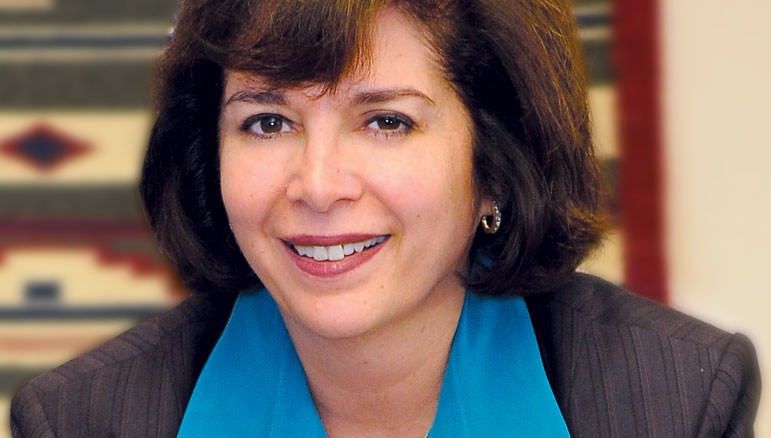
Dean Breslin finds the right fit
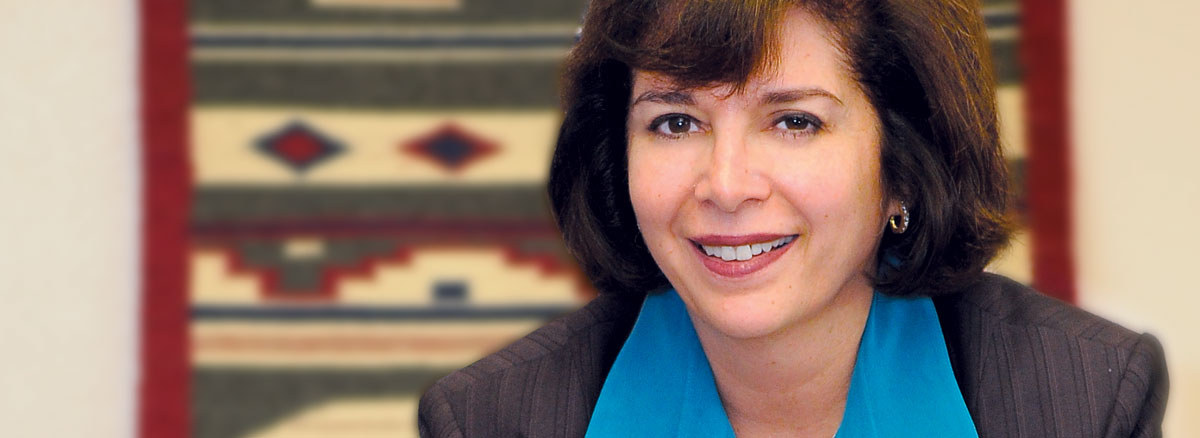
Dr. Breslin has worked on the Hopi and Navaho Indian reservations and at the rim of the Grand Canyon. Now she’s deep in the heart of Texas leading the Health Science Center’s School of Nursing, where she says she feels right at home.
On April 1, The University of Texas Health Science Center at San Antonio welcomed a new dean to the School of Nursing — Eileen T. Breslin, Ph.D., R.N.
Dean Breslin came to the UT Health Science Center from the University of Massachusetts at Amherst (UMass), where she was professor and dean of the School of Nursing since 1998 and interim dean of the School of Public Health and Health Sciences from 2003 through 2006.
In addition to innovative leadership, the new dean brings a fond love for the Southwest.
Dean Breslin earned her registered nurse diploma from Hartford Hospital of Nursing in Hartford, Conn., where she grew up with five siblings. She then headed west to Northern Arizona University in Flagstaff — the heart of the Navaho and Hopi American Indian reservations — to earn her bachelor’s degree in nursing. The border state also was home to many Hispanic families.
"The program at Northern Arizona University had a strong emphasis on public health. I learned about community assessments, community activism, environmental health and policy issues. I think this is what really sparked my lifelong interest in public health," Dean Breslin said.
"One of the most remarkable experiences I had was a clinical rotation at a health center at the Grand Canyon," she explained. "I learned about issues in rural health care because we were the only health providers around for miles. I also learned how difficult it is for individuals to get health care when they don’t speak the language and the importance of really connecting with patients on a personal level."
The dean’s love for the Southwest continued for more than 20 years. She focused on women’s and public health programs, working as a hospital labor and delivery nurse, setting up a network of family planning clinics and earning her nurse practitioner certificate in women’s health care from the University of New Mexico (1978).
In 1983, she earned her master’s degree in maternal-newborn nursing from the University of Arizona in Tucson, then went back to Northern Arizona University, where she served as an assistant professor, associate professor, and professor and chair in the Department of Nursing.
She earned her Ph.D. in 1992 while serving for five years on the Arizona Board of Nursing as chair of the Chemical Dependency Committee and as its nursing representative to the Arizona Board of Medical Examiners. During that time, Dean Breslin learned that chemical dependency problems for nurses were handled differently than for physicians. "After studying the issue, we were successful in changing the regulations to establish a rehabilitative process instead of a punitive process for nurses," she said. The disparity became the topic for her doctoral dissertation.
In 1998, Dean Breslin returned to the Northeast to become dean of the UMass School of Nursing. Under her tenure, UMass instituted a doctoral degree in nursing practice, a clinical nurse leader program and a dual master of science/public health degree — all firsts in the state. The university also became a national leader in distance learning.
What attracted her to the UT Health Science Center? "There’s a lot of excitement here, tremendous opportunities, really fabulous faculty, terrific staff, great resources, a willingness to work hard, and I am happy to be back at an academic health institution," she said.
"We have a really clear focus for serving South Texas, which is a fairly rural area. This is a great mission-value fit for me. From my previous work in Arizona and at UMass, I think I have the skill set to further our mission of increasing diversity, furthering partnerships, providing access to education, developing research and focusing on such issues as health disparities, aging and women’s health," she said. "I think it’s important to affirm that there is so much good here. I wouldn’t have come if I didn’t think this was already a great place."
For now, she said, "I want to continue to build the research trajectory that has been established. I want to continue to develop the faculty, to focus on educational partnerships, to strengthen and build upon the simulation work that has already begun here and to take a good look at distance education. I am absolutely delighted and thrilled to be here. I just feel that this is an opportunity of a lifetime."