

Nurses, students, community members encouraged to preserve ‘spirit of nursing’
Although she has been a nurse for 42 years, it wasn’t until Maria Wellisch, RN, B.B.A., LNFA, experienced the compassionate care of nursing firsthand that she felt the immense pride of being a nurse.
Wellisch, vice president of corporate education for Morningside Ministries, was the keynote speaker at the Nursing Advisory Council (NAC) spring luncheon. The philanthropic arm of the School of Nursing, the NAC provides student scholarships, funds research and supports major projects, such as the recently opened Center for Simulation Innovation.
A member of the NAC, Wellisch said that a few years ago she and her husband received the phone call that parents dread – her teenage daughter had been in a terrible wreck.
"When I walked into the emergency room, I was in nurse mode. I asked all the technical questions about Jessica’s blood pressure and how many units of blood she'd had. Then, the ‘mom’ part of me stepped in for the six days that she was in a coma. The nurses were so patient with my repeated questions and concerns," she said, and noticed the smallest ways to provide comfort.
"Jessica was so particular about her appearance and cleanliness. The nurses carefully washed her hands and fingernails in a basin," she said. "They sang childhood songs with me to Jessica. And they were the ones who noticed that my younger daughter could not approach Jessica because of her appearance." The nurses trimmed Jessica’s hair and rewrapped the turban so that she looked as though she had just washed her hair.
"That is the heart and spirit of nursing," Wellisch said. "I never fully appreciated the impact we can have as nurses on our patients until then."
To support the spirit of nursing through the NAC or to become a member, contact Gwen Notestine at 210-567-5313 or Notestine@uthscsa.edu.
Helping the homeless heal
 Students provide care to patients at Haven for Hope
Through their clinical training and volunteer work, UT Health Science Center San Antonio students and residents have many opportunities to learn while providing valuable service to the community.
Working with underserved patients at Haven for Hope - San Antonio’s transformative program for homeless men, women and children - provides a different perspective for students in the School of Medicine, and Dental School students and residents.
"Most of the patients we see are trying to make a positive change to improve their lives. Many of them have been affected by addiction, abuse, abandonment, bankruptcy and illness," said Paul Orjuela, D.D.S. The 2012 Dental School graduate saw patients there during clinical rotations as a student. He now provides more complex care as a resident in the Advanced Education in General Dentistry (AEGD) program.
-
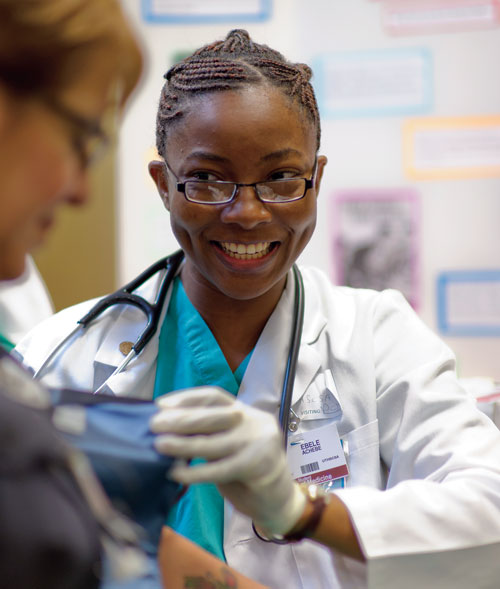
Second-year medical student Ebele Achebe, offers calming words and a reassuring smile to a patient at Haven for Hope as she checks the patient’s blood pressure.
Changing lives
One of his patients was a former businessman whose life unraveled due to drug addiction and business problems. "In a matter of three years he lost his family and home. He became ill and lives in a shelter. He came to our clinic because he needed about 40 percent of his teeth extracted due to decay and he needed other major restorative care. It is incredible how drugs can destroy a person’s life, spirit and body in just a few years," Dr. Orjuela said.
He also provided care for a young woman who had a large abscess and had been unable to eat for two days. "We extracted the tooth, prescribed antibiotics and told her how to keep the extraction area clean. I ran into her the next time I was in the clinic. She approached me in the waiting room, shook my hand and reminded me of the treatment I provided," Dr. Orjuela said.
"I found out she had been homeless for two years and has a 3-year-old. She wanted to thank me because she was able to study for her computing class, passed her exam and was applying for jobs," he said.
These are familiar stories to the approximately 100 senior dental students who participate in a weeklong rotation at the San Antonio Christian Dental Clinic at Haven for Hope. Thirteen AEGD residents, such as Dr. Orjuela, provide care there on Tuesdays and Thursdays as part of their clinical training. And this semester, about 30 senior dental hygiene students began rotations at the clinic, said Elaine Neenan, M.S., D.D.S., M.P.H., associate dean for External Affairs in the Dental School.
Students gain life lessons
Meanwhile, nearly 200 medical students per year work at the Centro Med Haven for Hope Clinic on Wednesday evenings. "We have first- through fourth-year medical students at the clinic working as volunteers or as part of their classes," said Jessica Mendez, community service learning program coordinator and assistant to the director in the Center for Medical Humanities & Ethics, which coordinates the medical students’ efforts at all five of the center’s student-run free clinics.
Fourth-year medical student Tiffany Cortes said she has learned important lessons while volunteering there. The clinic serves Haven for Hope residents as well as others who cannot afford care.
"There was one woman who developed a rash that kept spreading," Cortes said. "Eventually her ankles, hands and wrists became swollen. Then, she developed sores in her mouth and throat. When she came to us she said she had tried all these different medicines but it kept getting worse. She had to quit her job at an elementary school because she couldn’t work, and without a job she no longer had health coverage."
After consulting, the medical students on duty that evening proposed that the patient might have lupus. Supervising faculty member Richard Usatine, M.D., agreed. He recommended the patient be tested for the chronic autoimmune disease.
Unparalleled experience
"What I have enjoyed the most is being able to help people get back on their feet," said Cortes, who is from Corpus Christi. "It is easy for a medical condition to grow and hinder a person from being able to work. I have enjoyed learning about different diseases and conditions in class and then being able to see them in the clinic.
"I’ve also gained so much by working with my peers. The upper-level students have the chance to teach the less-experienced students. I enjoy helping them get oriented in the clinic. We learn a lot from each other," she said.
As a result of their experiences at Haven for Hope, both Cortes and Dr. Orjuela, who is from Harlingen, plan to care for underserved patients in their careers.
Hamilton Oliver legacy honored through endowment
Scholarships will prepare next generation of physicians for rural regions
If you drive a country road this time of year it won’t be long before you witness spring in all its glory. Bluebonnets, Indian paintbrushes and little yellow daisies splash their color along the roadsides and sweep through the ranchland of South Texas. You may end up in the town of Cuero, the Wildflower Capital of Texas, located about an hour and a half southeast of San Antonio on U.S. Highway 183.
Cuero is the seat of DeWitt County, which has a history in the cattle and mercantile business.
The town was one of the origination points of the legendary Chisholm Trail cattle drive and provided supplies for new immigrants heading west to occupy Texas homesteads in the 1800s. Now Cuero is beginning to boom again as part of the Eagle Ford oil and gas development.
Despite its rich history, however, DeWitt County is designated by the federal government as a Health Professional Shortage Area (HPSA) and Medically Underserved Area (MUA). There are not enough health professionals to serve the needs of the population there.
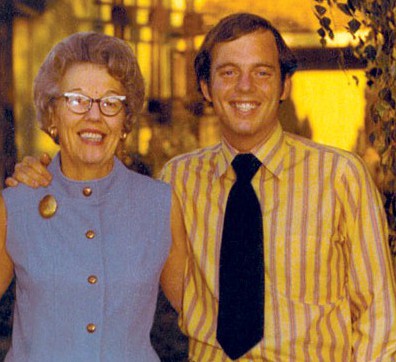
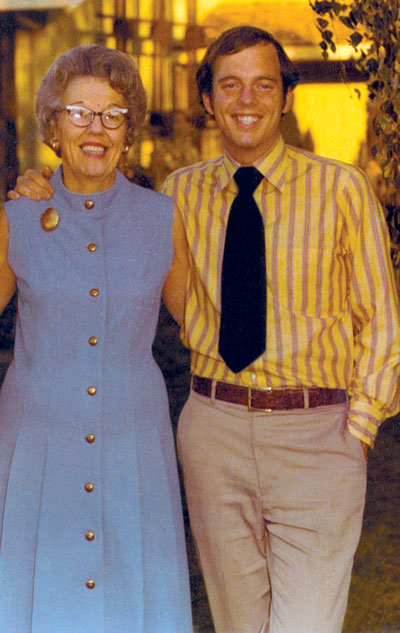 Frances Hamilton Oliver is shown on a trip to California with her youngest son, Robert, in 1971. Robert Oliver shares many of his mother’s interests including regional and family history. Robert’s great-grandfather, Alexander Hamilton, a Texas settler from Kentucky, began a thriving mercantile business in Cuero in 1873. He later opened the First National Bank in his store, founded and managed a cottonseed oil company, and brought some of the first registered Hereford cattle into DeWitt County.
Thanks to the vision and generosity of Cuero resident Robert Oliver, more bright medical students will have the opportunity to complete their education and provide care in rural areas such as DeWitt County. In memory of his mother, Oliver has established The Frances Hamilton Oliver Endowed Scholarship at the UT Health Science Center. The scholarship will support students who intend to practice in rural areas.
The UT Health Science Center serves primarily 38 counties south and west of San Antonio, most of which have an HPSA or MUA designation. The university actively recruits students from underserved areas not only into the Long School of Medicine, but also the Dental School, School of Nursing, Graduate School of Biomedical Sciences and School of Health Professions to address the shortage of health providers in the region.
Oliver said education and health care were important to his mother, who was the great-granddaughter of an early Victoria physician, Dr. William Thornton. Frances Hamilton graduated from The University of Texas at Austin and was a schoolteacher in Refugio until she married Gale Oliver Jr. While she occasionally was a substitute teacher, Frances Hamilton focused on being a full-time mother to their four boys, steering them all toward a college degree.
"My mother was really strong on history, family tradition and education," Oliver said. "My brothers and I were all raised in Refugio, but every summer we spent a week in Cuero visiting my grandmother and cousins. I spent a lot of time at our family’s ranch. I listened to my mother and grandmother talk about family history, and that’s important to me, too.
"It used to be that young people left home, got an education and then came back to the small towns to raise their families. Now that isn’t necessarily the case. This gift honors my mother’s love of education and brings health care providers to rural areas to improve our quality of life," Oliver said.
Oliver spent some years away from home, too, as a property manager in Vail, Colo., but returned to Cuero in 1995. In retirement, he has dedicated his time to founding the Chisholm Trail Heritage Museum. The museum will open later this year and will house UT Austin’s Horseman of the Americas - Tinker Collection, with more than 900 ranching and horse-related artifacts. "It is generally regarded as one of the finest international collections of cowboy objects in the world," Oliver said.
Once the museum is open, Oliver plans to host in its meeting rooms continuing education sessions for regional health care providers, as well as community health education speakers from the UT Health Science Center San Antonio.
Through his support of health care, history and education, Oliver is helping improve the lives of residents of Cuero, DeWitt County and all of South Texas, while honoring his beloved mother’s legacy.
Cuero, San Antonio share rich history of culture, education
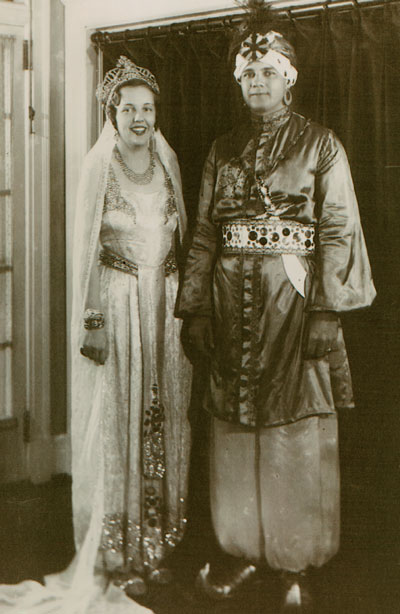
As "Sultana Oreuc" (Cuero spelled backwards) young Frances Hamilton and the town’s "Sultan Yekrut" (turkey spelled backwards), Dan Peavy, D.D.S., M.S.D., reigned over the community celebration that helped promote the town’s main agricultural industry at that time - turkeys. In those days, thousands of turkeys were herded through downtown Cuero from outlying farms to a processing plant and then shipped by rail for Thanksgiving dinners across America.
Dr. Peavy was an orthodontist, practicing in Cuero and San Antonio from the mid-1930s until his death in 1962. His son, also an orthodontist and named Dan Peavy, D.D.S., M.S.D., was raised in San Antonio. He is an adjunct faculty member in the Dental School at the UT Health Science Center San Antonio.
Hamilton married Gale Oliver and lived in Refugio. She was a schoolteacher and the mother of four sons, including Robert Oliver, who generously established The Frances Hamilton Oliver Endowed Scholarship for first-year medical students who want to practice in rural areas.
Baldwin’s legacy honored in new simulation center
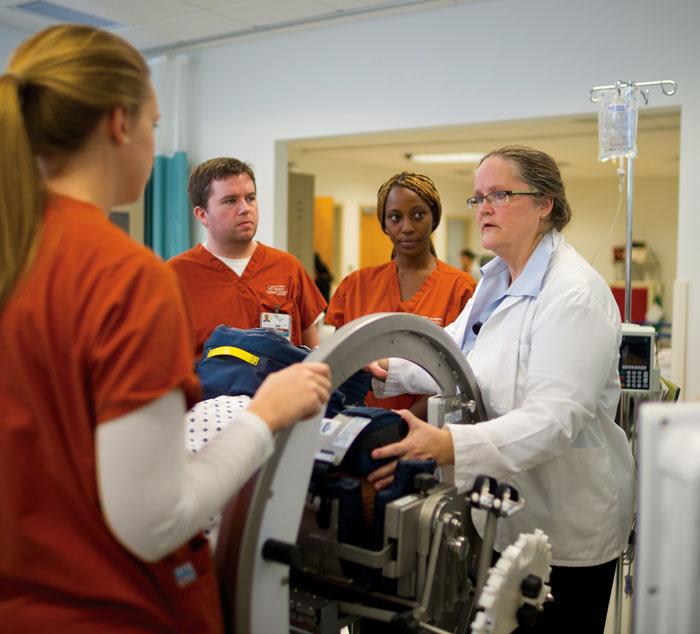
Located in the School of Nursing, the new Center for Simulation Innovation (CSI), as it is officially named, continues to evolve under the leadership of nationally recognized simulation expert Teresa Anne Boese, M.S.N., RN, who joined the faculty this past fall.
"We are so fortunate to have Ms. Boese on our faculty," said Eileen T. Breslin, Ph.D., RN, FAAN, dean of the School of Nursing. "As an early promoter of simulation training, she helped write the international standards for simulated education. She has a keen grasp of how to use simulation for nursing education, certification and continuing education."
 The Center for Simulation Innovation (CSI) provides far more realistic clinical training than could have been offered just a little more than a decade ago when Ruth Ann Baldwin, RN, M.S.N., retired from teaching clinical skills. Known for having high expectations, Baldwin also was a School of Nursing alumna, earning her bachelor’s degree in 1979 and master’s degree in 1985. She is pictured here as a master’s graduate.
Boese follows in the footsteps of many outstanding faculty, including the late Ruth Ann Baldwin who taught clinical skills in the School of Nursing for 15 years, retiring in 2001.
Colleagues remembered Baldwin, who also was an alumna of the School of Nursing, as dedicated to helping her students achieve the highest standards in clinical skills. Teaching and nursing were life, they said.
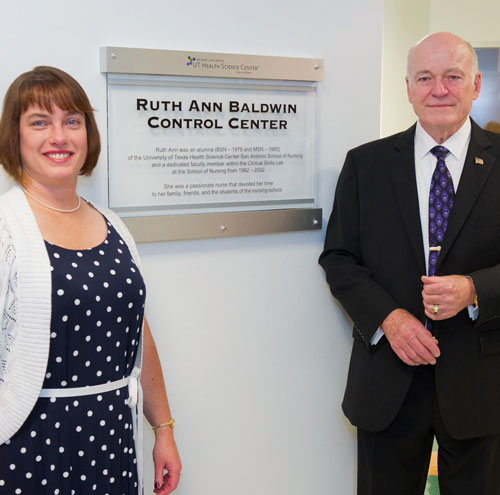
Last year, Baldwin’s husband, retired Air Force Capt. Gary Baldwin, established a generous endowment in the School of Nursing for student scholarships and for the new CSI. The Ruth Ann Baldwin Control Center in the simulation center is named in her honor.
To support the CSI and other programs in the School of Nursing, visit MakeLivesBetter.uthscsa.edu or contact Gwen Notestine, director of development in the School of Nursing, at 210-567-5313.
Click here to see how the simulation center works.
Sustaining smiles: Methodist Healthcare Ministries partners with Dental School to serve community
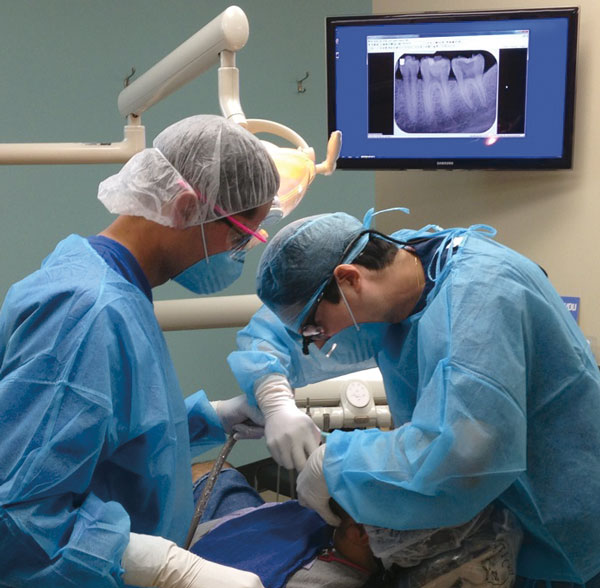
The Dental School’s involvement with the Salinas Dental Clinic began in 2003 as a partnership with Methodist Healthcare Ministries of South Texas Inc. (MHM) and the city of San Antonio, which owns the Salinas Clinic. There, working under faculty supervision, dental students and pediatric dentistry residents provide dental services to children from all areas of San Antonio. "The need for oral health care is critical," said Kevin Donly, D.D.S., M.S., professor and chair of developmental dentistry.
The clinic is a centerpiece of the Dental School’s outreach education program. It gives students and residents the opportunity to provide comprehensive care, and to learn about the needs of underserved communities and different ways to deliver care. "In a typical year, we provide about five or six procedures per patient during 5,000 patient visits," Dr. Donly said. As a sustaining partner, MHM has contributed nearly $1.3 million to the clinic since 2002.
This clinic is just one of several long-term partnerships between the Dental School
and MHM:
- In 2002, MHM and the Dental School began partnering on a school-based prevention program for second graders in the Edgewood Independent School District. MHM’s contributions for the Give Kids a Smile Program includes equipment and supplies valued at nearly $650,000.
- Since 2005, MHM has supported the Dental School’s clinical education programs in Laredo with grants for planning, equipment and program support totaling nearly $1 million.
- MHM also has supported pediatric dental services that students and residents provided at the Frank Bryant Clinic on the Eastside since 2005. Funding through 2012 exceeds $1 million.
- In 2012, MHM began funding a Dental School rotation through San Antonio Christian Dental at Haven for Hope. Funding of $214,088 in 2012 will support 3,000 dental visits.
Kevin C. Moriarty, MHM president and CEO, said, "We firmly believe in the partnership we’ve created with the UT Health Science Center Dental School. We have succeeded because we share the same mission of caring for the least-served in San Antonio and South Texas."
In all, MHM has provided more than $2.45 million to the Dental School’s outreach education programs in pediatric dentistry, prosthodontics, general dentistry, dental public health and prevention.
Beginning in 1998, MHM also was the driving force in educating the community about the value of fluoride in preventing cavities. As a result, voters approved adding fluoride to the city’s water supply.
In addition to the generous support provided to the Dental School, MHM has been a longtime champion of a multitude of programs throughout the UT Health Science Center including programs in the Long School of Medicine and School of Nursing.
Bill Dodge, D.D.S., dean ad interim of the Dental School, added, "It would not be an exaggeration to say that together, we have touched the lives of hundreds of thousands of people, not only through direct patient care, but through all the health care professionals who have received top-notch training from programs and clinics supported by Methodist Healthcare Ministries."

Najim invests in building healthy future for children
Harvey Najim learned two lessons early in life: hard work pays off and that you have to make your own way in life to be successful. Najim applied those two principles and built a billion-dollar company, Sirius Computer Solutions, in San Antonio."For more than 30 years I focused on building a successful business, but later in life I realized that I wanted to achieve something more. I wanted to become a community leader who supports the needs of others," Najim said.
In 2006 he created the Harvey E. Najim Family Foundation focused on children’s health and education. This year, his generosity included gifts for two programs at the UT Health Science Center San Antonio honoring Charles Butt and the Charles Butt and H-E-B Excellence Fund for the Future of Health.
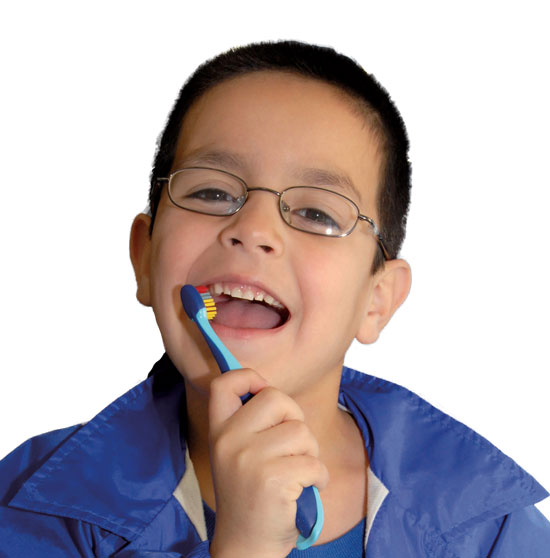
- Gary Guest, D.D.S., professor and assistant dean for Predoctoral Clinics in the Dental School, received $5,000 for the annual Dental Sealant Program. Each February, about 650 second-graders from the Edgewood Independent School District ride the bus to the Dental School where they receive dental screenings, fluoride treatments and sealants from dental students and dental hygiene students. The grant provided dental equipment and supplies for the clinic, and toothbrushes, toothpaste and educational coloring books for the children to take home.
- Rebecca Huston, M.D., M.P.H., clinical professor of pediatrics, received a $5,000 grant to purchase 2,397 books for children who receive care at four clinics run by the Long School of Medicine. Health care professionals and medical residents from the Health Science Center "prescribe" reading developmentally appropriate books and provide a beautiful new board book at each well-child checkup. Affiliated with the national, nonprofit Reach Out and Readorganization, the program aims to improve literacy and school readiness for preschoolers, especially those from low-income families.
"We are grateful to Mr. Najim and the Harvey E. Najim Family Foundation for recognizing the value of these two programs that help make lives better for our youngest patients," said President ad interim Kenneth L. Kalkwarf, D.D.S., M.S."These programs not only improve children’s health but help prepare them for a successful future."
Dental Sealant Clinic shines
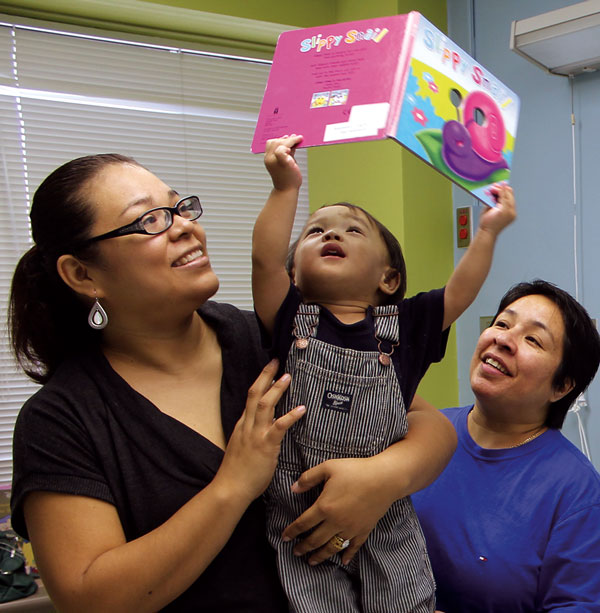
Reach Out and Read impacts children
However, it’s easy to see how delighted he is to receive a brand-new book at the end of his well-child checkup. Faculty members and medical residents from the Premature Infant Development Premiere Program (PREMIEre) encourage Michael’s parents to read to him every day.
"Children typically receive 10 new books by the time they start school," said Clinical Professor Rebecca Huston, M.D., M.P.H., who directs the Reach Out and Read program in the Children’s Health Center run by the Department of Pediatrics.
"More than 15 peer-reviewed studies have reported the positive impact of the national Reach Out and Read program," which promotes literacy and school readiness, she said.
Third-year medical resident Ryan Van Ramshorst, M.D., added, "The families we see might be working three jobs, so having these books is very meaningful to them," he said. "With their limited budgets, buying books is often not a priority."
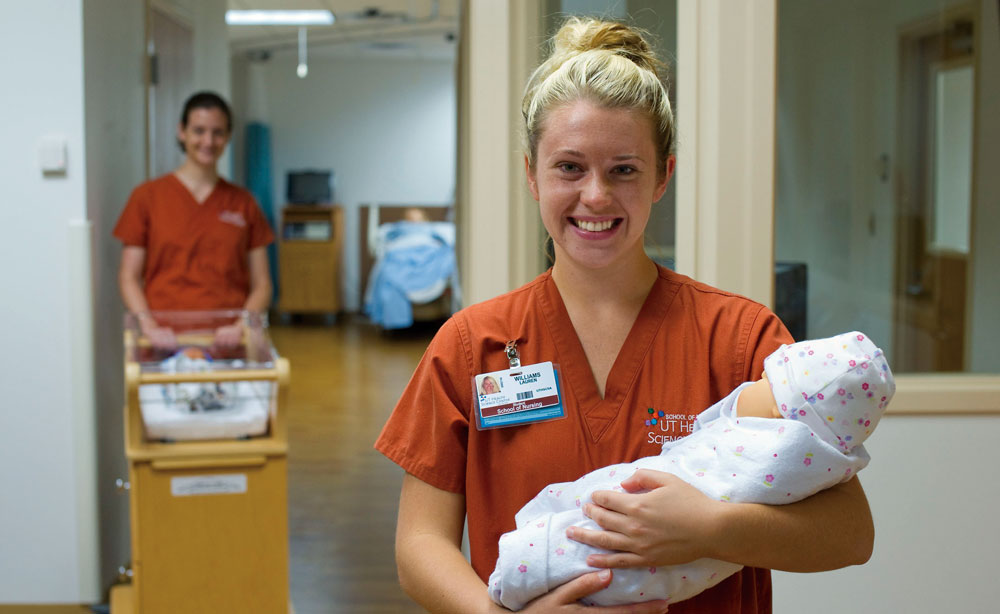
Modeling excellence
Community support builds simulation center to educate, train future health care providers
For Stacy Cousins, the sight of the infant having a seizure was dramatic. "The baby was shaking and turning blue," the senior nursing student said. "It felt like we were right there in the hospital."
Instead, she and fellow nursing students were learning clinical skills in the School of Nursing’s new, state-of-the-art Simulation Center & Clinical Learning Lab.
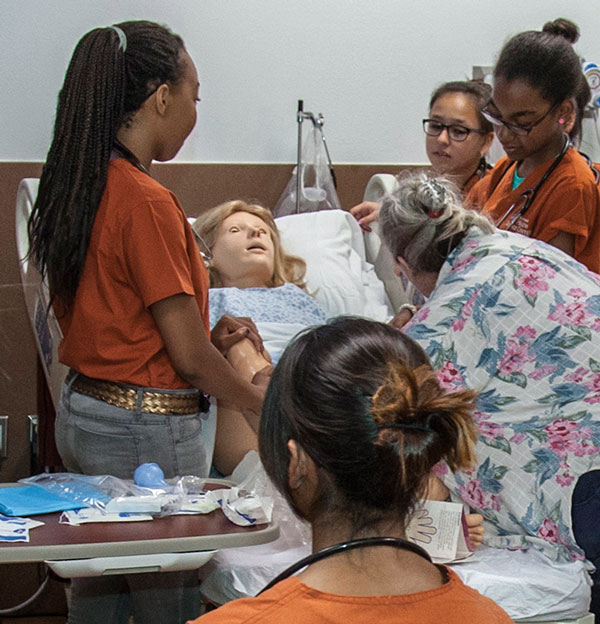
In the lab, students work with 13 brand-new high-fidelity simulation manikins, including newborns, babies, children and adults, as well as more than 30 additional manikins that can be used for a variety of clinical learning purposes.
The newest manikins, provided through a grant from Methodist Healthcare Ministries of South Texas, can be programmed to simulate normal and problematic health symptoms, such as a mother giving birth, a man having a heart attack and a baby having a seizure. The manikins’ eyes blink, their skin feels similar to human skin, they breathe and they have a pulse on their neck, wrists and legs. They are so lifelike that sometimes it’s easy to forget that they aren’t human.
"We weren’t expecting this to be so realistic. Now I’ll know what to do," Cousins said, when she begins working with human patients in a hospital setting.
Set up as a hospital and home health setting in the School of Nursing building, the 7,281-square-foot Simulation Center & Clinical Learning Lab provides realistic clinical education for students from the schools of Nursing, Medicine and Health Professions.
Through simulation, nurses and interprofessional teams of students and residents learn to appraise and respond to unique clinical scenarios led by Health Science Center faculty members, and to reflect on whether they did the right thing at the right time, explained Eileen T. Breslin, Ph.D., RN, FAAN, dean of the School of Nursing.
Dr. Breslin initiated partnerships to build the $3.9 million Simulation Center in 2009. Construction began in 2010 and was completed in spring 2012. The first partnership was initiated with the Economic Development Administration which provided a $1 million grant to fund Phase 1 of the project. As the School of Nursing embarked on Phase 2, a large portal was built through $750,000 in construction support from University Health System. The system was going to build mock hospital rooms and units in a warehouse to evaluate new equipment and furniture for University Hospital’s new tower. After those decisions were made, the rooms would be torn down.
The School of Nursing dean was a member of the advisory committee for the project. "I said, ‘Why not build it here and have your staff (physicians, nurses, therapists and administrators) walk over and give you feedback?’ That’s what we did and now we have simulation versions of several hospital units in our simulation center. We are grateful for this partnership and to all of our partners, donors and supporters," Dr. Breslin said.
At the June 13 ribbon-cutting ceremony for the simulation center, President William L. Henrich, M.D., MACP, said, "This simulation center is among the most advanced in the nation and it was because of funds from generous philanthropic institutions, individuals and creative partnerships within the community that it came to fruition. No state funds were used to build this. I also want to commend Dean Breslin and her team for their visionary work. This was a dream of your school and it happened because you all believe in nursing and nursing education for our community." The School of Nursing educates more than 800 students a year who are pursuing bachelor’s, master’s and doctoral degrees in diverse specialties of the profession.
Taking on a new role as director of the simulation center is Teresa Anne Boese, M.S.N., RN, who joined the Health Science Center in September. Boese is co-founding president of the International Nursing Association for Clinical Nursing Simulation and Learning, and was instrumental in writing the international standards for simulated education. "We are looking forward to tapping into Teri’s extensive knowledge about simulation to make our center even better for future nursing and interprofessional teams," Dr. Breslin said.
So far, nursing students agree that the simulation training is an invaluable part of their education.
Fourth-semester nursing student Jessica Gallegos said, "It’s awesome seeing what you read in books coming to life here in the center. It comes full circle."
[pexyoutube pex_attr_src="https://www.youtube.com/watch?v=GdqTy7YoJKU&feature=related"][/pexyoutube]
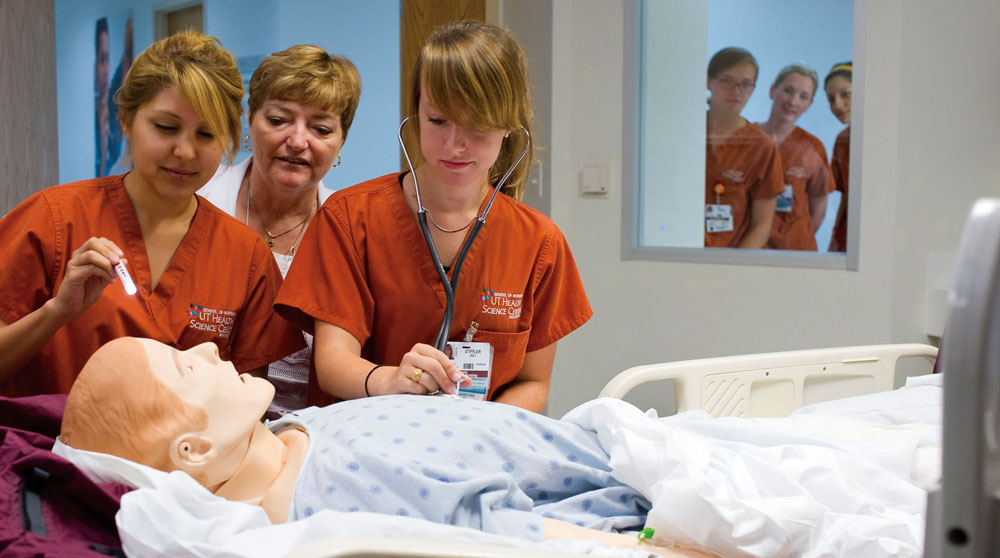
Facilities replicated
The School of Nursing’s Simulation Center & Clinical Learning Lab offers a wide variety of hospital and home health environments, including:
- Trauma center - modeled after University Health System’s facility; two trauma exam rooms and one trauma emergency care room
- Intensive care unit - two rooms constructed as a replica of new construction at University Hospital
- Home health center - designed as an efficiency apartment to demonstrate to students the importance of care provided in homes
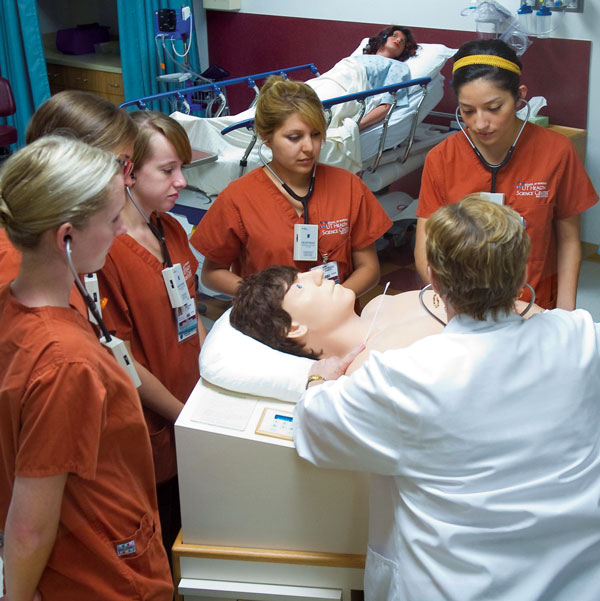
- Multi-bed educational center - four-bed medical/surgical unit where students will experience the dynamic environment of practicing on the floor of the hospital; allows medical teams to manage multiple patients at once; each room equipped with specialty hospital beds and high-fidelity manikins
- Pediatric care suite - includes three infant cribs, one child’s bed, and four high-fidelity manikins
- Ambulatory care suite - four treatment sites where students will experience the clinical environment of an ambulatory center
Maternal/child center - two mother-baby birthing suites, where students will experience the care of mother and baby from labor and delivery to postpartum care
- Simulation conference room - a debriefing site for faculty to work with students in unraveling the meanings and lessons inherent in each experience within the simulation center
Medication and supply rooms - these rooms house the automated medication dispensing system for medicines, all necessary supplies and electronic medical records for the center
- Four control rooms - where the manikins, and audio and video equipment are managed without the knowledge of the simulation participants
[pexyoutube pex_attr_src="https://www.youtube.com/watch?v=l5Dt4GNq2F0"][/pexyoutube]