
Research

Redefining obesity
December 1, 2025
New obesity treatments must factor in the complexity of the condition and the connection to chronic disease.
Better together
December 1, 2025
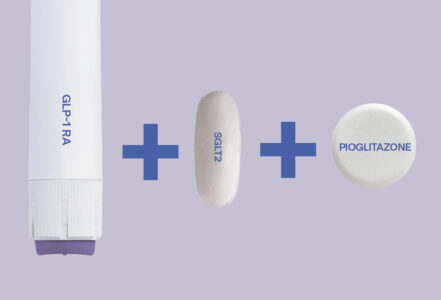
Dr. Ralph DeFronzo proposes treating diabetes with combination drug therapy rather than single medications. His research highlights pioglitazone, a powerful but underused insulin sensitizer, which, when paired with GLP-1 agonists and SGLT2 inhibitors, can control diabetes in up to 95% of patients.

Bold research aims to halt liver disease before it turns deadly
December 1, 2025
Researchers, including Dr. Luke Norton and Dr. Madesh Muniswamy, are leading efforts to understand and prevent metabolic dysfunction-associated steatotic liver disease (MASLD) and steatohepatitis (MASH).

Early diabetic kidney disease detection can help prevent irreversible damage
December 1, 2025
Dr. Kumar Sharma’s team at the Center for Precision Medicine is uncovering how high glucose damages kidney cells and leads to diabetic kidney disease.

Advances in preventing and treating diabetic neuropathy
December 1, 2025
Dr. Lee Rogers and Dr. Monica Verduzco-Gutierrez lead research and care to prevent diabetic neuropathy and limb amputations with new remote monitoring technologies.

Centers bring together science and care to take on diabetes and metabolic disorders
November 30, 2025
The Center for Molecular Metabolism and the newly opened Center for Excellence in Diabetes, serve as important hubs that foster communication and collaboration among investigators and help turn research findings into real-world impact.

Uncovering hidden biology of childhood obesity to target prevention strategies
November 30, 2025
Dr. Lily Dong’s research focuses on the unique biology of childhood obesity, emphasizing that children’s metabolism and fat regulation differ from adults.

The incretin revolution
November 30, 2025
GLP-1–based incretin drugs like semaglutide and tirzepatide are transforming obesity and Type 2 diabetes care by mimicking gut hormones that regulate insulin and appetite. However, they’re costly and weight often returns when treatment stops. Researchers at UT Health San Antonio are studying how to make incretin therapies longer lasting and more effective, including combining them with drugs that improve leptin sensitivity and metabolism.

When ‘time is brain’
December 9, 2024
In the world of stroke care, every minute counts. Lee Birnbaum, MD, professor in the departments of neurology and neurosurgery in the Joe R. and Teresa Lozano Long School of Medicine, sheds light on the latest developments in emergency treatments, post-stroke therapies and community education aimed at enhancing patient outcomes.

Breaking the grip of migraines
December 9, 2024
Throbbing. Stabbing. Fiery. Electric. Like being in a vice. There are many ways that migraine sufferers describe their pain, but no matter the word to describe it, having migraines is a debilitating condition that often causes significant disruption to a person’s quality of life.

Finding a break in the clouds
December 9, 2024
For some people struggling with their mental health, available treatments can be ineffective, effective for only a short time or cause insufferable side effects. About 30% of people with depression are treatment resistant, meaning they have tried two or more medications or therapies and are still experiencing significant symptoms.

Taming tinnitus
December 9, 2024
It can manifest as a low- or high-pitched tone — a squeal, buzz, roar, chirp or click seemingly coming from one or both ears or in the head. It can dissipate within seconds or be continually present; barely discernable or as loud as a freight train.