Early diabetic kidney disease detection can help prevent irreversible damage

By Claire Kowalick
Thirty years ago, there was minimal understanding of how high glucose affects kidney function. Today, diabetic kidney disease has become the leading cause of kidney failure in the United States. The dramatic rise in Type 2 diabetes has intensified the need to better understand the devastating effects of this disease, particularly its effects on the kidney.
Early investigations into diabetic kidney disease began with simple models where glucose was added to kidney cells, explained Kumar Sharma, MD, FAHA, FASN, chief of the Division of Nephrology, director of the Center for Precision Medicine and professor of medicine at the Joe R. and Teresa Lozano Long School of Medicine at The University of Texas at San Antonio. To their surprise, researchers observed that kidney cells flooded with glucose started producing large amounts of fibrotic molecules and matrix proteins, signaling tissue damage.
After decades of intensive research, Sharma said scientists are closer than ever to understanding how high glucose levels cause inflammation and fibrosis in the kidney. Specific kidney cells called proximal tubular cells are particularly sensitive to elevated glucose, and short-term exposure can disrupt mitochondrial function, impairing how these cells generate energy and reabsorb water and salt. Other cells in the glomerular filtering unit, called mesangial cells, produce cytokines and matrix molecules leading to eventual destruction of the glomerular filtering unit in diabetes.
Much of Sharma’s early work has since been validated by other researchers, leading to the widespread understanding that diabetic kidney disease is fundamentally driven by prolonged glucose exposure that results in mitochondrial dysfunction. With new methods such as spatial biology and spatial metabolomics, Sharma’s team at the Center for Precision Medicine is identifying specific metabolic pathways for the cell types involved in progression of diabetic kidney disease.
Why some people and not others?
A major focus of current research is understanding why only about one-third of people with diabetes develop diabetic kidney disease and how to identify and protect those at highest risk.
Damage to the kidneys and other organs may take 10 to 20 years to develop after a person becomes hyperglycemic. Over time, the kidneys enlarge — a condition called kidney hypertrophy — as they accumulate matrix molecules. The disease often remains undetectable until albumin, a blood protein, starts leaking into the urine due to damage to specialized cells called podocytes in the kidneys’ glomerular filter.
Scientists are still investigating why podocytes are particularly vulnerable to glucose. One possible factor is adenine’s effect on the endothelium — the lining of the blood vessels — which lies near the podocytes. Adenine, a metabolite, appears to promote inflammation and fibrosis in the kidney and heart in patients with diabetes. Additionally, Sharma’s team at the Center for Precision Medicine, led by Guanshi Zhang, PhD, assistant professor, has identified a toxic lipid called C16 ceramide that may contribute to podocyte dysfunction.
Once protein appears in the urine, the risk of kidney failure rises significantly. As the disease progresses, fibrosis forms in the kidneys and the glomerular filtration rate drops, reflected by increasing creatinine levels in the blood. By this point, reversing the disease is difficult, but nephrologists can attempt to slow its progression.
“Instead of taking five years to get kidney failure, we may be able to extend it to eight or 10 years using available therapies,” Sharma said.
“One goal in the next few months is to develop a new test for identifying patients who are at risk of developing kidney failure and heart failure and are currently in the very early stages of the disease.”
– Kumar Sharma, MD, FAHA, FASN, chief of the Division of Nephrology, director of the Center for Renal Precision Medicine, and professor of medicine in the Long School of Medicine
Early detection, early prevention
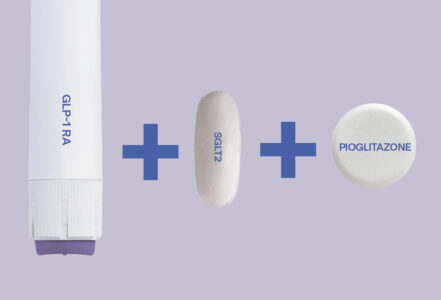
Current treatments for diabetic kidney disease include sodium-glucose co-transporter 2 (SGLT2) inhibitors, such as ertugliflozin and bexagliflozin, which block glucose uptake in the kidneys and appear to partially inhibit adenine production. Research shows that adenine is overproduced in the kidneys and hearts of people with diabetes and then may travel to other organs. Elevated adenine levels have also been detected in the hearts of diabetic patients, highlighting a strong link between kidney and heart complications.
The introduction of SGLT2 inhibitors has revolutionized nephrology, Sharma said, by revealing how blocking glucose uptake in specific kidney cells can dramatically protect kidney function. These medications have proven effective not only in diabetic kidney disease, but also in other kidney conditions previously thought to be unrelated to metabolism. For example, IgA nephropathy — long considered an immune-mediated disease — has shown improvement with SGLT2 inhibitor treatment. The drugs are also demonstrating cardioprotective benefits.
“We are still understanding the connection between the kidneys and the heart, but we think that it is mainly through metabolism,” Sharma said.
Glucagon-like peptide 1 receptor agonists (GLP-1 RAs) such as tirzepatide and semaglutide also offer benefits for diabetic kidney disease by promoting weight loss, which helps reduce inflammation. These drugs further influence adenine signaling, potentially lowering the risk of kidney fibrosis.
Sharma’s team is now developing adenine-focused therapies aimed at blocking its accumulation and damaging effects. If successful, these treatments could simultaneously protect both kidney and heart function.
Adenine also appears to be a key contributor to endothelial dysfunction. When damaged, the endothelium triggers inflammation, narrows blood vessels and promotes atherosclerosis and blood clot formation. Using a technique called spatial metabolomics and single-cell RNA sequencing, Sharma discovered that endothelial cells producing adenine contain an enzyme called methylthioadenosine phosphorylase, which increases in response to hyperglycemia, obesity and other inflammatory stressors.
“The cells become bathed in elevated adenine levels, and that seems to be driving the endothelial damage,” he said. Adenine-focused tests in development As director of the Center for Precision Medicine, Sharma is leading efforts to pinpoint, on a mechanistic level, why some patients are more vulnerable to diabetic kidney disease and how to tailor treatments accordingly. Among the promising developments are tests that measure adenine levels in urine and blood, potentially identifying patients at risk for kidney disease up to a decade before symptoms appear.
“One goal in the next few months is to develop a new test for identifying patients who are at risk of developing kidney failure and heart failure and are currently in the very early stages of the disease,” Sharma said.
Those identified as high risk could begin treatment with SGLT2 inhibitors to lower adenine levels and potentially prevent or delay kidney disease progression. A separate blood test under development may help detect elevated adenine levels that increase the risk for cardiovascular complications.
“We think by blocking endothelial dysfunction, we can have a major impact on cardiovascular disease, heart failure, coronary artery disease and vascular calcification,” Sharma said.
High risk in South Texas
With the high prevalence of Type 2 diabetes, diabetic kidney disease poses a particular threat to the South Texas area. Individuals are not only developing diabetes earlier, but are also experiencing kidney failure, cardiovascular disease and amputations at much younger ages. Sharma said the Health Science Center’s Nephrology Division is seeing diabetic kidney disease and kidney failure in patients as young as their 20s and 30s.
“Patients are developing kidney failure and needing dialysis from Type 2 diabetes at an early age. It is rampant. They are also experiencing amputations and cardiovascular disease earlier,” he said.
A significant reason for the surge in complications, Sharma noted, is that many individuals are now developing obesity and inflammation during childhood or adolescence rather than later in life.
“We are seeing this throughout the country and the world, but San Antonio may be the epicenter,” Sharma said.
This troubling trend emphasizes the urgent need to identify high-risk individuals early and provide treatment to prevent or delay kidney disease before irreversible damage occurs, he added.