
Molecules in 3-D
Imagine a suitcase on a bumpy ride. With enough jostling it opens, spilling clothes everywhere. Similarly awkward, the suitcase locks may jam and not open at the destination.
This analogy illustrates the importance of the protective capsule, called the capsid, which surrounds the HIV-1 genome. The capsid has to disassemble once the virus enters the cell, releasing its disease-causing cargo at precisely the right time and place.
“It’s still a matter of debate at what point the capsid falls apart in HIV-1 infection of cells,” said Dmitri Ivanov, Ph.D., assistant professor of biochemistry. Dr. Ivanov is a senior author on a study, published in Proceedings of the National Academy of Sciences, that offers clues about HIV-1 capsid disassembly. Akash Bhattacharya, Ph.D., was the first author on the study.
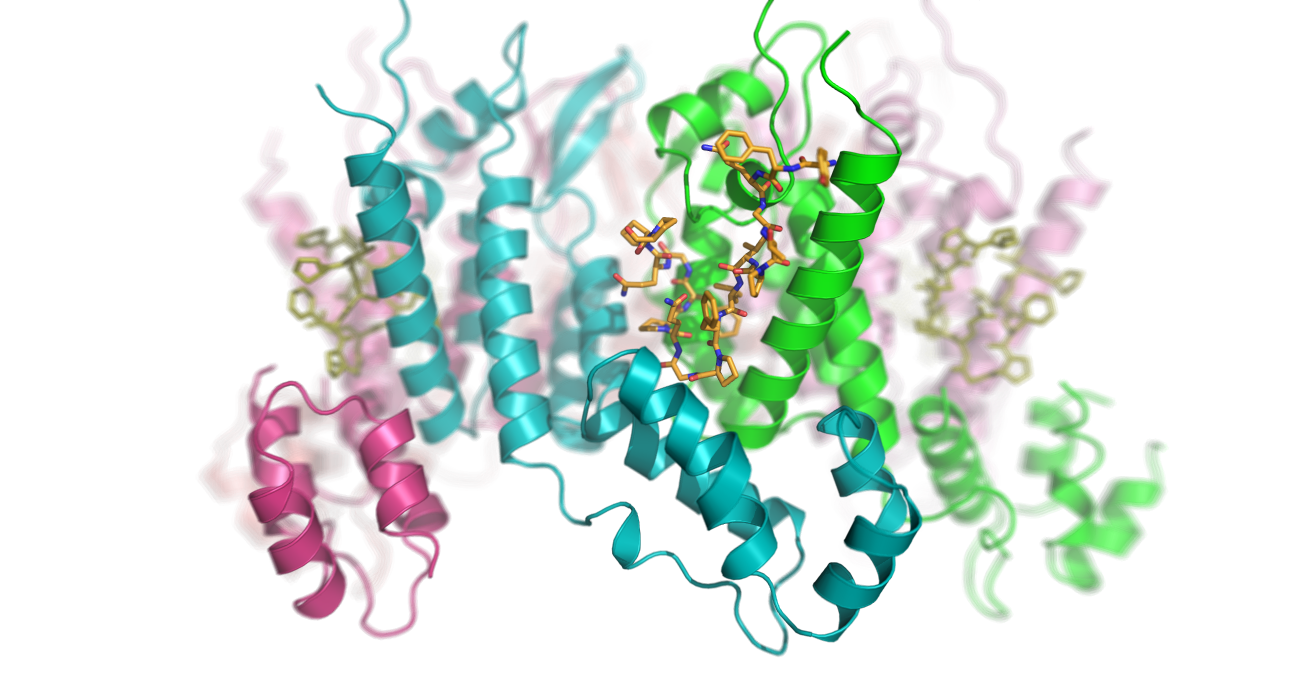
An HIV-1 inhibitor called PF74 and a host protein called CPSF6 bind to a small pocket on the surface of the capsid and prevent it from disassembling. Using the analogy, the suitcase is locked. Viral information is kept inside.
“We think that this process can be targeted for therapeutic purposes in HIV-1 infections,” Dr. Ivanov said.
In part of the study, researchers used X-ray crystallography at the UT Health Science Center to visualize the three-dimensional structure of the bound HIV-1 capsid.
“Seeing molecules in 3-D is illuminating; it tells us something about their function,” Dr. Ivanov said. “We now know how PF74 and CPSF6 interact with the adjacent building blocks of the HIV-1 capsid, thus stabilizing the entire capsid structure. It tells us that these molecules bind to the capsid before disassembly, blocking viral replication.”

‘Most hopeful’ suicide research
Short-term cognitive behavioral therapy dramatically reduces suicide attempts among at-risk military personnel, according to findings from a research study that included UT Health Science Center investigators.
The two-year study, funded by the Army’s Military Operational Medicine Research Program, was conducted at Fort Carson, Colorado. It involved 152 active-duty soldiers who had either attempted suicide or had been determined to be at high risk for suicide. The study evaluated the effectiveness of a brief cognitive-behavioral therapy in preventing future suicide attempts.
Soldiers receiving cognitive-behavioral therapy were 60 percent less likely to make a suicide attempt during the 24-month follow-up than those receiving standard treatment. The results were published by The American Journal of Psychiatry.
The findings are particularly encouraging given that rates of active-duty service members receiving psychiatric diagnoses increased by more than 60 percent during a decade of war in Iraq and Afghanistan. Rates of suicides and suicide attempts rose in comparable numbers.
“The significant increase in military suicides over the past decade is a national tragedy,” said Alan Peterson, Ph.D., a co-investigator on the study who is a professor of psychiatry and director of the military-focused STRONG STAR Consortium. “The Department of Defense has responded by investing significant resources into military suicide research, and the findings from this study may be the most important and most hopeful to date.”
Nobel laureate stresses the power of science
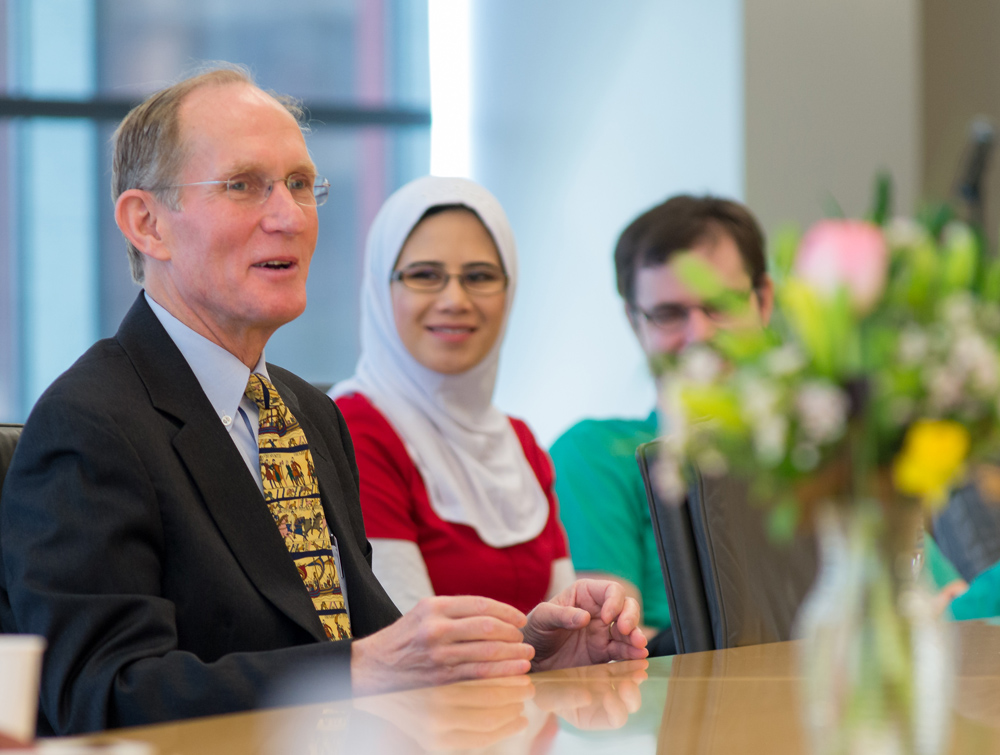
Peter Agre, M.D., Nobel laureate and director of the Johns Hopkins Malaria Research Institute, spoke about the power of science during the 2015 Presidential Distinguished Lecture March 26.
“We should never underestimate the power of science to open doors,” he said.
Dr. Agre shared the 2003 Nobel Prize in Chemistry for the discovery of aquaporins, a family of water channel proteins found throughout nature. Referred to as “the plumbing system for cells,” aquaporins are involved in numerous physiological processes in humans and are implicated in multiple clinical disorders including malaria.
Dr. Agre joined the Johns Hopkins School of Medicine faculty in 1981 and has served as director of the Johns Hopkins Malaria Research Institute at the Bloomberg School of Public Health since 2008. He oversees 20 faculty research groups as well as field activities in Zimbabwe and Zambia.
In a personal message to UT Health Science Center students and written in the Presidential Distinguished Lecture Series Commemorative Album, on permanent display in the Dolph Briscoe Jr. Library, Dr. Agre said his message was simple: Creative science that will shape the future is undertaken by young scientists.
“The experiences you are having right now may have profound impact,” he wrote. “And importantly, you do not have to be perfect in order to do something important.
“Please take advantage of opportunities, keep the faith and never give up. The world is counting on you.”

Biomedical research program gets additional funding
San Antonio area high school students will have the opportunity to participate in a unique, intensive, three-year biomedical research program at the Health Science Center, thanks to a $675,000 grant from The Max and Minnie Tomerlin Voelcker Fund.
Voelcker fund trustees helped establish the Voelcker Biomedical Research Academy at the Health Science Center in 2009 with an initial gift of $750,000. The goal of the Voelcker Academy is to encourage high school students to enter careers in science, technology, engineering and mathematics.
The new funds will also enable the Voelcker Academy leadership team to conduct longer-term research on the program’s effectiveness with the hope of developing a national model for other universities to replicate.

Reaching out
A $600,000 three-year grant from the Rita & Alex Hillman Foundation is supporting a new nurse-led clinic for children who attend the AVANCE-San Antonio Head Start program at the Fenley Center, a child-development campus in the Harlandale Independent School District.
The clinic offers preventative screenings and primary health care through an agreement between the UT Nursing Clinical Enterprise, an initiative of the School of Nursing, and AVANCE-San Antonio, which provides Head Start Services.
All children enrolled in Head Start in the Harlandale ISD and their parents and guardians also will receive health education from certified pediatric nurse practitioners, a registered dietician, licensed vocational nurses and AVANCE-San Antonio staff.
A contract with the Centers for Medicare and Medicaid Services’ Delivery System Reform Incentive Payment Program also helped fund the clinic expansion.
Appointments and Awards
 Bandana Chatterjee, Ph.D., professor in the Department of Molecular Medicine, is a new fellow of the American Association for the Advancement of Science. She has conducted almost a quarter-century of prostate cancer research in the Long School of Medicine.
 Andrea Giuffrida, Ph.D., was appointed vice president for research after serving as ad interim since May 2014. Dr. Giuffrida is an associate professor of pharmacology and served previously as the director of biomedical research development in the Office of the Vice President for Research. He joined the Long School of Medicine and Graduate School of Biomedical Sciences faculty in 2003.
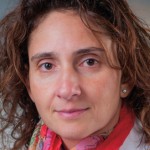 Virginia Kaklamani, M.D., was named director of the breast cancer program at the Cancer Therapy & Research Center. A professor of medicine in the division of hematology/oncology, her research interests include studying high-risk families and identifying genetic mutations that are associated with an increased risk for breast, colon and prostate cancer.
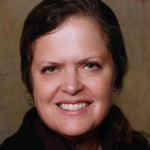 Jan E. Patterson, M.D., M.S., was appointed to serve on the Healthcare Infection Control Practices Advisory Committee of the Centers for Disease Control and Prevention. The committee provides guidance regarding infection control practices and strategies for surveillance and prevention of health care-associated infections, antimicrobial resistance and related events.
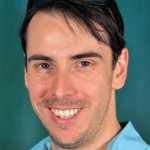 Daniel Lodge, Ph.D., a psychiatric disorders researcher, was chosen as the first recipient of the Neuropharmacology Division Early Career Investigator Award from the American Society for Pharmacology and Experimental Therapeutics. Dr. Lodge is an assistant professor in pharmacology.

Four stars: School of Medicine faculty honored
Four School of Medicine faculty were honored at the national meeting of the American College of Physicians:
 Marvin Forland, M.D., MACP, professor emeritus of medicine who helped launch the Long School of Medicine, received the Texas Chapter Centennial Award. A founding faculty member of the Health Science Center, Dr. Forland recorded a video history interview. View
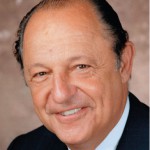 Ralph DeFronzo, M.D., FACP, professor of medicine and chief of diabetes, received the Samuel Eichold II Memorial Award for Contributions in Diabetes.
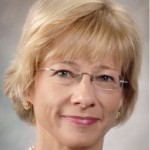 Ruth Berggren, M.D., FACP, professor of medicine–infectious diseases and director of the Center for Medical Humanities & Ethics, received the Nicholas E. Davies Memorial Scholar Award for Scholarly Activities in the Humanities and History of Medicine.
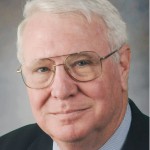 George Crawford, M.D., MACP, professor of medicine and associate director of the Internal Medicine Residency Program, was installed as governor of the Southern Texas Region of the ACP.

Salud America! receives $1.3 million grant
A national online network to reduce obesity received a one-year, $1.3 million grant from the Robert Wood Johnson Foundation.
Salud America! The RWJF Research Network to Prevent Obesity Among Latino Children, created in 2007, is a San Antonio-based network of 10,000 parents, leaders, academics and advocates seeking environmental and policy solutions to Latino obesity. The funding will allow the program to expand its membership and build new scientific evidence and policy recommendations to guide efforts to reduce obesity.
“Latino childhood obesity remains a national health threat, but we believe our research and multimedia educational content will continue to motivate people to push for healthy changes in their areas,” said Amelie Ramirez, Dr.P.H., professor and director of the Institute for Health Promotion Research at the UT Health Science Center and director of Salud America!

Matchmaking at Match Day 2015


Stressed out? Blame your genes
Scientists have long believed that the tendency of experiencing stress-related disorders such as depression, post-traumatic stress disorder and obesity is inherited or is the result of traumatic events. But scientists from the Health Science Center who study depression in teens are looking into another factor—the role that changing genes play.
Subtle changes in a gene can predict how the brain reacts to stress, they found. And those genes may change over time, making some with the same genetic makeup more likely to experience stress than others.
The studies, led by the Health Science Center’s Douglas E.
Williamson, Ph.D., and Ahmad Hariri, Ph.D., from Duke University, looked at the serotonin transporter, a gene that regulates the amount of serotonin signaling that occurs between brain cells and is frequently the target for antidepressant drugs. They proved the existence of a mechanism impacting the brain that also may play a role in an individual’s reaction to stress, which may be a stronger predictor of stress than DNA sequencing.
Attached to the serotonin transporter’s DNA are chemical marks called methyl groups. They help regulate when, where and how much of the gene is expressed. This is one form of gene modification, which scientists are studying to understand how the same genetic code can produce different reactions to stress, and a wide range of cellular responses in the body.
“Our work is helping to identify the specific mechanisms that are involved in the onset of depression, which is involved in 70 percent of people with PTSD,” said
Dr. Williamson, an associate professor of psychiatry, epidemiology and biostatistics in the Long School of Medicine, and the Dielmann Chair of Genetic and Environmental Risk.
“The findings of the current study and our ongoing research are contributing to a paradigm shift in how our field examines genetic contributions to psychiatric conditions like depression and post-traumatic stress disorder. We are moving beyond simple inherited genetic sequence variation to examine what is being modified during one’s lifetime and how this may in turn be passed on to our children.”