
An Evening of Promise
Annual gala honors Frost family legacy

The link between Patricia and Tom Frost and the Health Science Center was forged in 1959, when the Texas Legislature signed House Bill 9 to create the Long School of Medicine that now sits in the heart of the San Antonio Medical Center.
But the Frosts never imagined it would become what it is today.
"It’s been an important thing in my life [to experience] how well it’s been done," said Tom Frost, emeritus member of the Health Science Center’s Development Board. "It’s marvelous. We never dreamt it would be anything like what we have now. The level of medical care in this community is many times greater today than it was before the university came."
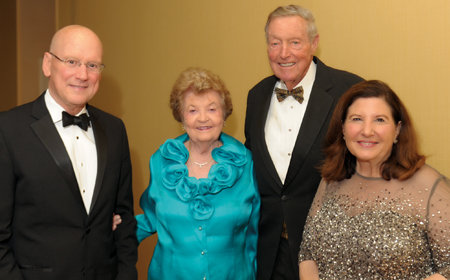
The Frosts, known for their longtime support for the economic growth of San Antonio, were honored at the 2014 President’s Gala held Sept. 13. The event, called An Evening of Promise, will establish the Tom C. and Patricia H. Frost Endowment to Advance Cancer Research and Education with proceeds of $500,000 raised through community support. The endowment will go toward student scholarships and fellowships, and cancer research.
It was the Frosts’ faith in the future and their willingness to accept risk that helped launch the Health Science Center into the epicenter for education, research and healing it is today, said Health Science Center President William L. Henrich, M.D., MACP.
"In one way or another, directly or indirectly, we have all been touched by the countless efforts of Tom and Patricia Frost’s generosity and service to San Antonio, to our region, to our state and to our country," Dr. Henrich said.
"When Tom and leaders of San Antonio inaugurated these new medical efforts, they made a pledge to the city to give their best efforts to improve health care, foster research and light the lamp of education."
Tom Frost, chairman emeritus of Frost Bank, is the fourth generation of his family to oversee the bank founded by his great grandfather, Col. T.C. Frost, in 1898. The Frost family continues to build on a legacy of philanthropy that spans generations, said Bartell Zachry, honorary chair of the gala.
"No team has done more than the team of Pat and Tom Frost," he said. "Their nurturing support since [the Health Science Center’s] beginning has touched so many lives. It is important that they be recognized for what they have accomplished, but especially for the example they have set for all of us in all they have done for so many years that makes possible the dynamic, grand and extraordinary lifesaving resource and life-changing resource that is the Health Science Center of San Antonio."
More than four decades ago, Frost led efforts to establish the Cancer Therapy & Research Center and was named its first honorary trustee. The CTRC, which just marked its 40th anniversary, has become one of the elite academic cancer centers in the country to be named a National Cancer Institute-Designated Cancer Center.
"This generous support by the Frost family and countless other members of our community will allow us to continue to provide compassionate treatment for all of our patients while our research team seeks to improve treatment and understand cancer with the goal of preventing it," Dr. Henrich said.

Stem cells revealed
Public Education Day explores regenerative medicine

What are stem cells and how might they be used to treat diseases? How safe are current stem cell treatments? How can the public enroll in a clinical trial? What are the ethical issues? How is the U.S. military using regenerative medicine?
The Health Science Center hosted a Stem Cell and Regenerative Medicine Public Education Day Dec. 2 to address the many questions about stem cells and regenerative medicine through speaker panels and interactive booths. Keynote speaker Elaine Fuchs, Ph.D., an investigator at Rockefeller University, presented a public lecture about her research that explores where adult stem cells come from, how they make tissues, how they repair wounds and how stem cells malfunction in cancers.
The event immediately preceded the 2014 World Stem Cell Summit, which ran Dec. 3 to 5 in downtown San Antonio. The Health Science Center was an organizing sponsor of the summit, which is the largest interdisciplinary stem cell meeting in the world.
"The Health Science Center is committed to stem cell research, including applications to oral health, aging, neuroscience, diabetes and cancer," said Health Science Center President William L. Henrich, M.D., MACP, a summit co-chair. "The World Stem Cell Summit was an opportunity to showcase our work on the global stage and establish new connections with national and international partners. The stem cell and regenerative medicine field has the potential to transform medicine, but also to transform the Texas economy."
The World Stem Cell Summit featured 200 prominent leaders in translational medicine, science and other fields. The event attracted attendees from 40 nations.
Exceeding expectations: CTRC raises an unprecedented $13.2 million
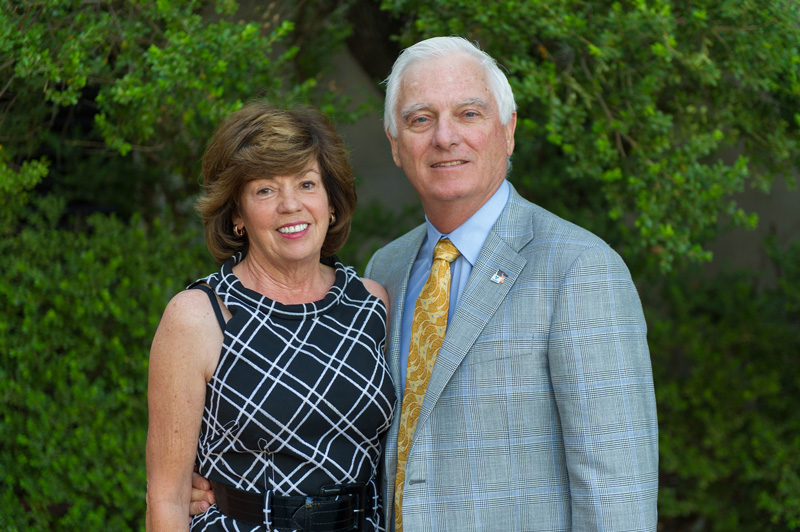
The Cancer Therapy & Research Center received $1 million from the Klesse Foundation and an additional $1 million from the Valero Energy Foundation in support of the recruitment of a nationally recognized scientist to lead the CTRC’s Cancer Prevention Program.
The two gifts helped the CTRC exceed its $10 million annual fundraising goal, bringing the year’s philanthropic total to an unprecedented $13.2 million.
"Margie and Bill Klesse and the Valero Energy Foundation are enabling us to continue to surpass our goals in making new discoveries and providing exceptional care, and we cannot thank them enough," said CTRC Director Ian M. Thompson Jr., M.D. "These votes of confidence from our own community are not only incredibly helpful for cancer prevention, research and care, but they are also close to our hearts."
Recruitment of a national leader in cancer prevention will distinguish the CTRC on a national level and will have a transformative effect, amplifying the important and lasting impact of reducing the burden of cancer on the South Texas region, he added.
Margie and Bill Klesse and Valero are longstanding supporters of the CTRC and the Health Science Center. Margie Klesse is a member of the CTRC Board of Governors and has served on the Board of Trustees of the CTRC Council, formerly the Cancer Center Council. She also has co-chaired the San Antonio Express-News Book & Author Luncheon, which benefits the CTRC’s Phase I Clinical Research Program.
At the Sept. 29 announcement of the gifts, Bill Klesse recognized Dr. Thompson’s leadership and the critical work of the CTRC physicians and researchers.
Many people who suffer from cancer can't travel to other cities for treatment, he said, so having a top-rated cancer facility in San Antonio, one that is connected to an academic institution, is essential.
New chair established
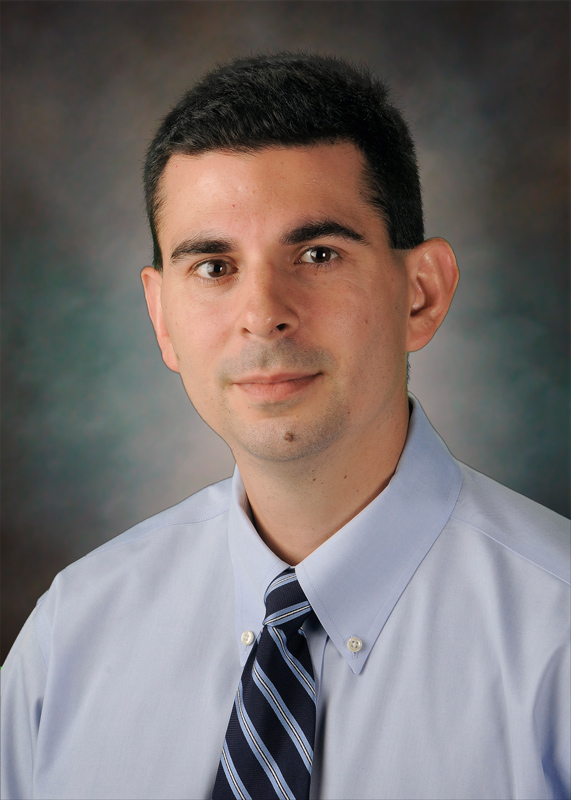
John H. Doran, M.D. ’73, an internist in Odessa, Texas, has given $500,000 to the Health Science Center to establish the John H. Doran, M.D., FACP, Endowed Chair in Peripheral Neuropathy.
Dr. Doran has been practicing in his native Odessa since graduating from the Long School of Medicine. He said he has long had an interest in giving back to the medical school and in advancing knowledge through research.
"There’s a lot we need to know about peripheral neuropathy," he said. "I’ve seen an increase in the number of cases in recent years. There are more idiopathic [unknown] causes."
The endowment will support, among other areas, the investigation of pathophysiology, cell biology and biochemistry of neuropathy, the development of biological or biochemical drugs and participation in clinical trials designed to reduce or eliminate the disease process.
Alejandro Tobon, M.D., is the inaugural holder of the Doran Chair. He completed his medical education in Colombia followed by an internship at Drexel University. His neurology residency training was at the University of New Mexico and his neuromuscular medicine fellowship training followed at the University of Miami.
Forging a connection: Father, daughter unite to support students
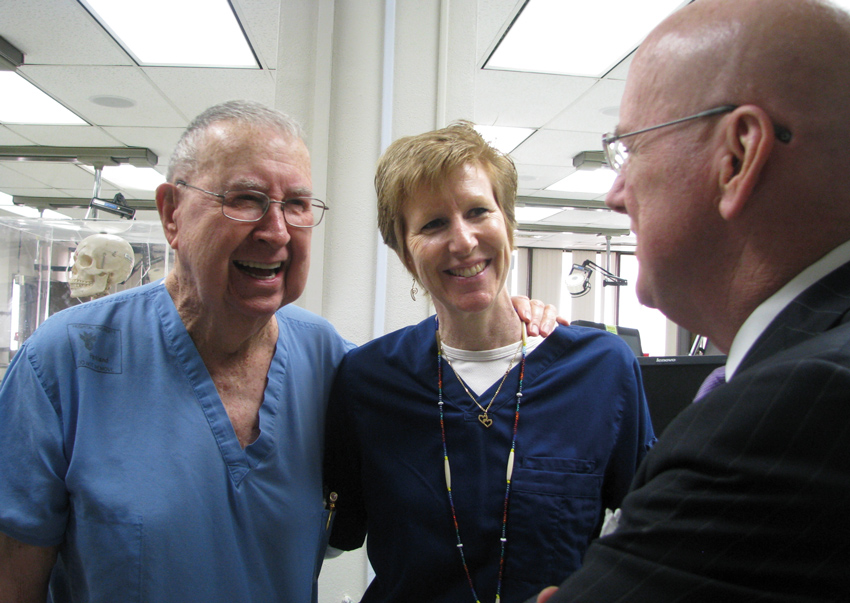
Julie Barnett, D.P.T., M.T.C., PT, respected the work of her father, a general surgeon, so much that she decided to follow his path to medicine. It seemed natural for the two of them to create another connection years later.
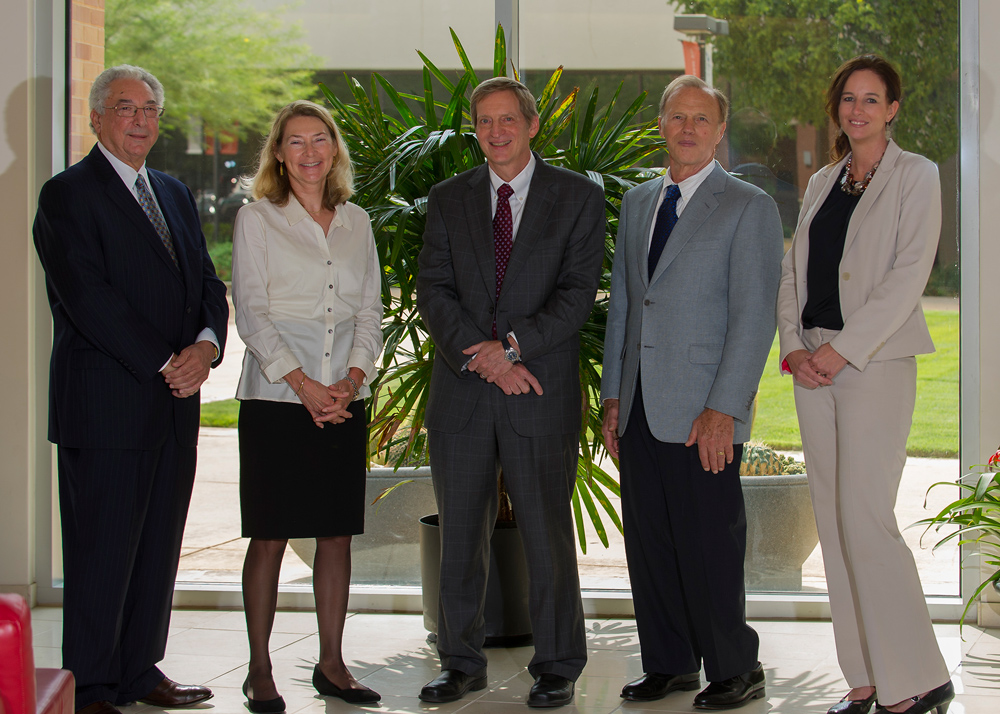
Dr. Barnett and her father, Duane Barnett, M.D., now retired, have established the Barnett Endowed Scholarship in the School of Health Professions. The $10,000 gift will create an annual scholarship of $500, awarded in perpetuity to first- or second-year physical therapy students.
“He came up with the idea, and I had always wanted to do something like that,” said Dr. Barnett, a clinical assistant professor of physical therapy at the Health Science Center. “He loves building up students, always has. And he always is thinking the best of people and being a teacher and an educator. That’s been my whole outlook, too. The apple doesn’t fall far from the tree.”
Creating the endowment was the right thing to do, Dr. Barnett said, to celebrate their shared passion for medicine and education.
“It feels like such a healthy emotional yet financially tangible way to have the heritage go on,” she said. “That’s what it’s about. This combination for the two of us, it feels like one of those father-daughter things that I’m really proud of.”
A pledge to help
The Houston-based JLH Foundation has made a pledge of $356,415 to the University Transplant Center, a partnership of the Health Science Center and the University Health System.
Foundation funds will be used to support the personal needs of transplant recipients and their families, foundation officials said. The foundation was created to honor the memory of John L. Hern, a Houston businessman who in the late 1990s was hospitalized for 252 days awaiting a heart transplant.
During his hospital stay, Hern met and befriended patients who were waiting for transplants or who had just received transplants. He realized that many could not afford the associated costs, such as transportation, temporary lodging, restaurant meals, parking, co-pays and costly prescription drugs. He decided to help.
While he did undergo successful transplant surgery in December 1996, Hern died the following October after anti-rejection drugs failed. But his desire to financially assist transplant patients was realized shortly thereafter with the establishment of the JLH Foundation, funded by profits from companies he owned.
Over the years, the foundation has established relationships with several nonprofit transplant entities and initiated donor awareness programs, primarily in the Houston area.

Expanding reach
$3.7 million grant focuses on pediatric cancer patients throughout South Texas
Hispanic children have the highest incidence of cancer and the poorest outcomes. This is an especially critical issue for San Antonio, a city with a population that is more than 63 percent Hispanic.
The National Cancer Institute has awarded a $3.7 million grant to pediatric oncologists at the Health Science Center to lead a consortium of regional providers in pediatric cancer research trials.
The grant is through the NCI’s Community Oncology Research Program (NCORP), and it designates the area as one of 12 minority/underserved community sites in the United States, and the only NCORP site in Texas.
"Because we are a majority-Hispanic city and have such a large Hispanic population in the area we serve, it is essential that our children be included on national trials," said Gail Tomlinson, M.D., Ph.D., interim director of the Greehey Children’s Cancer Research Institute at the Health Science Center.
The grant will focus on issues such as survivorship, the next big step in improving pediatric cancer care. It will also go toward cancer care delivery research, genetic counseling and support services, including consistent and accurate translation for families with language barriers.
Anne-Marie Langevin, M.D., professor and pediatric hematologist-oncologist at the Health Science Center and principal investigator on the grant, said the large scale of the grant and the area it covers means the best care is available to a larger number of families. The grant will target children in an area that extends throughout South Texas, from the Rio Grande Valley to Austin.
"We know that children, adolescents and young adults treated on clinical trials tend to do better," she said. "With all the partners, we cover 90,000 square miles of Texas, and we offer families of children and young people with cancer access to a network of clinical trails."
The other grant partners include San Antonio Military Medical Center, Methodist Children’s Hospital, Dell Children’s Medical Center in Austin and Driscoll Children’s Hospital in Corpus Christi.
The five-year grant replaces a federal pediatric cancer grant led by the Health Science Center for more than 23 years.
New Military Health Institute, director announced

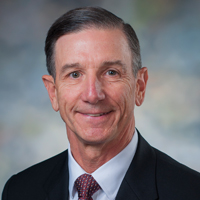
Retired Maj. Gen. Byron C. Hepburn, M.D., was named director of the Health Science Center’s new Military Health Institute.
Announced in September, the institute will improve the health of military service members, veterans and their families through collaborative education, research and clinical care.
Dr. Hepburn, whose military career spans 38 years, is a former commander of the 59th Medical Wing, Wilford Hall Ambulatory Surgical Center, Joint Base San Antonio-Lackland and director of the San Antonio Military Health System.
Prior to his selection as commander of the 59th Medical Wing, where he led the Air Force’s largest medical wing, he served as deputy surgeon general of the U.S. Air Force. In that role, he directed all operations of the Air Force Medical Service, a $5.1 billion, 43,000-person integrated health care delivery system serving 2.4 million beneficiaries at 75 military treatment facilities worldwide.
He is a distinguished graduate of the U.S. Air Force Academy and one of only a few U.S. Air Force pilot-physicians. He completed a residency in family practice and holds an appointment as professor in the Long School of Medicine’s Department of Family & Community Medicine. He also holds the titles of assistant dean for military health in the Long School of Medicine and associate vice president for the Health Science Center.
Gift to the deaf education program will benefit more children
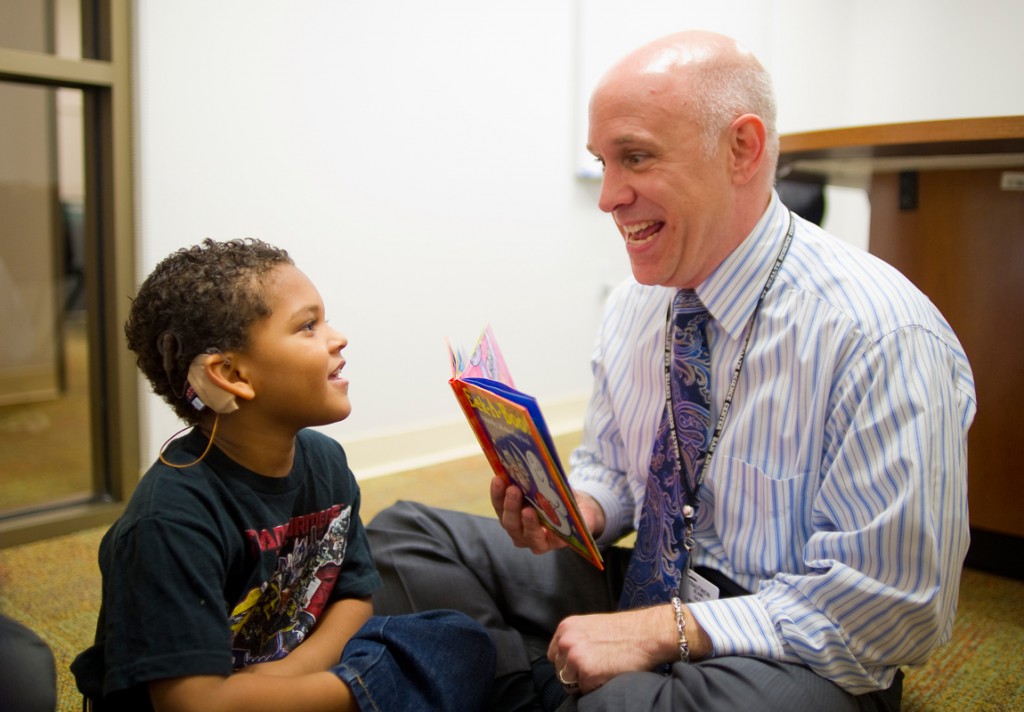
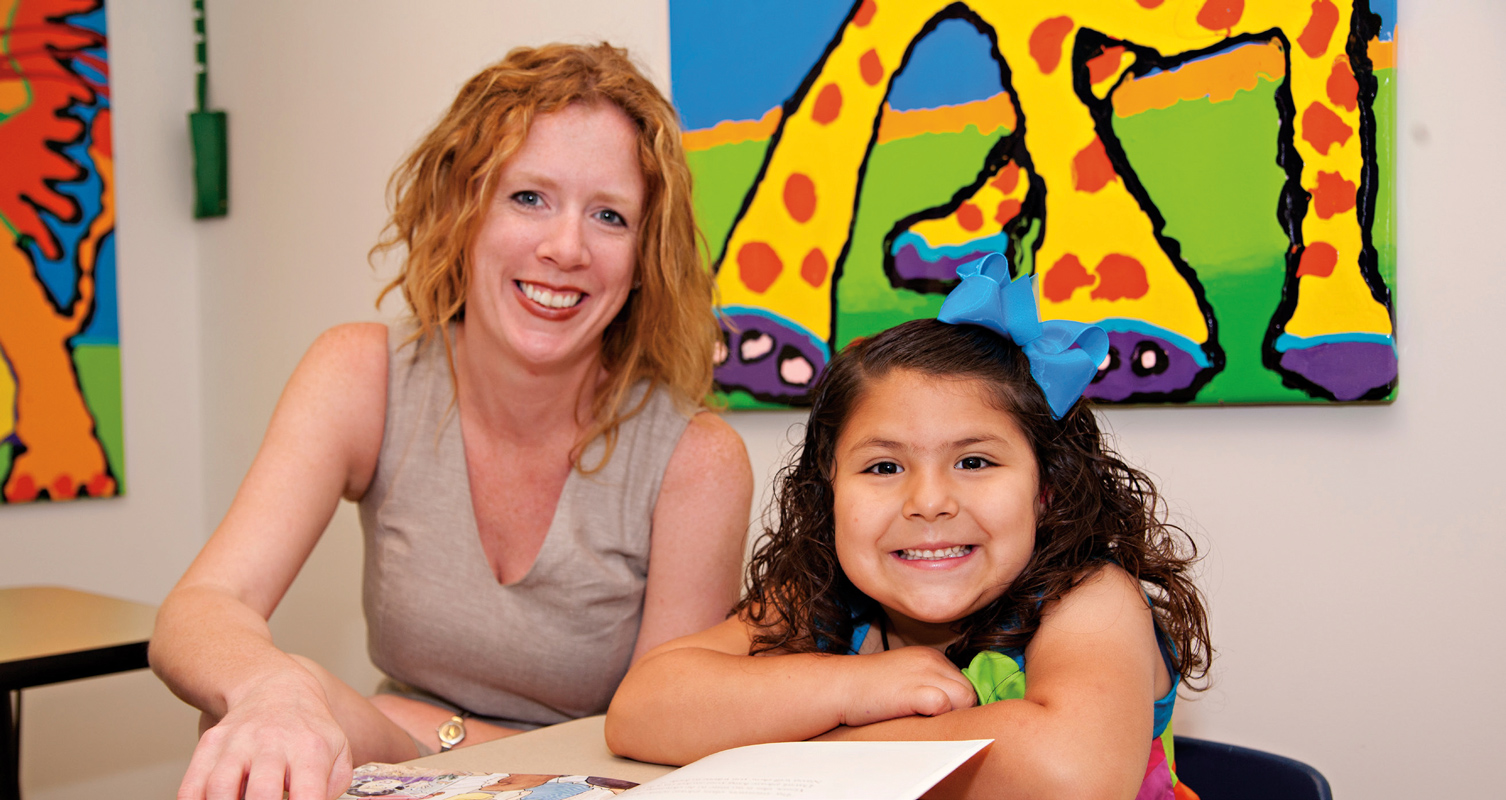
The deaf education and hearing science program received a $246,000 gift from the Oberkotter Foundation. It was the only university program in the country selected for a grant from the foundation this year, said Blane Trautwein, Ed.D., CED, assistant professor and program director.
The money will be used to create an online course about listening and spoken language outcomes for children with hearing loss. It will also go toward the program’s main practicum school, Sunshine Cottage, which will create a teletherapy program for families of children ages 0 to 3 who have hearing loss, but who live too far away to get appropriate help, he said.
“To say that we’re the only one chosen in the nation speaks fairly well for our program,” Dr. Trautwein said. “We’re pretty darn thrilled.”
The first gift from the Oberkotter Foundation was in 2008, and over the years support has topped $663,000. The foundation supports schools where children who are deaf or hard of hearing can learn listening and spoken language skills and develop their social, emotional, language and educational skills.
 The Health Science Center’s deaf education and hearing science program started in 2008 with three students. Today, with Dr. Trautwein and Sarah Ammerman, Ph.D., CED, at the helm, the program has grown to 21 students and is one of the largest in the country.
“Our program is all about making sure there are professionals out there who are knowledgeable enough and have the skills to be able to help the students use all this technology and all these great advances in medical sciences to their benefit,” Dr. Trautwein said. “It’s not just a matter of identifying children with hearing loss. You have to have trained professionals to make a difference.”
High praise received from UT System
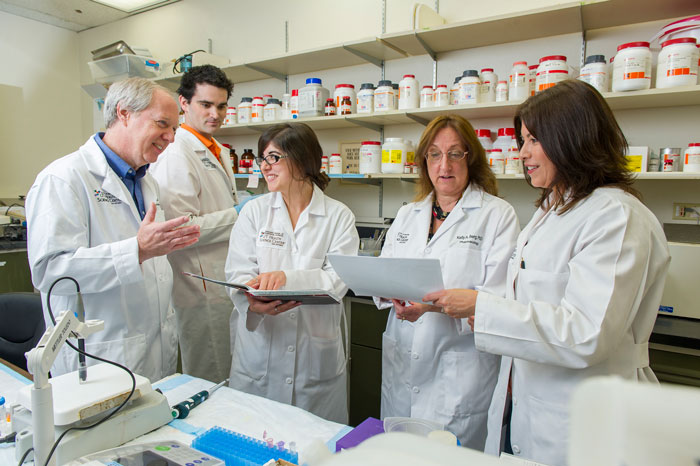
Eight educators from the Health Science Center were selected as winners of the 2014 Regents’ Outstanding Teaching Award from The University of Texas System.
Each honoree received $25,000. This year the UT System awarded a total of $2.4 million to top educators from its nine academic universities and six health institutions. The awards are among the largest and most competitive in the nation for rewarding outstanding faculty performance.
William L. Henrich, M.D., MACP, president of the Health Science Center, said the eight educators are deserving of the honor that recognizes leadership, service and passion for teaching.
"These innovative and inspirational educators are indicative of the culture of teaching excellence for which the Health Science Center is known," he said.
Those honored were:
- William P. Clarke, Ph.D., professor of pharmacology
- Archie A. Jones, D.D.S., M.B.A., professor of periodontics
- Linda M. McManus, Ph.D., professor of pathology
- Jay I. Peters, M.D., professor of medicine
- Linda Porter-Wenzlaff, Ph.D., M.S.N., RN, clinical associate professor of nursing
- Ruben D. Restrepo, M.D., RRT, FAARC, professor of respiratory care
- Ivy S. Schwartz, D.D.S., M.S.Ed., professor of general dentistry
- Frank J. Weaker, Ph.D., adjunct professor of cellular and structural biology.