San Antonio Firefighters Cancer Prevention Program launches at UT Health San Antonio
Mays Cancer Center Annual Report
By Steven Lee
Firefighting is classified as a known human carcinogen by the International Agency for Research on Cancer. Occupational cancer has become the leading cause of death among firefighters. Studies have shown that firefighters face a 9% higher risk of being diagnosed with cancer and a 14% higher risk of dying from cancer compared to the general U.S. population.
And cancer is a big concern for firefighters across San Antonio. Within the San Antonio Fire Department (SAFD), more than 70 firefighters have been diagnosed with cancer in the past 10 years — from leukemia to multiple myeloma and cancers of the brain, thyroid, colon, prostate and testicles. Many cases also go unreported.
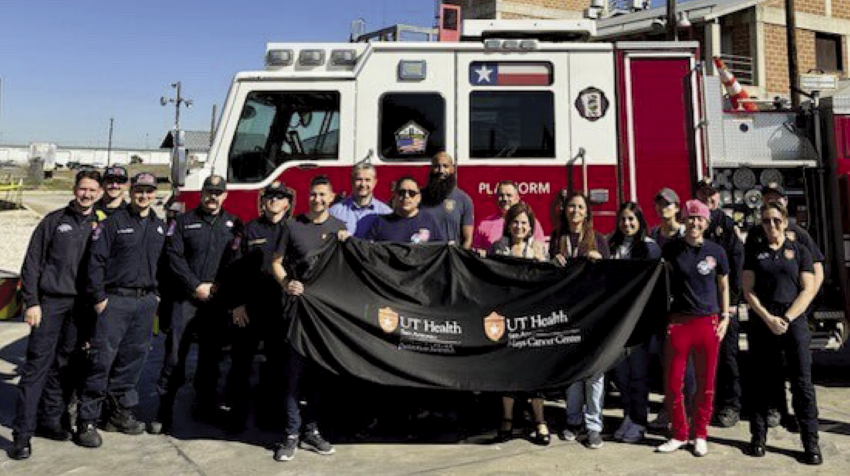
To help reduce the cancer risk among firefighters and emergency medical services personnel, SAFD, UT Health San Antonio and Sylvester’s Firefighter Cancer Initiative at the University of Miami have partnered to launch the San Antonio Firefighters Cancer Prevention Program. The program aims to better understand and reduce the burden of cancer among local first responders.
SAFD, which includes more than 1,800 fire and emergency personnel serving a population of over 1.4 million residents, created its Occupational Cancer Committee to address the issue. In 2024, the committee began working with UT Health San Antonio’s Institute for Health Promotion Research and its Mays Cancer Center’s community outreach and engagement team. Together, they also partnered with Sylvester’s Firefighter Cancer Initiative, which began in 2015. Now, the San Antonio Firefighters Cancer Prevention Program has started work.
“Our UT Health San Antonio team is already connecting with firefighters by sharing educational resources at SAFD health fairs,” said Amelie G. Ramirez, DrPH, MPH, director of the Institute for Health Promotion Research and associate director of community outreach and engagement at Mays Cancer Center. The program has also initiated an immediate response system with the Mays Cancer Center to provide cancer care referrals to firefighters who receive a cancer diagnosis.
“Our goal is to strengthen cancer prevention, education and expert care for the incredible firefighters and emergency responders who dedicate their lives to protecting our community,” Ramirez said.
Among the activities being explored through the program:
- Launching an annual cancer risk assessment study based on the national firefighter annual cancer cohort study of Sylvester’s Comprehensive Cancer Center.
- Tailoring Miami’s Firefighter Cancer Initiative educational resources for San Antonio firefighters and hosting educational sessions with the SAFD.
- Developing an additional referral and navigation system to connect SAFD firefighters to UT Health San Antonio and Mays Cancer Center providers for early cancer screening, diagnosis and survivorship programs.
- Connecting SAFD firefighters to cancer clinical trials and research studies at Mays Cancer Center.
- Identifying opportunities to advise the National Institute for Occupational Safety and Health (NIOSH) and other relevant stakeholders on a strategy to collect Firefighter Cancer Registry data.
- Collaborating with SAFD leaders to train UT Health San Antonio primary care providers on the unique screening needs and potential occupational or environmental exposures relevant to firefighters or emergency service personnel.
Ramirez said collaborators are unified in the goal to boost the well-being of local safety personnel.
“Firefighters dedicate their service and their lives to protect us. We should work just as hard to reduce
and prevent cancer within the firefighter community,” Ramirez said.