The state agency, Cancer Research Prevention Institute of Texas (CPRIT), which focuses on the fight against cancer, has now awarded $167 million to UT Health San Antonio since 2010.
Understanding obesity’s role in increasing liver cancer risk
Masahiro Morita, PhD, associate professor in the Department of Molecular Medicine and a researcher with the Sam and Ann Barshop Institute for Longevity and Aging Studies at UT Health San Antonio, received a $900,000 individual investigator award from CPRIT to study how obesity increases the risk of liver cancer by investigating the mechanisms by which excess nutrients lead to fatty liver and subsequently liver cancer.
“This understanding could lead to novel strategies for early detection, prevention and treatment of liver cancer, ultimately reducing the burden of obesity-associated cancer and improving patient outcomes,” Morita said.
The team, including co-investigators Francisco Cigarroa, MD, senior executive vice president for health affairs and health system at UT Health San Antonio, Blake Rasmussen, PhD, professor and chair in cellular and integrative physiology, who is affiliated with the Barshop Institute, Madesh Muniswamy, PhD, tenured professor of medicine in the Division of Cardiology, and Sakie Katsumura, DDS, PhD, assistant professor of molecular medicine, believe the findings will be particularly significant in regions like South Texas, where the incidence of liver cancer among obese individuals is notably high and could provide a foundation for targeted therapeutic interventions.
Advancing the fight against leukemia
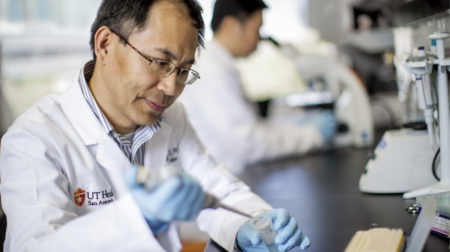
A $900,000 individual investigator award from CPRIT to Mingjiang Xu, PhD, professor in the Department of Molecular Medicine in the university’s Joe R. and Teresa Lozano Long School of Medicine, and distinguished chair in oncology at Mays Cancer Center, will support his research into identifying the role of TET2 gene mutations to develop future therapies targeting TET2-mutated myeloid malignancies.
“Along our investigation, we will identify potential specific therapeutic targets for the eradication of TET2-mutated cells,” Xu said. “Success of the proposed studies will fill a critical knowledge gap on how TET2 mutation leads to adult myeloid malignancies and clonal hematopoiesis and lay a solid foundation for future precision therapy developments targeting TET2-mutated myeloid malignancies and normal-aged individuals.”
Community-based intervention to increase HPV vaccination rates
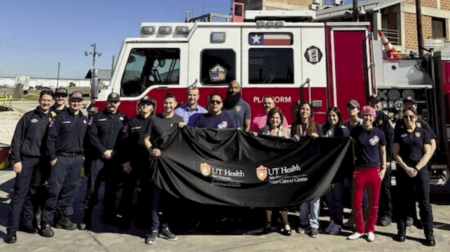
Erika L. Thompson, PhD, MPH, associate professor in the Department of Quantitative and Qualitative Health Sciences at the university’s Kate Marmion School of Public Health received a CPRIT prevention grant of $975,000 to fund a community-based intervention program to increase vaccination rates for the human papillomavirus (HPV) among adolescents in Bexar County. HPV can lead to several different types of cancers in men and women. Therefore, improving vaccination rates is an effective way to reduce cancer risk and help prevent HPV-related cancers.
The project will integrate and adapt the All for Them vaccination program, an evidence-based, bilingual initiative run by Paula Cuccaro, PhD, at UTHealth Houston School of Public Health for the delivery and coordination of the social marketing campaign. The university’s School of Nursing will deliver the HPV vaccines. The team will collaborate with community organizations and community health workers who work closely with underserved communities to administer community-wide vaccination services, including in after-school programs.
“The project’s focus on reaching underserved populations ensures that it addresses the most pressing barriers to vaccination,” Thompson said. “By increasing community demand for the HPV vaccine, improving access to vaccination services, and building trust in vaccine safety and efficacy, this intervention aims to advance efforts to reduce HPV-related cancer incidences and mortality in Texas.”
Developing technologies that target drug-resistant cancers
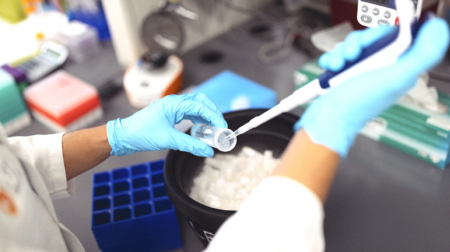
Daohong Zhou, MD, tenured professor in the Department of Biochemistry and Structural Biology in the Long School of Medicine, received CPRIT’s academic research award of over $2.4 million to expand UT Health San Antonio’s core facilities laboratories to increase researchers’ capabilities to better identify therapeutic targets and develop technologies to target hard-to-treat cancers.
Zhou, who serves as the director of the Target Discovery Core at the Greehey Children’s Cancer Research Institute at UT Health San Antonio, associate director for drug development at the Mays Cancer Center and director of the institution’s Center for Innovative Drug Discovery, shared that while there has been significant progress in treating cancers, we are still facing big challenges, especially with certain tough-to-treat pediatric and adult cancers like brain tumors, soft tissue sarcomas and those that do not respond well to current therapies.
“However, the absence of core facilities for target identification and validation (TIV) in Texas has limited the success in discovering and developing new cancer therapeutics because TIV is essential for drug discovery and development,” Zhou said. “In addition, the CPRIT award will allow us to acquire and develop new TIV technologies, including the state-of-the-art arrayed CRISPR knockout screening for TIV and groundbreaking small molecule degrader (SMD) discovery platform for screening SMDs to target undruggable proteins, which are not available in any other core facilities in Texas.”
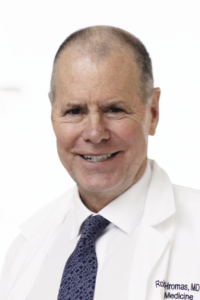
Robert A. Hromas, MD, FACP, dean of the Long School of Medicine at UT San Antonio.
“Advancing research to find cures for cancers, particularly those that disproportionately affect the populations of San Antonio and South Texas, is not only our mission, it is the passion that fuels our daily work to make lives better.”
Share this post!
Sorry, there are no other posts in the 2025 issue of Mays Cancer Center Annual Report


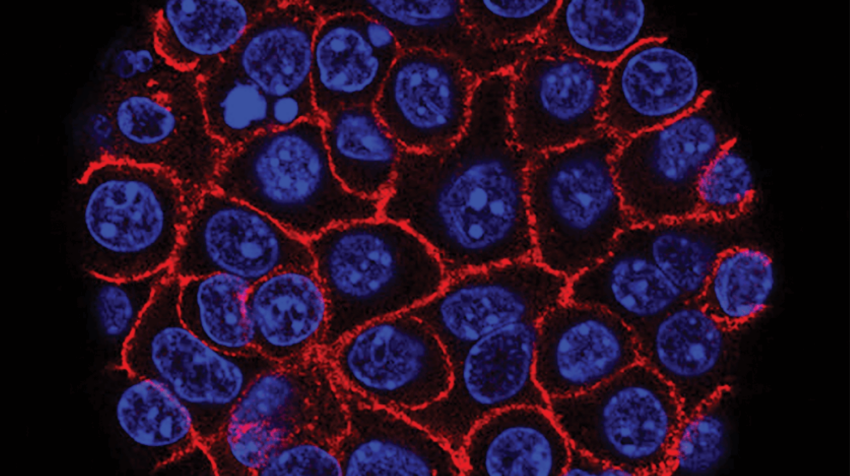
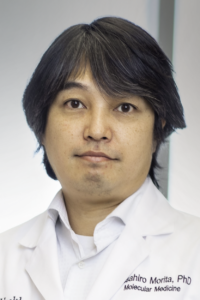 Masahiro Morita, PhD, associate professor in the Department of Molecular Medicine and a researcher with the Sam and Ann Barshop Institute for Longevity and Aging Studies at UT Health San Antonio, received a $900,000 individual investigator award from CPRIT to study how obesity increases the risk of liver cancer by investigating the mechanisms by which excess nutrients lead to fatty liver and subsequently liver cancer.
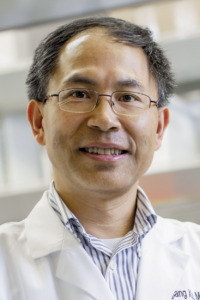 A $900,000 individual investigator award from CPRIT to Mingjiang Xu, PhD, professor in the Department of Molecular Medicine in the university’s Joe R. and Teresa Lozano Long School of Medicine, and distinguished chair in oncology at Mays Cancer Center, will support his research into identifying the role of TET2 gene mutations to develop future therapies targeting TET2-mutated myeloid malignancies.
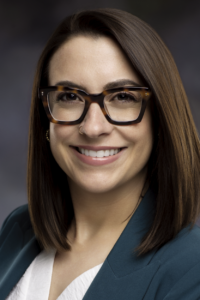 Erika L. Thompson, PhD, MPH, associate professor in the Department of Quantitative and Qualitative Health Sciences at the university’s Kate Marmion School of Public Health received a CPRIT prevention grant of $975,000 to fund a community-based intervention program to increase vaccination rates for the human papillomavirus (HPV) among adolescents in Bexar County. HPV can lead to several different types of cancers in men and women. Therefore, improving vaccination rates is an effective way to reduce cancer risk and help prevent HPV-related cancers.
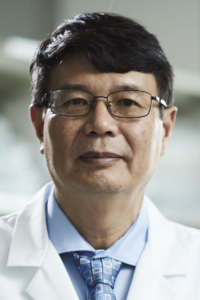 Daohong Zhou, MD, tenured professor in the Department of Biochemistry and Structural Biology in the Long School of Medicine, received CPRIT’s academic research award of over $2.4 million to expand UT Health San Antonio’s core facilities laboratories to increase researchers’ capabilities to better identify therapeutic targets and develop technologies to target hard-to-treat cancers.