
A call to heal, a call to serve
Alumnus gives back through mentoring and more
Implementing an externship was a longtime dream of James L. "Larry" Holly, M.D., Class of 1973. This past summer, his vision of educating students and serving on the faculty came to fruition when Summer Scavone, a fourth-year medical student, entered his practice, South East Texas Medical Associates (SETMA), to embark on a four-week patient-centered medical home externship. "My experience with Dr. Holly, in one word, was inspiring," said Scavone. "This rotation helped me see the difference between technician and healer - two things that any physician can be. The environment that Dr. Holly and his colleagues have built is one that I would like to work in and emulate in my future."
Dr. Holly’s path to becoming the exemplary physician he is today and the extraordinary journey which led him there began many years ago with his initial calling as a physician. While in graduate school, he and his wife, Carolyn, knew his vocation was one of service. Initially, he considered becoming a minister, but after careful discernment, "I saw a mission and ministry in being a physician," he said. "Both vocations help meet the desperate needs of people."
Upon attending the Health Science Center, he fell in love with biochemistry and physiology. "It was new and exciting," he said, comparing it to his undergraduate background in history and philosophy. "There was no part that I didn’t like." In addition to being active in several student organizations on campus, he served on the Association of American Medical Colleges (AAMC) executive committee as its first student member, where he voted on the Health Science Center’s medical school accreditation. Among his mentors, he credits Marvin S. Forland, M.D., former associate dean for clinical affairs in the Long School of Medicine; Elliot Weser, M.D., emeritus professor of medicine; and F. Carter Pannill, M.D., former dean of the Long School of Medicine. Their guidance inspired him to become a mentor and later establish the externship at SETMA where he would in turn become a mentor to future physicians.
After graduation, Dr. Holly completed his internship in internal medicine. Following 20 years in private practice in Beaumont, in 1995, he established a multispecialty group practice in Beaumont where he now serves as its CEO. In 2010, Southeast Texas Medical Associates became a patient-centered medical home. Among his many innovative approaches to patient care, Dr. Holly pioneered electronic medical records and electronic patient management. He is a recognized national leader in health care informatics. SETMA has been recognized with many honors, including the Ambulatory Care Davies Award of Excellence and as an affiliate of the Joslin Diabetes Center affiliated with Harvard Medical School. Within the past 18 years, SETMA has grown to five locations with care in family practice, pediatrics, internal medicine, ophthalmology, cardiology, neurology and endocrinology. Further expansion is planned. Dr. Holly serves on the National Quality Forum Endocrine Steering Committee and on the Health Information Management Systems Society (HIMSS) Innovation Standing Committee.
"Working in a patient-centered medical home is where community and population medicine is best practiced, and it was a privilege to see all of this firsthand," Scavone said. "I know that the model of patient-centered medical home is about collaboration and cooperation among health care teams and patients. My experience here is helping me decide which residency programs I want to pursue."
Driven by his personal motto, which is inspired by the Bible, Romans 13:8 - "Let no debt remain outstanding, except the continuing debt to love one another, for whoever loves others has fulfilled the law" - Dr. Holly and his partners created the SETMA Foundation to fund care for patients who cannot afford medical care and other necessities.
Dr. Holly said his heart never left the Health Science Center, where he served as president of the School of Medicine alumni association from 2006 to 2010. In honor of his outstanding service, he was recognized with the 2012 Distinguished Alumni Award from the Long School of Medicine. He was named adjunct professor in the Department of Family and Community Medicine and is regularly seen on the Long campus giving lectures and participating in alumni activities.
"The quality of a school is determined by the quality of the alumni who give back to it," he said. "The Health Science Center is an exemplary place and through our support we say to our community, ‘This is the place where we want to invest our resources.’"
Scavone concurs. "One of the most important lessons that I learned from Dr. Holly and this rotation is that you are never too old to create change in other peoples’ lives," she said. "As a future family physician, I look forward to practicing medicine holistically alongside my patients. The patient-centered medical home rotation has been a stepping stone in the right direction."
The Dr. and Mrs. James L. Holly legacy at the Health Science Center includes the following endowments:
- Dr. & Mrs. Holly Distinguished Professorship in Patient-Centered Medical Home
- School of Medicine Class of 1973 Endowed Scholarship
- School of Medicine Class of 2010 Endowed Scholarship
- Wirt E. Bellue, Sr., & William Richmond Holly, Sr., Distinguished Lectureship in Patient-Centered Medical Home
- Dr. Daniel G. Duke Memorial Endowment for Music and Medicine
- Initial funding for the Primary Care Institute
In 2011, one of Dr. Holly’s longtime patients, Wayne A. Reaud, chairman and founder of the Beaumont Foundation of America, donated $1 million to update the Health Science Center auditorium, which is now named in honor of Dr. Holly and his wife Carolyn.
For more information
Click to view The extensive Patient-CenteredMedical Home Externship Syllabus,written by Dr. Holly.
Taking it to heart
Researcher felt cancer firsthand
Nevertheless, that’s where he finds himself today, with a special focus on survivorship issues: specifically, the cardiac problems that can plague cancer survivors decades after a recovery.
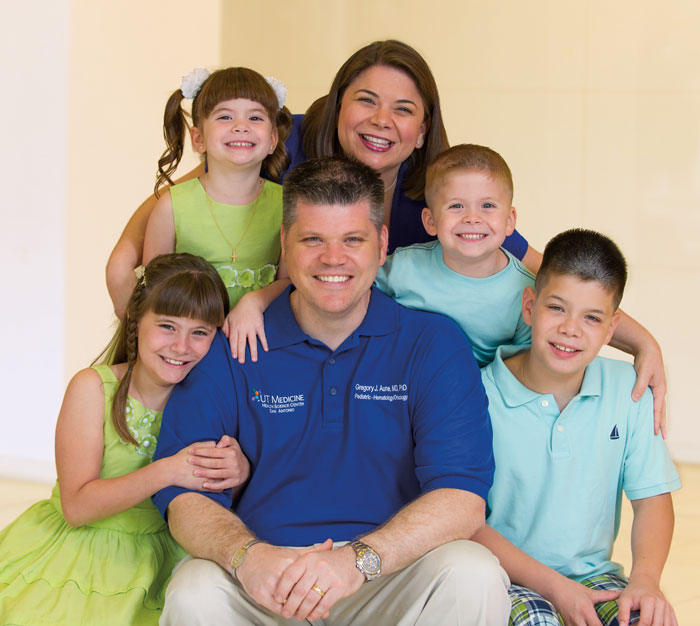
More than 20 years after the sports-loving high school kid was diagnosed with Hodgkin’s disease, Gregory Aune, M.D., Ph.D., is a pediatric oncologist in the Long School of Medicine at the UT Health Science Center San Antonio. He’s establishing a lab that approaches chemotherapy-induced heart problems from two perspectives: that of pediatric oncologist and laboratory cancer scientist. He is also the first graduate of the pediatric hematology-oncology fellowship made possible by the Greehey Pediatric Fellowship in Hematology Oncology endowment.
Things would have been different for Dr. Aune without that diagnosis. He might have gone into coaching or journalism instead of medicine. He would not have donated sperm in anticipation of the harsh cancer treatments that would destroy his fertility, and he would not have the two sets of twins who romp with him and his wife, neonatologist Christine Aune, M.D.
But as a 16-year-old he suffered through 10 months of chemotherapy, losing 80 pounds and a year of school. He developed severe abdominal pain from chemotherapy-induced paralytic ileus, a serious shutdown of his digestive system.
Dr. Aune says he behaved like many teenagers receiving cancer therapy and was not eager to talk about his symptoms. He waited a week to tell anybody about the abdominal pain. After that he had to receive his nutrition intravenously for several months.
So over time, as much as Dr. Aune had once wanted to get away from that environment, "all that toxicity got me thinking that there has to be a better way to do this."
It’s also given him a deeper understanding of what his young patients are going through, even when they try to keep it inside.
"I’m saying, ‘What’s going on in there? I know you’re not telling me stuff.’"
Dr. Aune focused on medical research throughout college, medical school, and graduate school. Later, when he gave a talk during his pediatric residency at Johns Hopkins on the health problems related to cancer survivorship, he was stunned at how many people approached him to say they hadn’t thought about those issues before. With 13 million adult and pediatric cancer survivors in the United States today and 20 million projected by 2022, both groups face significant and special health issues. To Dr. Aune it was obvious.
He continued his work, coming to the Health Science Center in 2008 to begin fellowship training in pediatric hematology-oncology. About that time he began to suffer from increasing exhaustion and shortness of breath. For a while he blamed his fatigue on the demands life puts on two busy physicians with four small children. Then he was diagnosed with critical aortic valve stenosis.
During the pre-surgical work-up to replace his aortic valve, his cardiologist insisted his coronary arteries would be clear because of his young age of 35. But with his knowledge of survivorship studies, Dr. Aune was not surprised to learn he also was suffering from severe coronary artery disease.
That life-threatening experience steered Dr. Aune’s research from experimental cancer therapeutics into an area of emerging importance - the basic science of cardiac disease in pediatric cancer survivors. But building momentum for this new area of research is challenging in a world focused on cures.
"The world of oncology and cancer research is set up to keep doing what it’s doing now, and what drives it is developing new medications to treat cancer," Dr. Aune said. "That has worked fantastically well in pediatric cancer - survival rates are so much higher now - but there needs to be some thought about the huge numbers of survivors.
"With a more basic understanding of how chemotherapy damages normal tissues such as the heart, we can begin to develop new medicines that protect vulnerable organs from the damage that results in late health effects in survivors."
Dr. Aune’s lab has developed a method to use advanced echocardiography to study the hearts of pediatric mice. He and his fellow researchers will use this as a tool to study cardiac function in mice that are given chemotherapy at a young age. "This is our model for the cardiac problems we see in childhood cancer survivors," he said.
It’s easy for Dr. Aune to talk about survivorship as a scientist and a physician. It’s harder to think about the health risks from a personal perspective. It would almost be better, he said, if he didn’t know.
"But I think it takes someone with that perspective to actually change how we practice."

From lab to clinic: Cancer survivors, patients benefit at CTRC
Gregory Aune, M.D., Ph.D., a pediatric oncologist, is just one of many physician-scientists at the UT Health Science Center who, through cutting-edge research, is paving the way for new treatments for cancer patients and survivors.

Just about a half mile from the university’s main campus is the Cancer Therapy & Research Center (CTRC) where investigators, like Dr. Aune, conduct their studies. Patients directly benefit from discoveries made here that are translated into tailored treatment and compassionate care.
Martha Arredondo has experienced that care firsthand.
Arredondo’s parents had sheltered her from the worst news on her cancer diagnosis at age 13.
"They all said I would be okay," Martha said, "so I figured I would be okay."
But her parents bore the heavy weight of knowledge: Martha had developed a malignant gastrointestinal stromal tumor. It was rare to begin with, and even rarer in young females. They were told that she wouldn’t make it to age 16.

Now 29, Martha has graduated from childhood cancer survivor to adult cancer survivor, and has two children of her own.
During that time she fought the cancer’s return several times – in her stomach, liver and even her brain – with the help of CTRC physicians and staff.
They are her friends. And as a veteran cancer patient, Martha knows how important that is.
"It’s amazing. I have so many friends there. At CTRC when the nurses have a break, they’ll come out of their way to talk to you. They always ask about my kids and my husband."
"It makes it a lot easier for you to handle whatever it is that you’re going through at that moment. I’ve had so many experiences where it helped a lot."
Martha protects her own boys from many details of her illness, but they’re acquainted with the CTRC.
"My son calls the nurses ‘the snack doctors.’ They would send snacks for him, so when I would get home he would ask, ‘Did you see the snack doctor?’"
She had a long relationship with her oncologist as well. Kamalesh Sankhala, M.D., saw Martha when he was a fellow helping to establish the sarcoma clinic at the CTRC. When he returned as a board-certified internal medicine specialist she became his patient again.
"He was super nice and professional then, and he hadn’t changed," she said.
 For more information
The Cancer Therapy & Research Center (CTRC) at the UT Health Science Center San Antonio is one of the elite academic cancer centers in the country to be named a National Cancer Institute (NCI) Designated Cancer Center, and is one of only four in Texas. A leader in developing new drugs to treat cancer, the CTRC Institute for Drug Development (IDD) conducts one of the largest oncology Phase I clinical drug programs in the world, and participates in development of cancer drugs approved by the U.S. Food & Drug Administration. For more information, visit cancer.uthscsa.edu.

Hargrove is trailblazer in forensics field

Solving mysteries comes naturally to Veronica Hargrove, Ph.D., M.S. As chief toxicologist of the Bexar County Medical Examiner’s Office, she leads a team of 10 who study how drugs and poisonous substances play a role in many impairments and deaths in criminal cases.
Dr. Hargrove is the first woman at the Bexar County Medical Examiner’s Office to hold this position. Although more women are entering the field, toxicology historically has been a male-dominated field.
Her path to this fascinating career began during her studies as a graduate student in the Forensic and Analytical Toxicology program in the Health Science Center’s School of Health Professions. "It was a great program that opened my eyes to a lot of specialties such as environmental toxicology, clinical toxicology and post-mortem toxicology." A six-week rotation at the Bexar County Medical Examiner’s Office, located on the Health Science Center’s Joe R. and Teresa Lozano Long (main) campus, sparked her interest in post-mortem toxicology. "I loved working in the lab and thought it was interesting to see how toxicology could play a role in deaths," she said. "It helps give families closure to the passing of their loved ones who may have died unexpectedly."
This program stood out in a very particular way to Dr. Hargrove. "When I finished the practicum I knew that’s what I wanted to do," she said. About six months later, a toxicology chemist position opened at the Medical Examiner’s Office. She was called by the office and was hired on the spot. Soon after graduating in 2007, she pursued her Ph.D. in pharmacology in the Health Science Center’s Graduate School of Biomedical Sciences and became certified by the American Board of Forensic Toxicology as a forensic toxicology specialist. She was appointed chief toxicologist and completed her Ph.D. in 2013.
Dr. Hargrove speaks humbly about her advancement and appointment as chief toxicologist and credits her success to the influence of her professors at the Health Science Center. "I had a lot of personal interaction from professors who guided me every step of the way," she said. "They were role models to me both personally and professionally and showed me how to help students, who now I enjoy mentoring."
Today, she runs the post-mortem lab and oversees approximately 2,500 cases per year, helping determine cause of death. Additionally, the Medical Examiner’s Office handles some toxicology testing for persons who are suspected of driving under the influence. These cases have dramatically increased from approximately 250 to 4,000 cases annually since the enactment of the mandatory blood-draw law in Bexar County.
She and her team run thousands of drug panels yearly and oftentimes quantitate their findings. Although blood is primarily tested, urine and tissue, such as muscle, are also included in testing samples at times in the investigation. "Illegal drugs. Prescription drugs. Heavy metals. Cyanide. If it’s poisonous, even if it’snot a drug, if it can kill you; we’ll look for it," she said. Once the investigation is complete, it is sent to the medical examiner, and, together, they review the entire case to confidently determine a cause of death. In this process she helps the medical examiner with researching and interpreting various findings, such as determining combinations, concentrations and influences of drugs, alcohol and poisons.
"Interpretation is what I enjoy most about my job," she said. "Seeing an entire case and determining if and how a drug caused a death continues to intrigue me."
Learning never stops for Dr. Hargrove, and to her, it is second nature. "The Health Science Center absolutely prepared me for the position that I have today. I am very thankful to the schools for their programs and professors," she said. "They prepared me for a career that I love and a job that allows me to do so much for others in our community."
Alumnus serves, saves in Boston attack

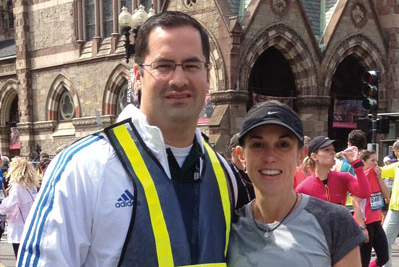
San Antonio cardiologist and UT Health Science Center alumnus Jorge A. Alvarez, M.D., and his wife, Rebecca, are avid runners. They enjoy the spirit and excitement of participating in various runs and marathons. Oftentimes Dr. Alvarez volunteers in a medical tent where he treats runners for minor aches and exhaustion while Rebecca runs.
But routine injuries and fatigue turned into life-threatening lacerations and catastrophe during the Boston Marathon April 15. That afternoon, Dr. Alvarez was stationed as a medical volunteer near the finish line and proudly greeted his wife when she crossed.
Twenty minutes later, their celebration turned to turmoil when a thunderous boom exploded nearby. Two bombs detonated near the finish line.
Instinctively, Dr. Alvarez, who was not hurt, rushed toward the scene - a ubiquitous fog of smoke and confusion. Blood and the wounded were scattered about. He immediately tended to the gravely injured while others hurried to offer help.
"I remembered the mantra ‘life over limb’ taught during clinicals in medical school," Dr. Alvarez said. "I used anything I could find - hoses, tubes and my belt - as tourniquets."
Authorities quickly cleared and secured the area. Dr. Alvarez was among the last to leave the scene as he helped move the wounded to a safe location nearby where he continued to attend to their injuries and waited for emergency responders to transport them to hospitals.
Later, Dr. Alvarez was tearfully reunited with his wife at a hotel nearby. She was unharmed.
Ultimately, dozens of lives were saved because of Dr. Alvarez’s quick and selfless response and the help of other volunteers.
"It’s what we are trained to do," he said. "The root of being human is compassion and that is what we are called to give."
Although his actions are considered heroic, Dr. Alvarez shies away from praise. "A hero wears a cape," he said. "I wear a white coat. The white coat means I’m here to help. I’m here to serve."
Natalie Gutierrez contributed to this story.

Targeting tumors, protecting tissue, saving lives
Researchers offer new treatment to brain cancer patients
 When Terra Bibb came to the Cancer Therapy & Research Center (CTRC) to meet with Dr. Andrew Brenner, she was desperate.
At eight months pregnant with her third child, Bibb was diagnosed with a deadly brain tumor. In a dramatic double surgery, doctors delivered her baby and then removed the tumor, and then Bibb underwent the best approved therapies available - chemotherapy and radiation. It was a fight that Terra Bibb and her entire family willingly took on, but very soon thereafter, the tumor began growing back.
Dr. Brenner had something else to offer her: a drug that was still in clinical trials.
"It was a miracle," Bibb said. "They gave me, tops, six to 12 months to live when I was diagnosed with a grade 4 glioblastoma - and I’m here."
Almost three years later, Bibb’s tumor has shrunk to almost nothing, and with few side effects, the mother of three is able to keep up with her three busy boys and the things that are most important to her.
"Dr. Brenner was so excited when he knew he could get me on this study," she said. "He had a reason to be excited, because it’s worked, more than even he thought it would."
For Bibb, it was also a modern wonder to be able to take this experimental therapy in the form of a pill. It was also a huge help for her, as the young family had moved to Tyler, Texas.
"To have a chemo in a pill form - that’s amazing to me. It’s so important to do that kind of research."
Clinical trials don’t just give researchers the opportunity to test new drugs. They also help find new ways of delivering known therapies so that they will be more effective.
Dr. Brenner is in the midst of developing a clinical trial for just such a promising new method of delivery.

Terra Bibb is pictured with her grandfather, Raymond Shelton, and son, Parker, 3.
See video on Terra's story.
For the past 40 years, radiation has been the most effective method for treating deadly brain tumors called glioblastomas. Although the targeting technology has been refined, beams of radiation still must pass through healthy brain tissue to reach the tumor, and patients can only tolerate small amounts before developing serious side effects.
A group of researchers at the UT Health Science Center San Antonio has developed a way to deliver nanoparticle radiation directly to the brain tumor and keep it there. The method doses the tumor itself with much higher levels of radiation - 20 to 30 times the current dose of radiation therapy to patients - but spares a much greater area of brain tissue.
The study, published today in the journal Neuro-Oncology, has been successful enough in laboratory experiments that they’re preparing to start a clinical trial at the Cancer Therapy & Research Center, said Andrew Brenner, M.D., Ph.D., the study’s corresponding author and a neuro-oncologist at the CTRC who will lead the clinical trial.
"We saw that we could deliver much higher doses of radiation in animal models," Dr. Brenner said. "We were able to give it safely and to completely eradicate tumors."
The radiation comes in the form of an isotope called rhenium-186, which has a short half-life. Once placed inside the tumor, the rhenium emits radiation that only extends out a few millimeters.
But simply putting the rhenium into a brain tumor would not work well without a way to keep it there - the tiny particles would be picked up by the bloodstream and carried away. That problem was solved by a team led by nuclear medicine physician William T. Phillips, M.D., and biochemist Beth A. Goins, Ph.D., in the Department of Radiology; and Ande Bao, Ph.D., a medical physicist and pharmaceutical chemist in the Department of Otolaryngology, all of the Long School of Medicine at the Health Science Center. They encapsulated the rhenium in minuscule fat molecules, or liposomes, about 100 nanometers across.
"The technology is unique," Dr. Brenner said. "Only we can load the liposomes to these very high radioactivity levels using a specific compound called BMEDA made to trap radiation in these tiny fat molecules. This compound was not available before Drs. Goins and Phillips created it. Now we can deliver these radioactive liposomes into the tumor where the cancer cells eat them up."
The doctors hope to launch the clinical trial by summer.
"Patients like Terra are the reason I do what I do every day," Dr. Brenner said. "My job is to find new ways in the lab to kill brain tumors and then take these remedies into the clinic to help my patients. Sometimes it means trying something that no one else has thought of, or teaming up with other scientists. Of utmost importance is our role in helping our patients live as normally as possible, and we are committed to doing that any way we can."
For more information about clinical trials at the CTRC, call 210-450-5798.

Keeping kids healthy

Amelia Quiroga was diagnosed with Type 2 diabetes when she was 16 years old and immediately enrolled in the TODAY study at the UT Health Science Center San Antonio. Three of her five siblings also have diabetes. During the course of the study, Amelia became a mother, which has since changed her view of the disease and how she cares for herself and her daughter, Julianna, 2. Today, Amelia is 24, studying to be a radiology technician and working as a dispatcher for a towing company. "Because of my family history and what I learned from the TODAY study, I know my daughter has a 75 percent chance of developing diabetes," she said. "Even though I’m busy, I take time to look at the nutritional value of everything my daughter and I eat. I want her to be healthy and diabetes free for the long run."

Learning TODAY for a healthy tomorrow

National study brings Type 2 diabetes discoveries to light, gives patients healthy options
At 5 years old, Richard Zarate’s skin began to change. Dark, rough patches began to appear along his neckline. When he turned 10 and entered the fifth grade, Richard experienced more unusual changes in his health. He was constantly thirsty and made more frequent trips to the bathroom to urinate. His mother, Christine, who is a nurse, was alarmed by the changes. Using her own blood-glucose monitoring device, she checked her son’s sugar levels. They were very high, so Christine rushed him to the emergency room. Richard was diagnosed with Type 2 diabetes.
Researchers at the UT Health Science Center San Antonio led a national study that has revealed a frightening fact - Type 2 diabetes is becoming more prevalent in children aged 10 to 17 and is more aggressive and deadly in children than in adults.
Richard and his mom were quickly referred to the Texas Diabetes Institute, one of the nation’s largest and comprehensive diabetes and endocrinology centers operated by University Health System, which is the teaching hospital for the UT Health Science Center. There they learned of the TODAY study, a national collaborative clinical trial for children and adolescents with Type 2 diabetes. TODAY stands for Treatment Options for Type 2 Diabetes in Adolescents and Youth. The UT Health Science Center is one of 16 sites throughout the country and one of only two in Texas funded by the National Institute of Diabetes and Digestive and Kidney Diseases to enroll patients. The goal of the study is to improve treatment and outcomes for children with Type 2 diabetes.
Christine was, at first, skeptical of the study and thought she could handle her son’s health situation. "Both of my parents have Type 2 diabetes, and I was diagnosed when I was 40 years old," she said.
But Richard had an instinct about the program.
"Mom, maybe they can help me," he suggested. "Maybe something good can come from this." A year later, Richard convinced his mom, and in 2006 he became a part of TODAY. Richard is one of 699 children and adolescents with Type 2 diabetes nationwide who were enrolled in the study from 2004 to 2009.

According to the U.S. Centers for Disease Control and Prevention (CDC), diabetes is becoming one of the most common chronic, preventable diseases among children in the United States. Family history, obesity and the low level of physical activity among young people may be major contributors to the increase in Type 2 diabetes during childhood and adolescence.
[pexyoutube pex_attr_src="https://www.youtube.com/watch?v=uIr2CB027q8"][/pexyoutube]
Daniel Hale, M.D., professor and chief of the Division of Pediatric Endocrinology, and Jane Lynch, M.D., professor of pediatric endocrinology at the UT Health Science Center, are the lead investigators of the San Antonio study and they and their staff are authors of an article revealing their findings published in an April 2012 issue of the New England Journal of Medicine.
Patients aged 10 to 17 whose body mass index (BMI) indicated that they were overweight or obese received a minimum of six weeks to a maximum of six months of comprehensive, standardized diabetes education, including diet and exercise counseling from diabetes educators and were then randomly assigned to one of three groups: 1.) treatment with metformin alone; 2.) treatment with the drugs metformin and rosiglitazone (rosiglitazone is currently FDA-approved for therapy for adults only with Type 2 diabetes); or 3.) treatment with metformin and lifestyle intervention, which included diet and exercise counseling. Metformin and insulin are currently the only FDA-approved forms of therapy for children with Type 2 diabetes.
"Standard education was provided at the beginning to give the participants a good knowledge base," said Aimee D. Wauters, M.S., RD, LD, CDE, a senior dietitian and diabetes educator with the TODAY study. "At every visit throughout the study, all of the participants had access to a diabetes educator, and everyone had tailored, customized education and health care based on what was happening to them," she said.
Researchers found that children who were given the combined therapy of metformin plus rosiglitazone did not have significantly better outcomes compared to children who were administered the metformin alone or who took metformin and had lifestyle intervention. Fifty two percent of children on metformin alone, nearly 40 percent of patients on metformin plus rosiglitazone, and 47 percent of children on metformin plus lifestyle intervention lost their ability to produce insulin and had to be placed on insulin therapy. The children in the combined therapy group of metformin plus rosiglitazone lost their ability to produce insulin later than the children in the group taking metformin alone and those taking metformin with a lifestyle intervention.
Richard responded well to the metformin. "I wish I would have enrolled him right away because we could have gotten it under control a lot better sooner," Christine said. "I could have kicked myself." But mom and son are optimistic and moving forward. Among the many new approaches they’ve taken to adopt a healthier lifestyle - making their own sodas and vegetable chips.Today, Richard is a bright 17-year-old who dreams of becoming a chef or a physician - career opportunities influenced by his experience with Type 2 diabetes. He also serves as a "big brother" to fellow youths and encourages them to see their doctors if they describe symptoms similar to what he experienced. He enjoys offering them positive advice on how to maintain a healthy lifestyle.
Researchers said unfortunately, most patients are not as compliant as Richard and consequentially experience serious, irreversible long-term damage, including neuropathy (nerve damage), or develop kidney or cardiovascular disease. Twenty two percent of the children in the study developed secondary complications, including high blood pressure and high cholesterol.
"This study showed us that Type 2 diabetes in children is more aggressive, progressive and different than Type 2 diabetes in adults," said Rose Ann Barajas, study coordinator. "If this frightening trend continues, this generation of children will be the first who will not outlive their parents. Parents will have to bury their children."
The study also revealed insight on how rapidly the disease progresses in children and adolescents. "This is really contrary to what we know about pediatric illnesses," Dr. Lynch said. "This disease is more aggressive than previously thought, with many more complications."
Dr. Hale added, "Typically children are more resilient across all chronic and acute illnesses compared to adults. This disease is ravaging kids at a faster rate."
Researchers said these findings will be published in the future. A continuation of the study, called TODAY 2 Phase I, is under way, and will follow the cohort of participants to track how Type 2 diabetes progresses.
Dr. Hale’s healthy lifestyle tips
- Turn off the television, computers and video games. Have no more than two hours of screen time a day for children older than 2. Read a book, play a game or talk instead.
- Have at least one hour of vigorous physical activity every day for children and adults.
- Put aside sodas, sports drinks and juices. Make water and low-fat milk the only beverages available at home.
- Treat fast food as a treat by consuming it once per week or less. Beware of any meal greater than 500 calories.
- Make healthy snacks from fruits and vegetables. Beware of all other foods labeled "snacks."
Obesity may contribute to Type 2 diabetes
- Type 2 diabetes costs as much as one-third of the U.S. military budget.
- More than one in three children in Texas is overweight.
- Over the past three decades, the childhood obesity rate has more than doubled for preschool children aged 2 to 5 years and adolescents aged 12 to 19 years and has more than tripled for children aged 6 to 11 years.
Sources: U.S. Centers for Disease Control and the Texas Department of State Health Services
Natalie Gutierrez contributed to this story.
Zarate Family Fruit Soda recipe
4 cups water
1 cup fruit (except citrus)
1/4 cup sugar substitute
Carbonated water
Mash fruit and add to water in a sauce pan; bring to a boil. As soon as the mixture boils, bring down to a simmer and let simmer for 20 to 30 minutes to reduce mixture. Strain mixture to remove pulp and sweeten with sugar substitute. Place from 1 tablespoon to 1/4 cup of mixture in a large glass with ice and fill with carbonated water. Enjoy!
Arming the aging immune system to fight cancer

But a study from The University of Texas Health Science Center at San Antonio shows that some types of immunotherapy previously thought to work only in younger patients can be used to help the elderly, with less toxic effects than many common therapies, if combined in ways that account for age-related changes in the immune system.
"We’ve shown that immunotherapy for cancer not only works in aged mice, but actually can work better in aged hosts than in young counterparts by capitalizing on the immune changes that happen with age," said Tyler Curiel, M.D., M.P.H., a professor in the School of Medicine at the Health Science Center and principal investigator of the study, published April 15 in Cancer Research.
As you age, most parts of your body begin to wear out. They keep doing what they’re made to do, Dr. Curiel said, but over time, they don’t do it as well. The general perception is that the immune system also simply declines with age. "That’s really too simplistic," he said. "That’s really not the full picture of what’s happening."
The body’s immune system does weaken with age, but it also changes, and that changes the rules for fighting disease within the body.
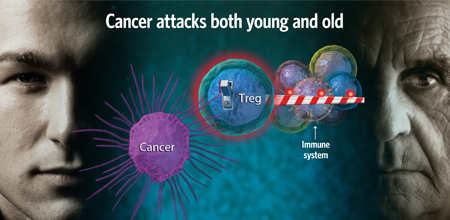
Dr. Curiel’s group started by examining an immune therapy that they previously had shown to work in younger hosts, including cancer patients. It’s designed to eliminate regulatory T cells (called Tregs), which are cells that turn off immune responses and allow cancer to progress. Tregs increase in cancer. In young hosts, the drug turns off Treg activity, allowing the immune system to function better. In older hosts, even though the drug turns off the Tregs, it has no clinical benefit.
Dr. Curiel asked the question why, and in this paper his team explains the answer. In older mice, when the drug turned off the Tregs, the researchers found that another type of immune suppressor cell (a myeloid-derived suppressor cell or MDSC) exploded in number to take the Tregs’ place, hampering clinical efficacy. That did not happen in young mice.
The team added a second drug that targets the MDSC, and found that with those tools to help immunity, the older hosts can combat cancer just as well as the younger hosts. Adding the second drug afforded no clinical benefit to young hosts, as their MDSC numbers had not increased.
"We’ve shown that an aged immune system can combat cancer just as well as a young one if you remove the impediments to successful immunity, which are different than those in younger hosts," Dr. Curiel said.
"We’ve shown that if you test all your immune therapy just in young mice and young people, you’ll never learn how it works in older patients — the ones most at risk for cancer. You might conclude that drugs don’t work in aged hosts, when they do. But they have to be combined with some help."
After discovering this in melanoma, the researchers then looked at whether the same action held true in colon cancer, a major cancer killer in the elderly.
"The details were different in colon cancer. The bad immune cells that increased in the aged mice and how they were knocked down by the drugs were different than in melanoma," Dr. Curiel said. "But the result was the same — we identified a drug combination that was highly effective in the aged mice."
That means that not only must this strategy be developed with regard to the age of the patient, he said, it also must be specific to the cancer.
"It’s a bit complicated, but it’s possible to put into practice, and because these approaches could be so much more specific and so much better tolerated than conventional chemotherapy, it is well worth pursuing."
The next step is to test these concepts in an immune therapy clinical trial for elderly patients, which the research team plans to do, Dr. Curiel said.
Dr. Curiel said he is grateful to the Max and Minnie Tomerlin Voelcker Fund; the Holly Beach Public Library Association; the William and Ella Owens Medical Research Foundation; the Mike Hogg Fund of Houston; the Robert Tucker Hayes Foundation; and the Fannie E. Rippel Foundation for funding this work. The National Cancer Institute (NCI), a division of the National Institutes of Health also supplied grants.
Grants from the NCI were no. P30 CA054174 and no. RO1 ca105207.

Firsts in the field
Banker, Glass pave way for future female dentists
Upon entering the UT Health Science Center at San Antonio’s Dental School in 1971, Birgit Junfen Glass, D.D.S., M.S., and Cynthia Banker, D.D.S., M.A., didn’t consider themselves to be trailblazers.
They simply fell in love with the field of dentistry and shared the same vision of helping patients. Yet, the two were indeed pioneers of their profession as they became the first females to graduate from the Dental School in 1975.
They addressed new and important issues in their field, including the development of new techniques, procedures and academic approaches. After graduation, Drs. Glass and Banker took different paths. For Dr. Glass, it was a career in academics. For Dr. Banker, it was a call to private practice.
With the Dental School rapidly growing at that time, Dr. Glass was recruited as an instructor in the Departments of Dental Diagnostic Science and General Dentistry, and was one of the Dental School’s first female faculty members. Since 1995, she has served as the associate dean for academic affairs and continues her appointment as a tenured professor in the Department of Comprehensive Care.
After graduation, Dr. Banker worked in private practice and completed a pediatric dental residency at the Health Science Center. She also worked for several years as a clinical professor in the Department of Operative Dentistry. Dr. Banker, the second female dentist in San Antonio, became known for her compassionate care and expansive knowledge of pediatric dentistry. Today, she practices with her husband, Brett Mueller, D.D.S., at West Side Pediatric Associates and San Pedro North Pediatric Dental Associates in San Antonio.
Drs. Glass and Banker said they firmly believe in giving of their time and talent to further the field of dentistry and in supporting their alma mater. Additionally, they support the university though financial gifts. Dr. Glass is a member of the President’s Council and contributes to the Dental School’s Critical Needs Fund.
Dr. Banker is also a member of the President’s Council and she and her family established the Cynthia Banker Mueller Endowment and the Brett H. Mueller, D.D.S., Endowment for Pediatric Dentistry.
"Dentistry has made my life successful and fulfilled, so I believe that giving to my profession will give me a perpetual link to the future and allow my legacy to continue," Dr. Banker said.
Dr. Glass agrees. "Why would anyone not give back to the Health Science Center, considering the quality education we received that has made us successful? We couldn’t have done it without that diploma!" she said. "By giving back, we can play a small part in assuring that future graduates are as well prepared as we were, and that the future of health care in this community, including for our own families, will be in the best hands. Indirectly, we continue to be rewarded as our diploma maintains the high value to inspire confidence in us from our patients."
And, patients aren’t the only ones who admire and trust them. Alexandra Forney, a third-year dental student, worked closely with Dr. Glass while serving as president of the class of 2012.
"Their story carries a spirit that is motivating for young women entering the field of dentistry," Forney said. "They laid a foundation for future female dentists to build upon and grow."
Emily Whittington, also a third-year dental student, agrees. "We owe a debt of gratitude to these two great women for paving our way," she said. "Today, classes are equally divided between male and female students. Dr. Glass and Dr. Banker are truly pioneers and can be proud of what they started."