
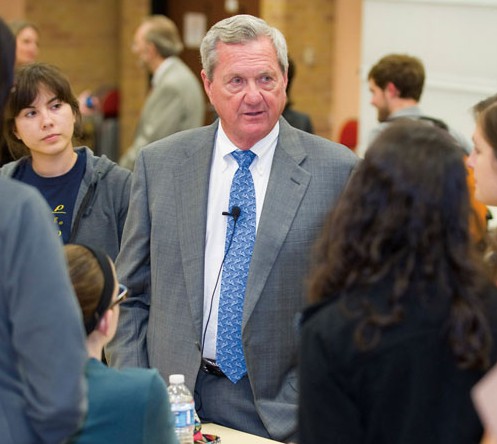
Health Science Center and Haven for Hope champion is among world’s greatest business leaders
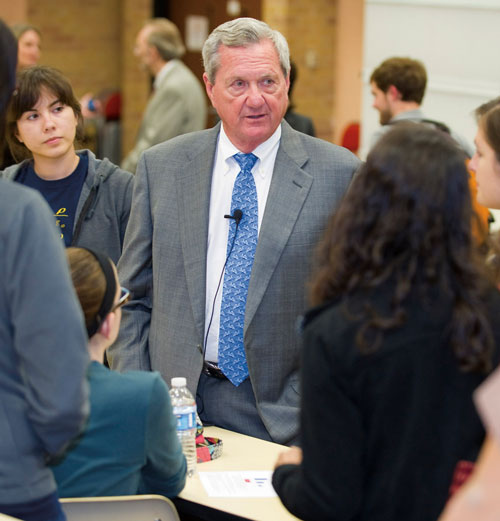
In January, the Harvard Business Review’s "100 Best-Performing CEOs in the World" ranked Greehey 12th among U.S. CEOs and 31st worldwide.
His ranking was based on his tremendous success as CEO of Valero Energy Corporation. As chairman and CEO of Valero, he led the growth of a small petroleum pipeline and storage company that was affiliated with Valero until that company spun off from Valero as an independent company, and was renamed NuStar Energy LP. Greehey retired from Valero in 2005, but he continues to serve as chairman of NuStar.
No description of Greehey would be complete without mentioning his strong commitment to the community, including gifts and collaborations that touch the Health Science Center.
In 2007, the Greehey Family Foundation donated a transformative gift of $25 million to the Health Science Center for the Greehey Children’s Cancer Research Institute. The gift also established the Greehey President’s Endowment for Excellence in Children‘s Health Sciences, and the Greehey Cancer Laboratories. Both the institute and laboratories are located on the Greehey Academic and Research Campus.
"We congratulate Bill Greehey on this significant international recognition," said William L. Henrich, M.D., MACP, president of The University of Texas Health Science Center at San Antonio. "We appreciate his excellent leadership not only in the board room but also in the community, and thank him for his generosity that has benefited the Health Science Center and so many others."
In 2006, Greehey launched Haven for Hope, an innovative program to transform and save the lives of homeless individuals and families. Now, Health Science Center medical students and dental residents receive clinical training there while providing care to patients who otherwise could not access or afford care.
In 2012, a research team from the Department of Epidemiology and Biostatistics began working with Haven for Hope to build an infrastructure to evaluate the program’s community and economic impact and identify the best and optimal use of resources and services for its clients.

Scholars reunite to honor Joe R. and Teresa Lozano Long
Students and alumni of the Long School of Medicine, who have benefited from the generosity of Joe R. and Teresa Lozano Long, reunited recently to pay tribute to the Austin couple. In 2000 the Longs established the Joe R. and Teresa Lozano Long Presidential Scholars program that awards full scholarships for tuition, fees, instruments, textbooks and additional expenses to support deserving medical students from South Texas. Many of the scholarship recipients are the first in their families to attend college and pursue their dreams of becoming physicians. Since the program’s establishment, 34 Long Scholars have graduated from the Long School of Medicine and are practicing in prestigious residency programs across the country. An additional 12 scholars are currently enrolled in the Long School of Medicine.
"Our Long Presidential Scholars program at the Medical School has been one of the most worthwhile programs we’ve ever done," Mr. Long said. "We are very proud to see so many accomplished graduates who are now practicing medicine across South Texas, and we know there will be many more in the future."
In 2008, the Longs donated a historic gift of $25 million - the couples’ largest donation ever to any institution - to the Health Science Center. The university’s main campus on Floyd Curl Drive in San Antonio is named in their honor - the Joe R. and Teresa Lozano Long Campus - acknowledging the couple’s generosity.
Jessica Treviño Jones was among the students who attended the reunion. She is a fourth-year medical student who will graduate this year and begin her internal medicine residency program here at the UT Health Science Center San Antonio.
"Thank you for letting me be a part of your Long family," Treviño Jones said. "Without your support, I would never have been able to have time for both my education and my family. Now my husband and I have a beautiful son and with my education and training that you’ve made possible, I’ll be able to support his future. I can’t express how much this means to us. We are so grateful."
If you are a Long Scholar who would like to reconnect with the UT Health Science Center and other scholars, contact Sabrina Paniagua at 210-567-2508 or paniaguas2@uthscsa.edu.
CPRIT gives HSC researchers $3.7 million

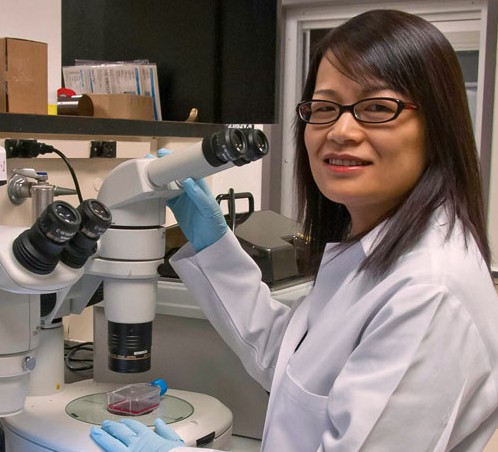
The Health Science Center was awarded $1.8 million by the Cancer Prevention and Research Institute of Texas (CPRIT) to fund work ranging from genetic analysis to patient counseling skills in San Antonio. CPRIT also awarded the Health Science Center a recruitment grant of $1.9 million to recruit Pei Wang, Ph.D., a postdoctoral fellow from Stanford University, as an assistant professor in the Department of Cellular and Structural Biology.
"We are exceptionally pleased at the confidence and support of CPRIT
for our scientists," said Ian M. Thompson Jr., M.D., director of the Cancer Therapy & Research Center at the UT Health Science Center. "We’re eager to turn research into results."

Dental School receives $2.5 million for faculty development
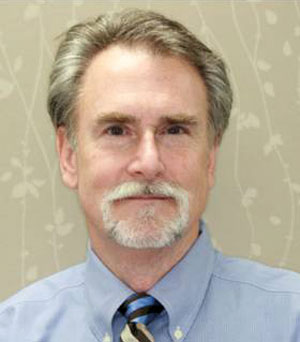
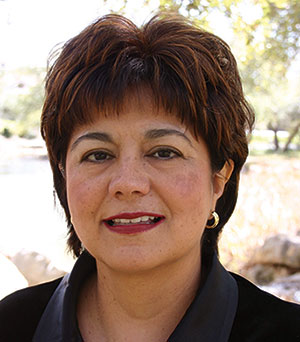
A $2.5 million, five-year federal grant obtained by the Department of Comprehensive Dentistry will support faculty development and training in the Dental School. The project will provide career development training, including fellowships and workshops for dental students, residents and faculty. Investigators on the grant are Jeffrey L. Hicks, D.D.S., professor, and M. Norma Partida, D.D.S., M.P.H., associate professor in the Department of Comprehensive Dentistry. The intent of the program, sponsored by the Health Resources and Services Administration of the U.S. Department of Health and Human Services, is to fund projects that address a current shortage of faculty in the primary care areas of dentistry and dental hygiene, and to increase access to oral health care.
$1 million gift from Kolitz family supports brain cancer research
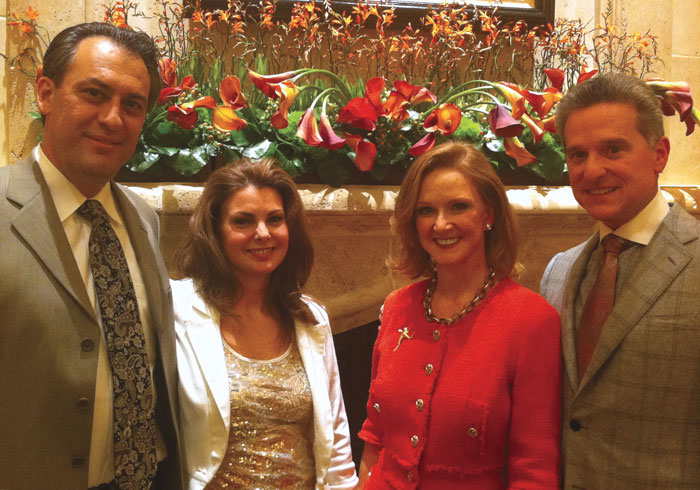
A transformational gift totaling $1 million from the Kolitz family - Sandi, Bob and Aaron Kolitz, and Karee, Loren and Millie Jones - will support the research of Andrew Brenner, M.D., Ph.D. Dr. Brenner is a neuro-oncologist at the Cancer Therapy & Research Center (CTRC) and an assistant professor of medicine at the UT Health Science Center. Part of the gift, $750,000, establishes the Sandi and Bob Kolitz Chair in Neuro-oncology Research at the CTRC. Dr. Brenner has been appointed as the inaugural holder of the chair.
The other portion of their gift, $250,000, has created a research fund in neuro-oncology that supports Dr. Brenner’s innovative approach of applying rhenium-186 to treat deadly brain tumors called glioblastomas. The method attacks the tumor with higher levels of radiation - 20 to 30 times the current dose of radiation therapy to patients - but spares a much greater amount of brain tissue. Dr. Brenner is developing a clinical trial at the CTRC for this promising new therapy that could revolutionize the treatment and care of patients with brain cancer.
Bob Kolitz said funding research at the UT Health Science Center and the CTRC is more important than ever. "The UT Health Science Center is vital to this region and we want to ensure that, even in challenging economic times, the lifesaving research and treatments produced here continue for a lifetime," he said. "Dr. Brenner is a brilliant scientist and the Health Science Center needs more researchers like him who will help so many patients in this community now and in the future."
$1 million grant supports occupational therapy
$1.2 million funds studies of Alzheimer’s cell biology
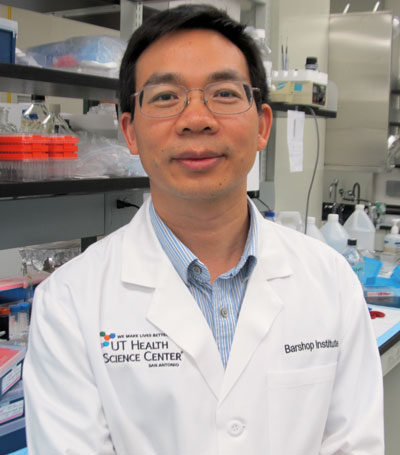
Two newly funded grants totaling $1.2 million will support studies of Alzheimer’s disease at the Sam and Ann Barshop Institute for Longevity and Aging Studies. One grant, $960,000 over four years from the U.S. Department of Veterans Affairs, is furthering studies of environmental toxins and their role in Alzheimer’s risk. Qitao Ran, Ph.D., and his team found that exposure to pesticides can worsen cognitive decline in mice and increase deposits of amyloid-beta protein in the mouse brain. Amyloid-beta plaques often are seen in the brains of Alzheimer’s patients studied at autopsy. The second grant, $240,000 over three years, is from the Alzheimer’s Association. In this study Dr. Ran and his team are overexpressing an enzyme called glutaredoxin-2. "If we have more of this enzyme, we believe we can protect the cells and reduce amyloid-beta accumulation," he said.
Biochemists receive $1.7 million NIH grant to fight heart disease at molecular level
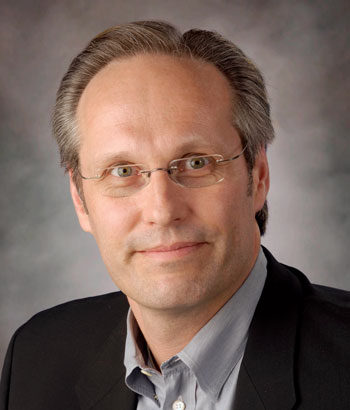
Reto Asmis, Ph.D., biochemistry professor and associate dean of the Graduate School of Biomedical Sciences, was awarded a four-year, $1.7 million grant from the National Institutes of Health (NIH) to look at underlying causes of cardiovascular disease at the cellular level. The NIH grant may allow these scientists to develop new drug treatments that could be used to stop or prevent oxidative stress in monocytes (white blood cells formed in bone marrow) in order to prevent cardiovascular disease. "Findings from the studies proposed here are likely to have a major impact on both preventive and therapeutic strategies for a wide array of diseases – including atherosclerosis, heart failure, healing after a heart attack, and diabetic complications such as renal disease and impaired wound healing," Dr. Asmis said.

Physician assistant program receives $980,141 federal grant for primary care training
The Department of Physician Assistant Studies received a five-year, almost $1 million grant from the Health Resources and Services Administration, an agency of the U.S. Department of Health and Human Services, to provide better primary care to more patients. The funding period began Aug. 1 and runs through July 31, 2017. "We expect this project to provide high-quality training materials and resources for current and future faculty," said Juanita Wallace, Ph.D., dean of the School of Health Professions. "More importantly, we will be able to both support and enhance collaborative primary care experiences for our students and future graduates."

Study uses promotoras to increase physical activity among Latinas
To improve Latinas’ health, a new five-year, $3.48 million National Institutes of Health study will use promotoras - trained community health workers - to lead culturally appropriate group education and exercise sessions for Latinas in a program called Enlace (a Spanish term that means to "connect" or "join") in community centers in South Texas’ Lower Rio Grande Valley. "The idea behind Enlace is that, through this promotora intervention, Latinas will gain an otherwise-unavailable layer of social support to overcome barriers to activity and make positive behavioral changes - namely that Latinas engage in 30 minutes of moderate-to-vigorous physical activity on five or more days a week," said study leader Deborah Parra-Medina, Ph.D., M.P.H., professor at the Institute for Health Promotion Research.