

Model of excellence in women's health
What if that special woman in your life - your mother, grandmother, sister or friend - was sick? What if she needed a doctor, medication or a medical procedure to make her better?
Today, women make up almost half of the U.S. labor force. About 40 percent of all households with children under 18 include mothers who are either the sole or primary source of income for the family. Single moms account for 8.6 million of those. And, grandmothers are more often becoming primary caregivers for the 1 in 10 children who live with a grandparent.
At The University of Texas Health Science Center at San Antonio, researchers and physicians understand the profound impact women have on our lives and society. That’s why women’s health care is a top priority.
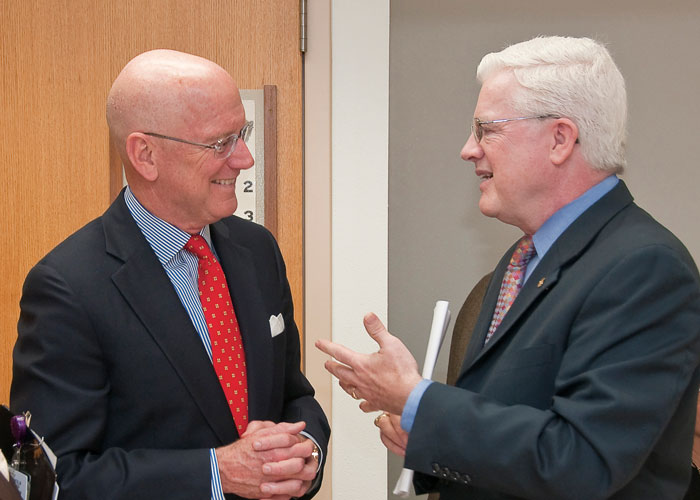
The following pages illustrate just a few examples of how Health Science Center researchers, such as Leslie Myatt, Ph.D. (pictured left), and clinicians, like Ildiko Agoston, M.D. (right), are collaborating and leading efforts to enhance the care and services provided to women of all ages and backgrounds in San Antonio and South Texas.
Source: Pew Research Center
Related Stories
Guiding Latinas to good health
Center for Excellence in Women’s Health launched
Join the Council for Excellence in Women's Health
VIP care: without the VIP price tag
Women’s liberation: Doctor relieves disconcerting disorders
What is a patient navigator?
Dr. Xin-Yun Lu: Mentor, mom, scientist
Women scientists lead efforts to fight cancer
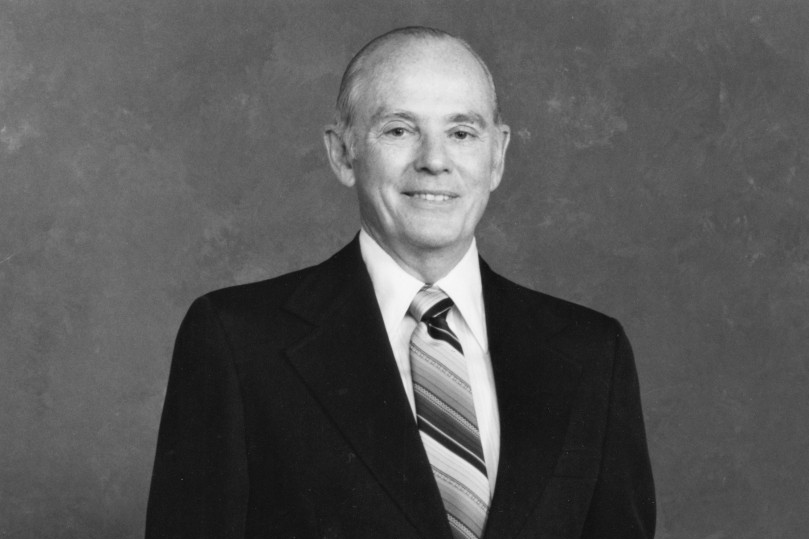
In Memoriam: First president was innovator

The UT Health Science Center community, Texas and the nation lost a pioneer with the passing of Frank Harrison, M.D., Ph.D., on Aug. 9. He was 99. As the first president of the Health Science Center, Dr. Harrison paved the foundation for a strong faculty and administration and positioned the university as a model of excellence in education and research.
Soon after The University of Texas System Board of Regents named Dr. Harrison as president on Nov. 4, 1972, he named deans for the Long School of Medicine and Dental School of the Health Science Center and established the institution’s Executive Committee. During the 1970s, a $3 million laboratory animal resources area was completed as part of a $15 million School of Medicine expansion project and the Board of Regents authorized plans for a $9.5 million library building.
The School of Nursing and Dental School buildings were constructed and dedicated. Dr. Harrison oversaw the transfer of the School of Nursing from the UT System into the Health Science Center, and presided over the establishment of the Graduate School of Biomedical Sciences and the School of Allied Health Sciences (now the School of Health Professions). He also launched the Health Science Center Development Board. It was a time of tremendous growth, and Dr. Harrison’s graceful leadership always accentuated the positive.
The Health Science Center, at its establishment, enrolled 500 students, employed 1,000 faculty and staff, and conducted sponsored research of $3 million. By September 1984, upon Dr. Harrison’s retirement, the Health Science Center enrolled more than 2,300 students, employed more than 3,000 faculty and staff, and conducted sponsored research of $32 million.
Prior to his presidency at the Health Science Center, Dr. Harrison pursued a long and distinguished career of service within the UT System, notably at UT Southwestern, where he was associate dean of graduate studies. In 1966, UT System Chancellor Harry Ransom asked Dr. Harrison to launch the graduate program at UT Arlington. Within two years, Dr. Harrison had established six graduate departments approved by the Texas Higher Education Coordinating Board. Named president in Arlington in 1968, he fostered an atmosphere of collaboration and openness while demonstrating the desirable ability to run a tight ship. He was a detailed and skilled administrator who worked behind the scenes in advance of official actions to ensure their success.
Dr. Harrison was born on Nov. 21, 1913. The son of a Dallas neurologist, he earned a bachelor’s degree in chemistry from Southern Methodist University and studied for two years at The University of Texas Medical Branch at Galveston. He earned his master’s degree and Ph.D. at Northwestern University.
UT Health Science Center President William L. Henrich, M.D., MACP, said Dr. Harrison’s legacy of innovation and collaboration in education and research helped mold the university into the success it is today. "Dr. Harrison will be remembered and appreciated for generations to come," Dr. Henrich said.

Center for Excellence in Women’s Health launched
Experience, collaboration and support fuel new center
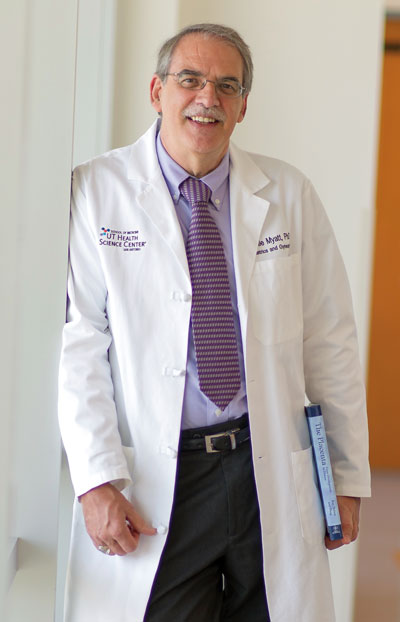
"Women are at the core of our lives and world," said Leslie Myatt, Ph.D.
For nearly 40 years, Dr. Myatt has dedicated his life to reproductive science and women’s health care. He focuses on applying basic bench research to clinical problems and translating his findings into better ways to diagnose and prevent diseases and disorders that plague women.
His passion stems partly from observing many of the strong women in his life. He describes his mother, aunts and two grandmothers as being determined and influential, yet sensitive and supportive of their spouses and family. As a young boy growing up in Yorkshire, England, Dr. Myatt remembers helping his family care for his paternal grandmother when she was diagnosed with diabetes, and his maternal grandmother during her final days battling bladder cancer.
Today, Dr. Myatt sees the same determination and support from his wife, Angela Elizabeth Myatt, with whom he has two children, George, 25, and Louise, 20. Angela earned her Master of Science in Information Science degree from the City University in London. She is an expert in information retrieval, teaches evidence-based medicine and serves as the curriculum liaison librarian for the School of Medicine at the Health Science Center.
Dr. Myatt said his wife has been the pillar holding their family together during some of their toughest storms. "Angela has single-handedly dealt with family crises during my frequent work-related absences, and even kept the children safe during two actual tornadoes and a hurricane that hit when I was out of town."
In 2008 while Dr. Myatt was in Austria attending a research conference, the powerful remnants of Hurricane Ike blew through Cincinnati, where they lived at the time, leaving behind a trail of destruction. "When I got home, there was a huge tree lying across our yard and driveway. Angela had taken care of our children and our home through it all. She is amazing," he said.
Myatt on a mission
Motivated by his family philosophy and insatiable quest for new scientific knowledge, Dr. Myatt is on a mission to help solve some of the most vexing problems affecting women today. In the process, he intends to help provide new opportunities for women scientists and physicians to lead these critical efforts.
"We still do not know what causes preterm labor or preeclampsia. These problems affect a vast number of women worldwide and have a tremendous emotional, societal and economic impact. These are just two areas where we have a lot of work to do."
Dr. Myatt is professor of obstetrics and gynecology and director of the Center for Pregnancy and Newborn Research. He came to the Health Science Center after serving as a faculty member for 22 years at the University of Cincinnati where he directed the National Institutes of Health (NIH)-funded Physician Scientist Training Program and the Women’s Reproductive Health Research Scholars Program.
"Pregnancy is where life begins for the child and is a critical time in the life of the mother," Dr. Myatt said. "It’s like a mapping system or computer programming, determining the future course of health for both the mother and child."
Dr. Myatt likened pregnancy to a "stress test" for the mother. "If a woman fails the stress test because she develops gestational diabetes or hypertension, that means she needs careful and regular follow up during and after she gives birth and, importantly, throughout the rest of her life." Failure of the stress test, Dr. Myatt said, could be the signal for a host of other disorders that the mother and child could develop in the future, including obesity, cardiovascular disease, metabolic disorders, cancer, diabetes or psychiatric or mood disorders.
Dr. Myatt and his research team study how genes interact with environmental factors such as pollutants, lifestyle, diet, stress, and disease during pregnancy, and affect the mother and child. They also study how the placenta regulates fetal growth and development as it supplies nutrients to the fetus. When the placenta is compromised by the environment inside or outside the womb, preterm birth can also occur. Dr. Myatt said that children born prematurely face serious and sometimes lifelong health problems.
Dr. Myatt has published more than 220 research papers in his field and has a long history of funding from the NIH.
Endowment opens window
This year, Dr. Myatt was named the holder of the Quincy and Estine Lee Endowment, funded by a gift from the Estate of Estine M. Lee and a matching gift from Francisco González-Scarano, M.D., dean of the Long School of Medicine and vice president for medical affairs. Dr. Myatt also was named the director of the newly created Center for Excellence in Women’s Health at the Health Science Center.
"The generosity of the Estine M. Lee Estate and the decision to create the center shows a strong commitment by this institution and the community to women’s health. It opened a window of opportunity for us to excel in this area," Dr. Myatt said. "Women comprise 50 percent of the patients we see throughout our Health Science Center and UT Medicine clinics.
Dr. Myatt explained that the national decline in federal funding for research and education that began several years ago triggered the closing of many centers for women’s health across the country, including the closing in 2007 of the center that had been established at the Health Science Center.
"It is time to rejuvenate and expand our efforts and attract additional funding," Dr. Myatt said. "A new dynamic center in women’s health here on our campus will re-establish us as having the only center of this kind in Texas."
Connecting and collaborating
The new Center for Excellence in Women’s Health will be a multidisciplinary, coordinated effort by multiple departments and community partners to connect, consolidate and advance all aspects and efforts of women’s health care, research, education, leadership and community service the Health Science Center offers.
A large portion of research conducted across the various schools concentrates on women’s health. Obvious areas include perinatology and gynecology. Dr. Myatt said the center will work to identify and emphasize additional research opportunities in areas that may not be so obvious but that affect large number of women. Obesity, diabetes, depression, cardiovascular disease and cancer are some of those.
"Furthermore, San Antonio is notable for its predominantly Hispanic population and significant military presence. These present unique opportunities for us to bring researchers together to strengthen existing programs and develop new discoveries that benefit these groups," Dr. Myatt said.
Health care partners such as University Health System, the South Texas Veterans Health Care System and the network of researchers across the nation, who are connected by the university’s Clinical Translational Science Award, will make valuable contributions. An advisory board, including community leaders, will help guide the center’s efforts.
Umbrella for growth
UT Health San Antonio, the clinical practice of the Long School of Medicine at the Health Science Center, offers comprehensive care for women of all ages. Most recently, UT Medicine created the Women’s Comprehensive Health Institute at its Medical Arts & Research Center (MARC). The institute serves as a one-stop destination where women can achieve annual health care assessments in one place on one single day.
Dr. Myatt said that under the umbrella of the Center for Excellence in Women’s Health, the new institute and other clinical programs will benefit from access to new community outreach efforts such as health fairs that invite women to participate in clinical and research programs offered by the university. Women’s health research seminars and annual symposiums are also planned.
"All of these programs working together enhance our research and clinical enterprises," Dr. Myatt said.
Through curriculum expansion and career development, fellowship and mentoring programs, Dr. Myatt said the center will also focus on increasing the number of female faculty, students and fellows participating in women’s health activities and increase the number of women faculty at the university overall. He said grant applications for funding support are underway.
Philanthropy crucial to success
Because the NIH and other state and federal funding sources have remained relatively flat for the past few years, Dr. Myatt said funding from private donors and foundationsis crucial to the success of the center.
"The generosity of donors like the Estine M. Lee Estate has given us the start. Now we hope the community will join with us to continue our momentum," he said.
One group that will help advocate for the center is the Council for Excellence in Women’s Health. Mary Henrich, wife of Health Science Center President William L. Henrich, M.D., co-chairs the council with Graciela Cigarroa, wife of Francisco G. Cigarroa, M.D., chancellor of The University of Texas System. They lead a group of more than 100 influential women community leaders from San Antonio and South Texas who volunteer and serve on the council.
The goal of the council, which was formed in 2007, is to improve the physical and mental health of women in San Antonio by building awareness for women’s health issues. Through various outreach activities, they promote a greater understanding and need for support of women’s health care programs and initiatives.
Since its establishment, the council has raised $84,000 (including matching funds from the President's Council), and has provided more than 32 scholarships to students enrolled in the five schools at the Health Science Center.
"I am excited and honored to be able to work with so many talented individuals at the university and partners in our community toward elevating women’s health care, research, education and outreach in this city," Dr. Myatt said.
"The Center for Excellence in Women’s Health is an opportunity that everyone can and should be a part of, and one for which everyone will greatly benefit in the long run."
Women’s liberation: Doctor relieves disconcerting disorders
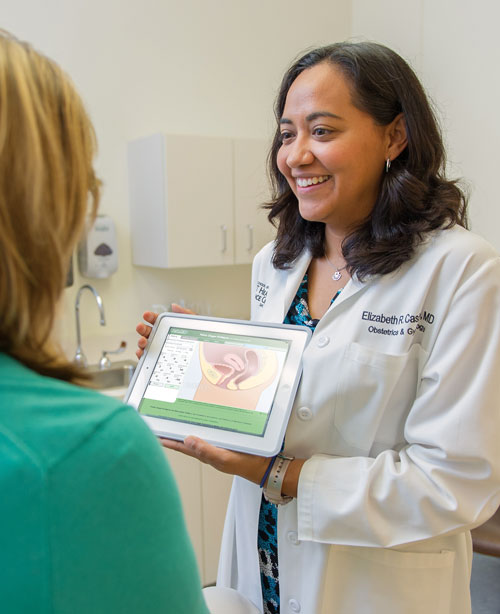
When a woman has the sort of problem that’s usually not discussed, she can find deep knowledge and a sympathetic ear in Elizabeth Casiano, M.D.
A fellowship-trained urogynecologist with UT Health Physicians, Dr. Casiano has extensive training and experience treating conditions that affect female pelvic organs and the muscles and connective tissues supporting them. These conditions include urinary incontinence and pelvic organ prolapse, when one or more pelvic organs slip downward from their normal position.
A woman might be embarrassed to tell anyone - even her physician - that she’s having such a problem. Still more common, Dr. Casiano said, is seeing women who have waited years to be evaluated because they thought their difficulties were a normal part of aging.
"They think it’s something they have to live with as they get older," said Dr. Casiano, a clinical assistant professor of obstetrics and gynecology in the Long School of Medicine at UT Health San Antonio. "A lot of older patients have stopped doing things because this is interfering. They really want to get back to their activities, the things they used to enjoy."
Women should not feel alone in having these problems. Up to 40 percent of women will have enough symptoms of urinary incontinence or pelvic organ prolapse to merit medical evaluation and treatment, which usually brings significant relief.
The specialty was a natural fit for Dr. Casiano, who arrived in San Antonio as a child due to her father’s military service. He is also a gynecologist, and by the time she attended Incarnate Word High School, she knew that she wanted to be a physician, too. "I always give my dad credit for that because I used to go around with him on the weekend," Dr. Casiano said. "He loved his job, and I was inspired by that."
She went to Brown University, where she completed an eight-year combined program in liberal medical education. She received a bachelor’s degree in political science in 2000 and her medical degree in 2004.
From there, Dr. Casiano went to The University of Texas Southwestern Medical Center for residency and the Mayo Clinic in Rochester, Minn., for a fellowship in female pelvic medicine and reconstructive surgery. She joined UT Medicine in 2011 and is one of two fellowship-trained urogynecologists in San Antonio.
"We are thrilled to have Dr. Casiano on our faculty and seeing patients of UT Medicine," said Mark Funk, M.D., medical director of the UT Medicine obstetrics and gynecology clinic, located at the Medical Arts & Research Center (MARC). "The expertise she brings for the care of women with the most complicated pelvic organ prolapse and urinary problems is extraordinary. She is able to greatly improve the lives of women suffering from symptoms of these pelvic conditions."
To schedule an appointment with Dr. Casiano or other UT Medicine obstetricians or gynecologists, call 210-450-9500.
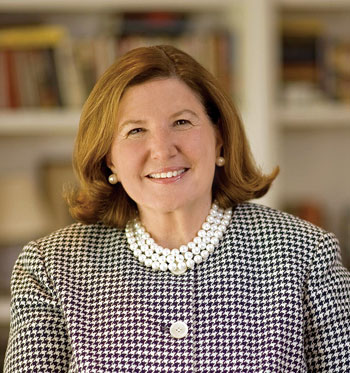
Join the Council for Excellence in Women's Health
Improving the physical and mental health of women in San Antonio
"It is empowering when women from all walks of life join together to advance education and health care in order to help women from a multiplicity of backgrounds and traditions. The work we accomplish today will last a lifetime and span generations of mothers, daughters, sisters and grandmothers." - Mary Henrich, co-chair, Council for Excellence in Women’s Health
Join today.
- Learn about women’s programs and initiatives offered at the UT Health Science Center;
- Serve as a sounding board and act as "eyes and ears" in the community to help the Health Science Center fulfill its mission for excellence in women’s health;
- Enlist other community leaders to serve as volunteers in support of the university’s women’s initiatives; and
- Participate in Women’s Leadership Committee meetings and other events.
For more information
To join the Council for Excellence in Women’s Health, call Kim Warshauer
at 210-567-0242 or warshauer@uthscsa.edu, or visit
uthscsa.edu/op/womenscouncil.

What is a patient navigator?
 Patient navigators are trained, culturally sensitive health care workers who provide support and guidance throughout the cancer care continuum. They help people navigate through the maze of doctors' offices, clinics, hospitals, outpatient centers, insurance and payment systems, patient-support organizations, and other components of the health care system. Services are designed to support timely delivery of quality standard cancer care and ensure that patients, survivors and families are satisfied with their encounters with the cancer care system.
Patient navigator activities designed to achieve these outcomes include:
- Coordinating appointments with providers to ensure timely delivery of diagnostic and treatment services;
- Maintaining communication with patients, survivors, families and the health care providers to monitor patient satisfaction with the cancer care experience;
- Ensuring that appropriate medical records
are available at scheduled appointments; - Arranging language translation or interpretation services;
- Facilitating financial support and helping with paperwork;
- Arranging transportation and/or child/elder care; and
- Facilitating linkages to follow-up services.
Other navigator activities include community outreach, providing access to clinical trials and building partnerships with local agencies and groups (e.g. referrals to other services and/or cancer survivor support groups).
Learn more about patient navigation in "A Patient Navigation Manual for Latino Audiences: The Redes En Acción Experience," a bilingual guidebook that aims to motivate and guide health care providers across the nation to develop patient navigation services that can help Latino patients overcome barriers to timely health care. The manual outlines the step-by-step approach and resources to help providers and groups learn about and consider adding navigators. Visit redesenaccion.org/PatientNavigatorManual.
Source: National Cancer Institute Center to Reduce Cancer Health Disparities
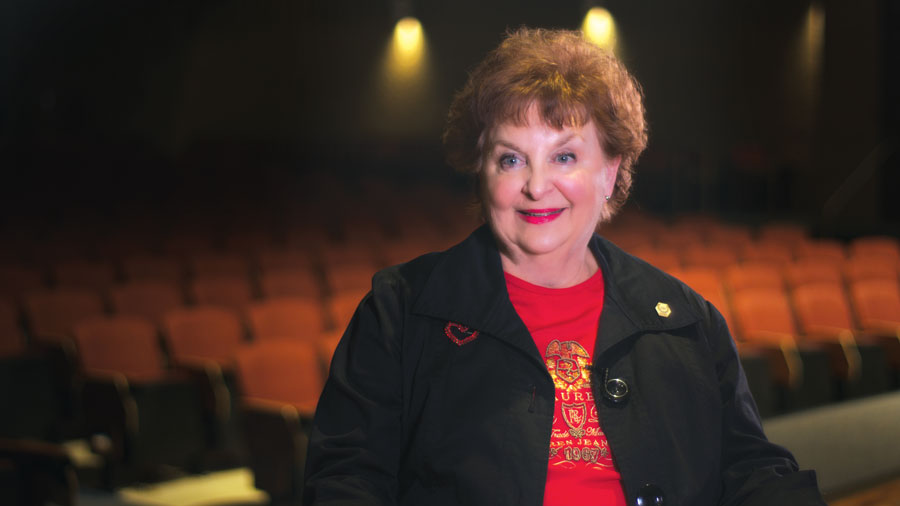
Survivor + Activist = Philanthropist
In the summer of 1989 Jones’ spirit was tested when she was diagnosed with breast cancer. Fueled by her inherent courage and devotion to her health, her job and her family in her hometown of San Angelo, Jones sought the expertise and a second opinion from physicians at the Cancer Therapy & Research Center (CTRC) at the UT Health Science Center San Antonio where she decided to undergo treatment.
Bravely, Jones beat breast cancer and believes research at the CTRC played a major role in her survival.
"At the CTRC I felt I received kind, generous and professional care that fit my needs and allowed me to go home to San Angelo, finish raising my children, and complete graduate school and international studies," she said.
Today, Jones is an activist for several non-profit organizations with the goal of beating breast cancer by 2020. Most recently, she made the decision to endow the CTRC with a bequest through her will to be used for breast cancer research.
Jones believes research is the key to unlocking life’s mysteries. Growing up in the 1950s, she vividly remembers collecting nickels and dimes to contribute to the cause of eliminating polio and developing the vaccine used worldwide today. "I believe research is the answer. There have been so many advances in breast cancer treatment since I was diagnosed in 1989."
Recalling her childhood memories, she knows that each contribution to vital research can make that goal a reality.
"I am just a retired school teacher, but I believe we are all in the same boat, and each of us needs to do what we can to help row the boat. I strongly believe we all should get behind the innovative research efforts at the CTRC to defeat cancer. I want my legacy to be that in the future, our children and grandchildren will not have to deal with the pain and fear of cancer. I hope my contribution creates a domino effect so others give what they can."
To this day Jones remains grateful to Peter Ravdin, M.D., Ph.D., director of the CTRC Breast Cancer program. She also considers him a friend.
Jones fervently believes that women with cancer need support groups. "I am grateful because I feel I am always welcome to call CTRC with a question, come in and get a checkup or take one of their new classes in healthy cooking." She has been an active member of the CTRC Cabinet since its establishment in 1996 and enjoys her membership in the Laureate Society.
She has also reached out to others after her successful battle with cancer by participating in the Breast Cancer Coalition. As a breast cancer activist, Jones has, for many years, been a member of the Alamo Breast Cancer Foundation and a regular volunteer for the San Antonio Breast Cancer Symposium that brings together thousands of health care professionals from around the world focused on curing breast cancer.
The word "philanthropy" is derived from the Greek language generally meaning "love of humankind." Annabelle Jones demonstrates that being a philanthropist is within reach for everyone who acts to enhance the quality of life and help others in need. She describes herself as a survivor and an activist, but she has become a philanthropist, giving from her heart to improve the future health of others. She joins the UT Health Science Center in their goal "to make lives better."
Honoring your generosity: Laureate Society pays tribute to donors
Annabelle Jones is a proud member of the Laureate Society at the UT Health Science Center.
You can be a member too! The Laureate Society was established to pay tribute to those who have made gifts to the UT Health Science Center through a variety of estate planning vehicles including bequests, life income gifts and insurance policies.
Members share the common bond of generosity and visionary leadership, nourishing the university’s continued success.
Contact us if you have made a gift or plan to give. We look forward to recognizing and honoring your generosity that has a lasting impact on future generations and helps make lives better.
For more information about the Laureate Society, gift options or ways to give, visit giftplanning.uthscsa.edu or contact Kent Hamilton in the Gift Planning Office at 210-567-5001 or e-mail hamiltonw@uthscsa.edu.
Natalie Gutierrez contributed to this story.

DoD, VA approve $45 million in quest for PTSD cure
In an unprecedented show of support for our nation’s wounded warriors, the U.S. Department of Defense and the U.S. Department of Veterans Affairs will provide approximately $45 million over five years for post-traumatic stress disorder (PTSD) research to advance diagnosis, prevention and treatment for service members and veterans. The UT Health Science Center San Antonio and the VA National Center for PTSD will lead the consortium.
The STRONG STAR Consortium to Alleviate PTSD (STRONG STAR-CAP) will provide an array of cutting-edge clinical treatment trials and biological studies for active military and veterans with PTSD and related conditions, said Consortium Director Alan L. Peterson, Ph.D., professor of psychiatry in the School of Medicine at the Health Science Center. Initiatives will include efforts to learn more about the biology/physiology of PTSD development and treatment response to inform diagnosis, prediction of disease outcome, and new or improved treatment methods.
"Historically, PTSD has been considered to be a chronic, lifelong disorder that is difficult to treat, particularly in military combat veterans," Dr. Peterson said. "However, results of studies of PTSD in civilian populations demonstrate that a large percentage of patients have been able to be treated to the point of remission or recovery. Although the term ‘cured’ is rarely used in reference to PTSD, we believe it is possible."
Clinical trials will be conducted to develop programs to treat the largest percentage of service members possible so that they can remain operationally and functionally fit for military service. The clinical trials will also recruit prior-service veterans.
An estimated 250,000 service members could be diagnosed with PTSD. Additionally, because an estimated 7 percent of the civilian population will develop PTSD at some point, treatment advances could help millions more Americans.
STRONG STAR (South Texas Research Organizational Network Guiding Studies on Trauma and Resilience) was initially funded in 2008 by the Department of Defense’s Office of Congressionally Directed Medical Research Programs (CDMRP), part of the U.S. Army’s Medical Research and Materiel Command. For STRONG STAR-CAP, the original STRONG STAR consortium has partnered with the seven divisions of the National Center for PTSD and other VA, military and civilian investigators and institutions across the world to form the largest research consortium in history dedicated to the alleviation of combat-related PTSD.
For more information, visit strongstar.org.
Methodist Healthcare Ministries funds new emergency medicine residency program
Methodist Healthcare Ministries of South Texas Inc. has partnered with the UT Health Science Center San Antonio to support the university’s inaugural emergency medicine residency program.
A four-year, $831,043 grant from Methodist Healthcare Ministries commenced this summer as the first 10 residents started their orientation in the Department of Emergency Medicine in the Long School of Medicine. They are expected to graduate in the summer of 2016.
William L. Henrich, M.D., MACP, president of the UT Health Science Center, said Methodist Healthcare Ministries has worked with the Health Science Center since 1996 to build a stronger and healthier community.
In the last 10 years, Methodist Healthcare Ministries has given more than $14 million to support UT System initiatives designed to improve the health and well-being of South Texas residents.
"By participating in this ground-breaking venture, Methodist Healthcare Ministries is helping to improve the quality and accessibility of emergency care in South Texas. These physicians will attain exceptional knowledge, procedural ability and superb clinical judgment," Dr. Henrich said.
Kevin C. Moriarty, president and chief executive officer of Methodist Healthcare Ministries, said this new residency program aligns perfectly with MHM’s dedication to providing medical and health-related human services to low-income families and the uninsured throughout the region.
"We are excited to team up with the Health Science Center in this long-range project that will help to alleviate the grave shortage of emergency medicine physicians throughout South Texas," Moriarty said. "By working together, we can help save lives."
South Texas has the country’s second lowest number of board-certified emergency physicians with 5.5 physicians per 100,000 residents. Rural hospitals in this area are especially underserved with only 2.3 emergency physicians per 100,000 residents.
Dr. Henrich said, "Board-certified emergency medicine physicians are not projected to meet minimum workforce standards in our region until 2050, which is why the new civilian emergency medicine residency is crucial.
"Studies show that 80 percent of graduates from an emergency medicine training program settle within 75 miles of their residency location. Because of our support from Methodist Healthcare Ministries, we will be able to significantly reduce the emergency medicine physician shortage in this region of Texas."
Support the Center for Oral Health Care & Research
A reason to smile
"The new building will allow us to care for patients with the same compassion and tailored treatment we have always provided, but in a new state-of-the-art facility. Ensuring patients’ oral health is an investment in their overall health and well-being. We pride ourselves on helping make their lives better," William Dodge, D.D.S., Dental School dean.
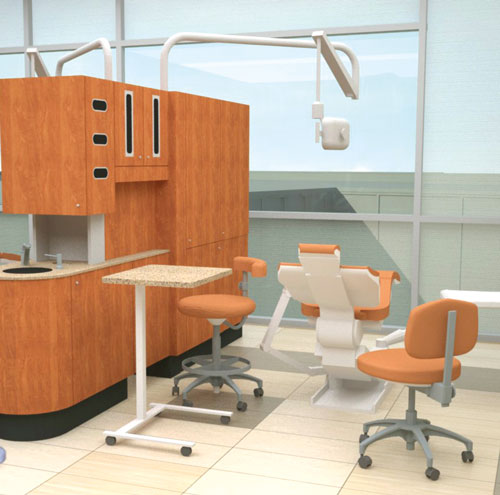
The $15 million community goal for the new Center for Oral Health Care & Research will equip the Dental School’s new home with the latest tools and technology to help ensure continued success for the next generation of students, faculty, residents and the thousands of patients who come to the Health Science Center from across the globe.
As the top-ranked professional school within The University of Texas System and one of the most prestigious schools in the United States and the world, the Dental School leads in research discoveries, outstanding patient care and education.
The new center will foster advancements in these endeavors and propel them to the next level. The delivery of oral health care changes rapidly in today’s world, and the new center will provide the flexibility to respond to and accommodate new technologies and training as they emerge.
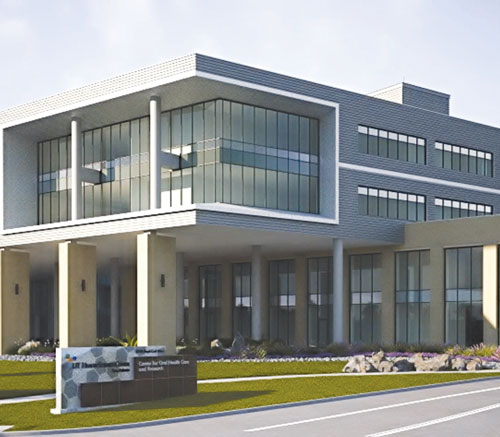 The Center for Oral Health Care & Research is scheduled to open July 2015. To see a 3-D and 360-degree rendering of the building, visit dental.uthscsa.edu/CFOHCR.
The center’s location on the North Campus places it in close proximity to the university’s Cancer Therapy & Research Center (CTRC), the Greehey Children’s Cancer Research Institute, the South Texas Research Facility (STRF), and the Medical Arts & Research Center (MARC), the clinical practice facility for the faculty of the Long School of Medicine. With these world-class facilities nearby, patients will have access to the finest inter-professional health care available that addresses not only the patients’ symptom or disease, but their total well-being.
Building highlights
- Cost: $108 million, which includes $93 million from The UT System Permanent University Fund, state bonds and university clinical revenue
- Size: 198,000 gross square feet
- Stories: Four
- Patient exam areas: 400 operatories
Community Goal: $15 million to fund equipment and technology and pre-doctoral clinic areas in the Center for Oral Health Care & Research.
"The Dental School gave me everything I needed – an outstanding education, mentoring and experience – to begin what has become my lifelong passion and career in dentistry. I ask you to give what you can to continue this legacy for the next generation of students. Your gift will help provide the best equipment, technology and training for future dentists who will deliver the finest care to patients in our community and throughout the state and nation."
– Warren Branch, D.D.S., Dental School alumnus and campaign chairperson
For more information
To make a gift or discuss a naming opportunity for the Center for Oral Health Care & Research, contact Sara Piety at piety@uthscsa.edu or 210-567-6536.
Or make a gift online at MakeLivesBetter.uthscsa.edu/COHCR.