
The pattern beneath the pain: Treating chronic orofacial discomfort
One orofacial pain specialist is helping patients and students connect what others miss — that chronic pain, like a tangled thread, requires time, skill and compassion to unravel
When Linda Bonnet first met Sovna Shivani Mishra, BDS, MDS, a clinical assistant professor at the School of Dentistry, she felt something she hadn’t in years: She felt understood.
For more than a decade, Bonnet has lived with persistent pain from a temporomandibular disorder, or TMD, a condition that affects the jaw joint and surrounding muscles.
“It’s not only my jaw,” she said. “The pain radiates up my neck, across the upper back, into terrible headaches — it affects the whole upper part of my body.”
Her journey to relief has been long and often frustrating. She had seen more than 20 healthcare providers since 2014. Many recommended surgery to break and reconstruct her jaw.
“Then came Dr. Mishra,” Bonnet said.
Between dentistry and medicine
Mishra is a rising leader in the emerging specialties of orofacial pain and dental sleep medicine. Since joining the school last fall, where she also provides care at UT Dentistry’s Oral Medicine Clinic, Mishra has worked to elevate both dental education and patient care while demonstrating that dental health extends far past teeth and gums.
“TMD and sleep-related disorders not only cause discomfort, but also disrupt lives,” Mishra said. “These are chronic pain conditions. They require empathy, education and a treatment plan that addresses the whole person.”
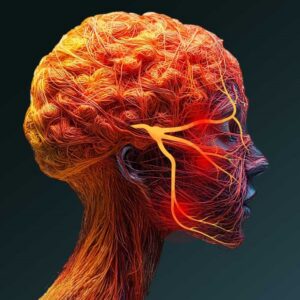 Orofacial pain refers to pain felt in the mouth, jaw, face, head and neck. It can stem from the jaw joint itself, surrounding muscles, nerves or even referred pain from other parts of the body. Conditions like TMD, certain types of headaches and nerve pain and stress-related pain often fall under this category — and they are frequently misunderstood or misdiagnosed, noted Mishra.
Dental sleep medicine focuses on the dental treatment of sleep-disordered breathing, including obstructive sleep apnea and sleep bruxism, or the act of teeth grinding and clenching during sleep. Dentists trained in this area look for physical issues that can make breathing harder during sleep — such as enlarged tonsils, a narrow airway or jaw alignment issues — and offer non-surgical treatments, including custom-fitted dental appliances designed to move the jaw in a position that keeps the airway open and reduces nighttime symptoms.
“These are areas where dentistry and medicine intersect,” Mishra said. “A dentist may be the first to recognize signs of a serious sleep issue during a routine exam. They can educate their patients and refer them to a physician. That’s why awareness, screening and interdisciplinary collaboration are so critical.”
Unlike more routine dental conditions, TMD and other sleep-related disorders often overlap with other health concerns, including neck tension, migraines, anxiety, insomnia and even cardiovascular issues.
Mishra trains dental students to recognize these broader health indicators, teaching them to ask about sleep quality, jaw clenching and pain patterns during patient visits. It’s a shift from reactive to proactive care and from siloed specialties to collaborative solutions.
“The field is young,” Mishra said. “Orofacial pain only became a recognized dental specialty five years ago. And dental sleep medicine is still growing. But these are essential areas where dentists and physicians must work together.”
Mishra is laying the groundwork to build just that kind of integrated care at UT Health San Antonio — offering patients a more comprehensive, thoughtful and empathetic path to pain relief.
Finding relief
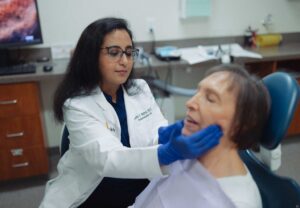
“It was phenomenal,” Bonnet shared. “It was the first time in years I felt someone truly understood what I was going through — the trauma, the chronic pain, the reality of living with something that doesn’t have a permanent fix.”
What struck her most was the way Mishra approached care: not as a clinical checklist, but as a relationship rooted in respect, compassion and whole-body understanding.
“She goes above and beyond the standard protocol,” Bonnet said. “She tailors treatment to the person in front of her. That’s what makes her care so exceptional. It’s focused, individualized and deeply personal.”
Mishra recommended a new, better-fitting and balanced bite guard for Bonnet and provided gentle jaw exercises to help her manage flare-ups. Bonnet continues to use these conservative strategies and physical therapy techniques to cope with her pain. But according to her, the biggest difference isn’t physical.
“I don’t feel lost anymore,” Bonnet said. “I’m seen. I feel less fear knowing that if I get into trouble, I have someone I can call.”
The next generation
Mishra brings that same philosophy to her students. She teaches first-year dental students the foundational anatomy of the jaw, head and neck, often expanding their understanding beyond traditional textbooks.
“I show them what normal anatomy looks like, so they can better spot abnormalities,” she said.
By their third year, students are applying that knowledge to real-world patient scenarios. Mishra creates mock case studies to help them practice clinical reasoning, encouraging them to recognize subtle symptoms and ask the right questions — questions most patients don’t expect from a dentist.
“As a component of the comprehensive evaluation, we screen for patients who may have underlying disorders. We’ll ask if they frequently wake at night, experience choking or gasping episodes, feel drowsy during the day or have ever fallen asleep during a meeting,” Mishra said.
This extensive medical history questionnaire is central to her clinical teaching and something she uses with every new patient. Questions cover more than sleep quality; Mishra inquires about recent stressors, past trauma, other coexisting chronic pain conditions, psychosocial status of the patient, pain coping mechanisms, impact of pain on daily activities and more. These questions are essential, she said, because pain is rarely isolated — especially in chronic cases.
“Patients don’t always know what’s relevant to tell their dentist,” she explained. “They might not think to mention sleep disturbances, headaches or a history of anxiety. But all of those factors could be connected to the pain they’re experiencing.”
Mishra teaches students to view this history as a window into the patient’s lived experience. The goal is not only to identify symptoms, but also to build trust, validate the patient’s story and design treatment with a clear understanding of the person in front of them.
“Every dentist will encounter a patient with orofacial pain,” Mishra said. “My goal is to make sure they’re ready to recognize it and equipped to respond with skill and empathy.”
A better path forward
As the School of Dentistry continues to grow in recognition — including being ranked the No. 1 dental school in Texas and consistently ranked among the top in the nation for National Institutes of Health funding — Mishra’s presence is helping expand the definition of what modern dentistry can offer.
She envisions a future where orofacial pain education and research are embedded into the core of dental training, including her dream of creating a formal residency program in the specialty at the university. Such a program would serve as a pipeline for future experts and help establish the institution as a national leader in the diagnosis and management of complex pain conditions through dentistry.
Mishra’s vision aligns with the institution’s evolving culture of medical–dental collaboration. At the clinic level, she’s already building bridges to work closely with sleep physicians, physical therapists, psychologists, and ear, nose and throat specialists and primary care teams to deliver comprehensive care. And university-wide, she is part of a broader movement to integrate health professions education across disciplines.
Her efforts are also supported by Kenneth Hargreaves, DDS, PhD, a globally recognized expert in pain research who was named dean of the School of Dentistry in May 2025. As director of the school’s Center for Pain Therapeutics and Addiction Research, Hargreaves champions a research culture focused on translational breakthroughs in pain relief and human health. He notes the need for empathy and a holistic approach to treating patients for pain and sleep disorders and suggests that progress is already visible in the kind of care being delivered — care that listens, adapts and affirms.
“Our dental school has decades of expertise in unraveling the mechanisms of acute and chronic pain and in developing novel therapeutic approaches to treat it. With the critical arrival of Dr. Mishra, we now are expanding our clinical expertise to fulfill our mission to make lives, and smiles, better,” said Hargreaves.
For Bonnet, her trust as a patient is about being seen and heard.
“Dr. Mishra is a rare kind of provider. She doesn’t see symptoms — she sees the person behind it all, and that changes everything.”
Rethinking TMD
What that jaw pain really means
Temporomandibular disorders (TMD) are complex, often chronic conditions that affect millions — and they’re frequently misunderstood. These quick facts provided by Sovna Shivani Mishra, BDS, MDS, a clinical assistant professor in UT Dentistry’s Oral Medicine Clinic, help set the record straight.
Myth |
Fact |
| I have TMJ. | Everyone has two temporomandibular joints, which connect your lower jaw to your skull on either side. What people mean is they have TMD, which affects how the jaw functions and feels. |
| TMD only causes jaw pain or clicking. | TMD can also cause headaches, earaches, neck and shoulder pain, and can even contribute to sleep disturbances. |
| Only stress or clenching causes TMD. | While stress and clenching can be factors, TMD can also result from muscle imbalances, joint disorders, trauma or other chronic pain conditions. |
| A night guard will fix any TMD issue. | Night guards are one tool but not a cure-all. Effective treatment is personalized and may include self-management strategies, physical therapy, behavior management, medication or other therapies. |
| You can only treat TMD with surgery. | Most TMD cases improve with conservative, non-invasive treatments. Surgery is rarely the first option. |
| TMD is a dental problem, not a medical one. | TMD exists at the intersection of dentistry and medicine. Collaborative care — involving dentists, physical therapists, psychologists and physicians — is often essential. |
| TMD pain means something is structurally wrong with the jaw. | Not necessarily. Chronic pain doesn’t always match tissue damage. The brain and nervous system play a big role in how pain is perceived and processed. |