
A boy’s journey from living in a bamboo hut to becoming an award-winning doctor
By Orith Farago
For the first 12 years of his life, Chandra Subedi lived in a rundown bamboo and thatch hut without electricity or running water. Born in a refugee camp in southeastern Nepal, this was the only life he knew.
Often, monsoon winds tore mercilessly through the region, shredding the tents and bamboo huts in their wake. During heavy rains, the preteen, his three older siblings and parents, wrapped themselves in plastic coats to shield themselves from the heavy liquid drops pouring from the sky.
The Subedis were among more than 100,000 Lhotshampas — southern Bhutanese of Nepali descent — who fled or were expelled from the Himalayan country of Bhutan in the late 1980s and early 90s amid discriminatory laws, forced evictions and human rights abuses, according to the International Journal of History.
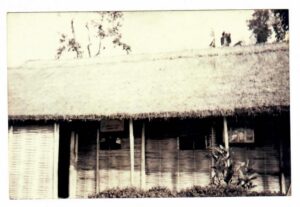
In 1992, the close-knit family had resettled in one of several refugee camps established by the United Nations High Commissioner for Refugees in Nepal and had been living there for 3.5 years when Chandra Subedi was born. His birth was a beacon of light in a camp where the refugees spoke of having “dark eyes” — meaning they had no hope.
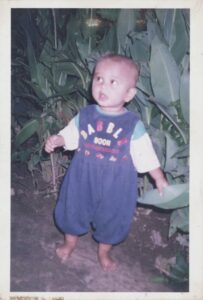
But the youngest Subedi had light in his eyes, even though he frequently fell ill to diseases that rapidly spread through the camp.
When he contracted pneumonia, he was taken to a crowded refugee clinic without a licensed physician — a fate many without health insurance faced. For two days, his father doggedly advocated for his son to be seen by a licensed doctor.
His passionate pleas worked.
The child was taken to a private, overcrowded, one-room hospital where he was left laying on a cement floor as licensed doctors tended to those with insurance. Sapped of energy, the young boy fell asleep. A day later, he awoke to find a needle attached to his arm and a wet cloth on his forehead.
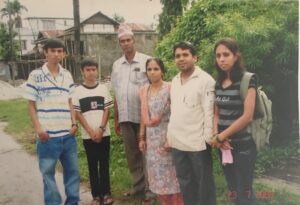
At a young age, he learned a hard lesson about disparity of care for those with and without health insurance.
Later, when he and his family had an opportunity to resettle in America, they took it.
The wide-eyed boy had arrived in San Antonio without any formal education. But that didn’t hold him back. For the next 17 years, the eager student soaked up every morsel of knowledge he could and gave back along the way.
Now a doctor and chief resident of research and education for the internal medicine residency program at The University of Texas at San Antonio’s Joe R. and Teresa Lozano Long School of Medicine, his experiences in the distant continent of South Asia seem a lifetime away. Yet the memories remain close to his heart through his compassionate interactions with patients, peers, students and the community.
Recently, his compassion was recognized with The Arnold P. Gold Foundation Humanism and Excellence in Teaching Award for outstanding humanistic teaching skills and the compassionate treatment of patients, their families, colleagues and students.
So how did this boy from the other side of the world — without a formal education or funds — venture into medicine?
The answer lies in a less-traveled road paved with hardships, endurance, mentorship, optimism and most importantly — compassion.
Arriving to a new world
Through the International Organization for Migration, many Bhutanese refugees of Nepali descent were given an opportunity to resettle in America, Europe, Canada and Australia. The Subedis were among the first wave of Bhutanese refugees to resettle in the Alamo City.
During the long flight bound for San Antonio, 12-year-old Chandra Subedi envisioned landing in a highly developed nation with many technologies. This new world would be opulent and grandiose. A place where the sky was the limit.
Just after midnight on Aug. 1, 2008, the jet touched down.
The youngster was still feeling motion sick when his family met with their case manager, who brought them to a less-than-opulent apartment building in San Antonio.
As he made his way into the family’s new apartment, he noticed dog excrement on the stairs leading to the apartment and asked himself, “Is this America or am I still in Nepal?”
While the living conditions were not what he’d imagined, he was now in America and anything was possible.
Culture shock
Growing up in the refugee camp without a television, radio or newspapers, the youngest Subedi had arrived in America without any formal education.
“Even the very basic schooling that I received in the refugee camp was a privilege that many refugees and other refugee diasporas around the world never had,” Subedi said. “I have to acknowledge that, because I think it did set me up for success.”
A self-professed “nerd at heart,” he was anxious to start Earl Rudder Middle School in San Antonio from the get-go.
“I kept bothering my case manager to take me to school,” Subedi recalled. “I was just so anxious to start to engage and assimilate in the community. I was just very eager to learn everything.”
But the enthusiastic adolescent didn’t realize he was in for a challenging time.
“It was quite the culture shock, not just for me, I think for my entire family, adjusting to a new country, language and the way of life,” Subedi said. “It took some time, but I have to give credit to my parents who never really had the opportunity to attend school in their home country. They were able to tirelessly make a new life here in the United States and ensure that my siblings and I had the opportunities that they never had.”
After starting middle school, he was teased and bullied.
“At that time it was devastating because you want to be able to make friends, you want to be able to assimilate with them, talk to them and obviously it’s going to take some time to get to that level,” he said. “But in the beginning, when you’re just by yourself, it feels truly isolating.”
The Subedi family was among the first wave of the Bhutanese refugees to resettle in San Antonio, so Subedi connected with refugee classmates from other parts of world. As additional Bhutanese refugees arrived in the city, Subedi made more friends.
Around that time, local businessman Jim Karlak and his wife Emily Karlak, an English-as-a-second-language (ESL) teacher in the Northside Independent School District, began to meet with the refugees from Nepal to help them learn English.
The Karlaks, along with volunteers from the Center for Refugee Services in San Antonio, helped the new arrivals obtain furniture, clothes, school supplies and backpacks. They also took them to medical appointments and facilitated field trips to the local grocery store, where they enlisted the help of a manager to provide a lesson about how to spot sales on products.
Upon meeting the youngest of the four Subedi children, Jim Karlak saw that he was filled with optimism and a zest for learning and acclimating to his new environment.
“If you know Chandra, his eyes are not dark,” Karlak said. “He’s always in a good mood. He’s always smiling.”
A passion for medicine
Subedi had a knack for science and math. Fortunately, he’d already met his future mentor — Pamela Wood, MD, professor of pediatrics at UT San Antonio’s Joe R. and Teresa Lozano Long School of Medicine — while in middle school.
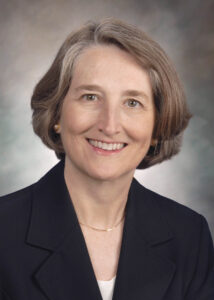
Wood, now a professor emeritus and adjunct pediatrics professor at the Long School of Medicine, had been volunteering to help the Bhutanese community in San Antonio after their arrival. During a project to distribute backpacks to kids, she met Subedi.
“I had a group of kids sitting around in a big room and I said, ‘Okay, who would like to help with this project?’” Wood said. “Chandra was one of the younger kids. I didn’t know him personally at that point and his hand shot up and he said, ‘I’ll help.’ That sort of gives you an idea of his enthusiasm for many things.”
After a few years, when Subedi attended John Marshall High School, he remembered meeting Wood and contacted her to ask if she could arrange for him to shadow a doctor.
“That’s a very important step in the process before applying for medical school,” Wood said. “Medical schools in particular are looking for that because they want to know that you have a realistic idea of what it means to be a doctor and it’s also important for the individual to validate whether or not this is really what they thought being a doctor was going to be and what they really want to do with their lives.”
After spending a couple of days in a clinic with Wood, Subedi expressed interest in learning about hematology and oncology. Wood put him in touch with a colleague and Subedi shadowed him for the summer.
Subedi kept busy during his high school years, focusing on his studies, helping others and preparing for college.
He tutored English as a second language refugee and international students in math, science and English every week and enlisted Karlak’s help with college and scholarship applications. Those efforts paid off, as Subedi became the first in the Bhutanese refugee community to be accepted to The University of Texas at Austin. He was successful in applying for assistance from the Joint Admissions Medical Program and the Gates Millennium Scholars Program, both of which help outstanding scholars from economically disadvantaged households pursue their academic goals.
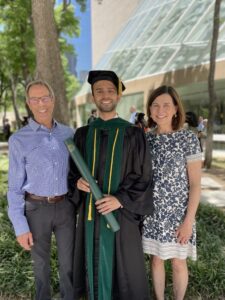
At UT Austin, he became a mentor to students. After graduating, Subedi was accepted to The University of Texas Southwestern Medical Center, where he received his Doctor of Medicine in 2022. Later, he was accepted to the residency program at UT San Antonio’s Long School of Medicine.
Now, as academic chief resident for the Long School of Medicine’s internal medicine residency program, Subedi oversees the program’s administrative side and supervises interns as they perform basic internal medicine procedures. He also works with his co‑chief residents to staff outpatient clinics and inpatient wards and supports resident education and training.
Delivering the care he needed early in life
When Subedi interacts with others — peers, trainees and patients — he treats them as he would like to be treated. With respect. With patience. With compassion.
While his days at the refugee camp are distant memories, his quality of care and compassion toward others is guided by those experiences.
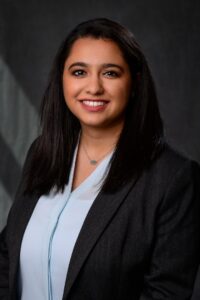
“He takes time to understand what the patient is saying, what they know about their healthcare,” said Iqra Nadeem Kazi, MD, co-chief resident overseeing quality, safety and procedures in the Long School of Medicine’s internal medicine residency program. “He’s able to really bring himself to the level of the patient. I think it’s really inspirational.”
Also inspiring is Subedi’s dedication to volunteering and giving back to those who helped him over the years, Kazi said.
“It’s really neat to see him as a medical provider, being able to volunteer at the refugee center, to stay in touch with them, ask them if they need any resources and always be involved in their care,” Kazi said.
To Subedi, giving back and providing the type of care he wished he received in the refugee camp is second nature.
“I want to be the kind of physician that I wish I had when I was a little kid running around the gullies of refugee camps just to receive basic checkups,” Subedi said.
And he is.
When Jiwon Park, now a fourth-year student in the Long School of Medicine, was doing an internal medicine clinical rotation at the Audie L. Murphy Memorial Veterans Hospital in San Antonio, Subedi supervised her and two other students who were just starting their patient-facing rotations.
Not only did Subedi tailor his training to match the students’ varying levels of knowledge, he took the time to explain how to navigate the VA’s electronic health record system and encouraged input from his trainees, Park said.
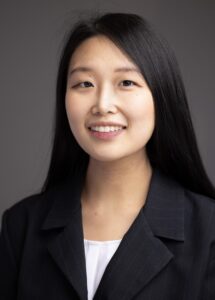
“I think it was very impressive how he made sure that everybody felt included and felt welcome to voice their opinions and their thoughts,” Park said, adding that she also valued his interactions with patients.
“He really understood this was one of the most stressful times for the patient and their loved ones,” Park said. “Being hospitalized is a very big event for anybody who is not involved in the medical field.”
His humility and compassion with patients also showed his empathy.
“He understood the difficulty that they’re navigating,” she said.
A future of compassion
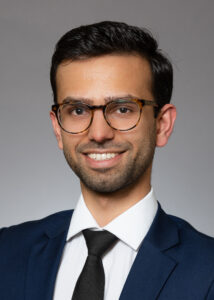
This July, Subedi will start three years of fellowship training to become a cardiologist. Ultimately, he’d like to remain in academia and continue engaging with the community.
Reflecting on his journey, he shared words of optimism for those who dream of becoming a doctor but think that goal may be out of reach.
“I want students to know that they are capable of more than they think,” Subedi said. “The journey to becoming a doctor is definitely not easy and there will be moments of self-doubt and times when you question whether you belong. Often, that’s just the impostor talking.”
In a recent speech to second-year medical students, he encouraged them to reach out to others for support and find mentors who will remind them that they belong in medical school.
“When you look at me, you’re looking at someone who didn’t receive a formal education until I was 13, when I resettled in the United States,” he said. “I didn’t speak a word of English. I truly started from zero. As you can imagine, this medical journey was not easy. But those early struggles taught me how to keep going when things feel uncomfortable, overwhelming or even impossible. Medicine will ask that of you again and again.”
From his early days as a child in the refugee camp, to acclimating in a new country, to working tirelessly to achieve his goals and give back in the process, he continues to take each step with intention and gratitude.
“It’s a God thing, but it’s also a human thing, in that none of this came easy for Chandra,” Karlak said. “There was a tremendous amount of hard work.”
Today, Subedi stands as a shining example of perseverance, humility and compassion.
“Coming to America, his moonshot dream was becoming a physician and son of a gun, he made it,” Karlak said.