

The gift of more time: Extending survival for patients with brain cancer
New research is advancing promising treatments to double the survival time for patients with brain cancer and to block tumor recurrence
If you are not familiar with glioblastoma, you might know some names of those it’s killed.
This most aggressive of brain cancers crosses political aisles, spans musical genres and touches sports, activism, media and beyond. U.S. Sens. John McCain and Ted Kennedy, Delaware Attorney General Beau Biden and U.S. Rep. Mia Love. Canadian rocker Neil Peart and Southern rocker Brit Turner. Major leaguers Gary Carter and Tug McGraw, reproductive rights advocate Cecile Richards and National Public Radio’s Neal Conan.
But university researchers are at the forefront of seeing that the insidious disease becomes less familiar, less deadly.
In just the last year, they have discovered a drug that could more than double survival time for glioblastoma patients, as well as a class of experimental drugs that could block the disease’s recurrence, a major clinical problem. Before that, they found that a drug effective in treating breast cancer showed promise in addressing brain metastases or recurrent glioblastoma that progress from breast cancer.
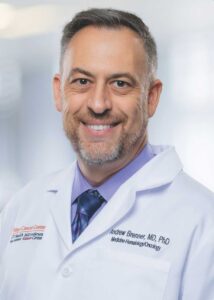
“As a disease with a pattern of recurrence, resistance to chemotherapies and [that is difficult] to treat, glioblastoma has needed durable treatments that can directly target the tumor while sparing healthy tissue,” said Andrew J. Brenner, MD, PhD, professor and chair of neuro-oncology research with Mays Cancer Center at UT Health San Antonio.
The median overall survival time for patients with glioblastoma after standard treatment with surgery, radiation and chemotherapy is only about eight months, Brenner said. And more than 90% of patients have a recurrence of the disease at its original location.
Brenner, who also is clinical investigator for the Mays Cancer Center’s Institute for Drug Development and co-leader of its Experimental and Developmental Therapeutics Program, said that new trials and research are providing new hope for a disease that is the most common primary brain tumor in adults and that can recur quickly and even more aggressively.
Extending survival time
One such trial revealed that a unique investigational drug formulation called Rhenium Obisbemeda more than doubled median survival and progression-free time — the duration from the start of a treatment to when a disease progresses or worsens — compared with standard median survival and progression rates. The drug also had no evident side effects serious enough to prevent increasing the dose.
Brenner was lead author of the trial’s study, published in March 2025 in Nature Communications. In this trial, scientists set out to determine the maximum tolerated dose of the drug, as well as safety, overall response rate, disease progression-free survival and overall survival.
After failing one to three other therapies, the 21 patients who were enrolled in the study between March 5, 2015, and April 22, 2021, were treated with the drug administered directly to the tumors using neuro-navigation, a computer-assistance guidance technology, and a specialized device called a convection catheter.
The researchers observed a significant improvement in survival compared with historical controls, especially in patients with the highest absorbed doses. The study patients had a median survival and progression-free time of 17 months and six months, respectively, for doses greater than 100 gray, which refers to the units of radiation.
Importantly, the researchers did not observe any dose-limiting toxic effects, with most adverse effects deemed unrelated to the study treatment. A phase 2 trial is underway.
Blocking recurrence
Brenner’s study came on the heels of another that discovered a way to delay or even block recurrence of glioblastoma, bringing new hope for survival. It came with a note of irony.
Scientists found that the customary treatment for the disease — ionizing radiation — can also cause tumors to recur by generating senescent, or aged, cells that secrete molecules that can spur growth of neighboring cancer cells.
When a tumor is radiated, a cancer cell can either die or remain alive but be permanently unable to divide further, a state called senescence, with both outcomes controlling tumor growth. However, researchers in this study discovered that senescent glioblastoma cells secrete large amounts of growth factors and other molecules that can act on persisting cancer cells and encourage them to re-proliferate.
But these researchers also discovered that a new class of experimental “senolytic” drugs given after radiation can kill those senescent cells while sparing normal ones, thereby stemming recurrence.
Senolytic gets its name from the words “senescence” and “lytic,” or destroying. A senolytic refers to a novel class of small molecules thought to selectively induce death of senescent cells.
“These findings lend credence to the ‘one-two punch’ approach to radiation therapy, where radiation or other agents are first used to induce senescence in a tumor, and then the senescent cells are removed by a senolytic,” said Sandeep Burma, PhD, professor and vice chair, research, of neurosurgery and co-leader of the Cancer Development and Progression Program of the Mays Cancer Center.
Burma and Bipasha Mukherjee, PhD, associate professor of neurosurgery at the university, were lead authors of this study, published in February 2025 in EMBO Molecular Medicine.
A double-edged sword
Burma’s lab has focused on understanding the forces driving recurrence and strategies to block the process. Specifically, they set out to understand whether senescence of cancer cells after radiation therapy — also called therapy-induced senescence — might counterintuitively be driving recurrence.
Burma said that ionizing radiation, which is routinely and, in many cases, effectively used to treat cancer, is a double-edged sword since radiation also is a powerful carcinogen.
For glioblastoma, radiation is still the most effective therapy. But radiation exposure also is the only known risk factor for its development and could perhaps also drive recurrence. What to do?
End of senescence
The researchers found that senescent glioblastoma cells rely on an anti-apoptotic protein, or one that slows or prevents cell death, known as cIAP2, for survival. They also found that targeting cIAP2 with a senolytic drug called birinapant in mouse tumor models after radiation could kill senescent cells while sparing normal cells.
They tested their approach in multiple mouse models of glioblastoma and found that, while the drug was not effective on its own, it was very effective at delaying or even preventing recurrence if given as an “adjuvant,” a secondary treatment after the primary treatment of radiotherapy.
“These pre-clinical results highlighting a novel senolytic approach for glioblastoma are very exciting from a clinical standpoint as they clearly indicate that significant improvement in patient survival may become possible by eliminating senescent cells arising after radiotherapy,” Burma concluded.
Nexus of breast and brain cancers
The year before, UT Health San Antonio researchers found that the drug sacituzumab govitecan, effective in treating breast cancer, was well-tolerated and showed signs of effectiveness for those whose breast cancers had metastasized to the brain. The scientists made the discovery from a “window trial,” or one in which patients agree to be treated with a novel drug before undergoing surgery.
About half of all women with the aggressive and advanced triple-negative form of breast cancer will be diagnosed with brain metastases, and the prognosis is poor, with a median overall survival of just more than seven months.
Brenner was lead author of the trial’s study, published in August 2024 in Nature Communications.
“We knew that the drug has been effective in the treatment of breast cancer, but its usefulness in treatment of resulting brain tumors has been unclear,” he said. “Our trial, however, revealed that it could achieve concentrations of inhibitors inside the tumors sufficient to benefit patients, and with minimal side effects, which is very promising for new therapy.”
Addressing an unmet need
Treatment for tumors originating from breast cancer typically involve surgery, radiotherapy and systemic therapies that target the entire body, though these measures are often unsuccessful. Aggressive glioblastoma represents about half of those brain malignancies.
This unmet need to address breast cancer with brain metastasis and recurrent glioblastoma has been limited by many factors. Unlike chemotherapy, sacituzumab govitecan is intended to target and kill tumor cells while sparing healthy cells.
The trial at UT Health San Antonio enrolled 25 patients, ages 18 or older, who had been diagnosed with breast cancer with brain metastases or recurrent glioblastoma. Each received a single intravenous dose of the drug one day before tumor-tissue removal and then again on days 1 and 8 of 21-day cycles following recovery. The timeframes were eight months for patients with breast cancer with brain metastases and two months for those with recurrent glioblastoma.
The researchers discovered significant penetration of SN-38, a potent anti-cancer agent, inside the tumors that was delivered by the drug to fight their development, and without unexpected adverse effects on the patients. The data would support investigation in a phase 2 clinical trial of the drug in recurrent glioblastoma.
Continuing research, trials
As the academic health center of The University of Texas at San Antonio, UT Health San Antonio conducts and participates in hundreds of clinical trials at any time across the spectrum of chronic disease and human health conditions. Within this broad context, the institution’s physician-scientists have helped improve brain tumor treatments in significant ways. And through continued research, they offer emerging therapies to eligible patients affected by early and advanced diseases, including glioblastoma.
“Our research can have a profound impact on families facing a brain cancer diagnosis,” Brenner said. “Just knowing that what we do can potentially extend lives and allow patients to have more time with their families makes all this worthwhile. It is why we do what we do.
“Glioblastoma has claimed the lives of countless individuals, famous and otherwise. Our patients aren’t famous, but our goal is for them not to become known or defined by this disease — and to cure or give them a new lease on life.”
Learn more about the cancer clinical trials and research at Mays Cancer Center.

Ready to respond: Students test their first-responder skills
Practicing emergency medicine far from the emergency room is how some medical students test their first-responder skills
There’s never a good place to have a heart attack, but some places are worse than others.
Clutching my chest and sprawled on the Ernst Ridge Trail in Big Bend National Park, high up in a corner of this most vast and remote of Texas parks, I was at least 30 minutes from an ambulance, plus the time to get to a pickup location. Once there, I was still about two hours from the nearest emergency room, and five hours from the closest trauma center. Helicopter? Maybe four hours, if it had a place to land.
Luckily, I was hiking with a group of fourth-year students and faculty from the Joe R. and Teresa
Lozano Long School of Medicine at The University of Texas Health Science Center at San Antonio. Even luckier, I was acting — playing a heart attack victim in one of seven wilderness emergency scenarios staged by students and faculty of what is possibly the most in-demand elective course at the medical school, judging by how immediately it fills up and the waiting list.
The four-week class goes by EMED 4007, Wilderness and Survival Medicine, and includes a four-day trip to Big Bend, where students practice their emergency
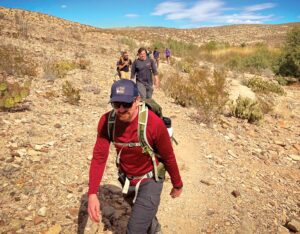
medicine skills in an austere environment.
Or “like ER without the resources,” said Bill Jones, MD, clinical assistant professor of emergency medicine, director of the school’s Wilderness and Survival Medicine Fellowship and a former fellow himself. Jones was one of 15 faculty and other physicians who joined a total of 44 students rotating in three groups throughout 10 days in February 2024. They all met at a group campsite at Rio Grande Village in the southeast corner of the park, about 50 yards from the Rio Grande.
A practical course
The course dates to 2020 when its director, Steven Moore, MD, clinical associate professor of emergency medicine, started off wanting 20 students, but took 26. Next time, he capped it at 35. This year, 63 students signed up the moment registration opened, and Moore eventually settled on 44 students.
“The feedback we get every year is ‘It’s the best course I’ve ever taken.’ A lot of them call it ‘The most useful course I’ve taken,’” said Moore.
Emergency medicine is a required clerkship for a third-year medical student at the school, so students need to complete that before taking this course. While many of the students who participate will specialize in emergency medicine, a growing number are pursuing other specialties — from internal and family medicine to surgery, anesthesiology, ophthalmology and radiation oncology. They see the merit in applying what they’ve learned the past four years of medical school in this most basic, sparse environment.
Learning to group problem-solve
For the scenarios, Moore had this bit of instruction to the group: “Just immerse yourself in the scenario and let your common-sense brain kind of kick in,” he said. “Think about the weather, think about what’s comfortable for you, think about how you would be if you were this patient. Don’t worry so much about getting the right answer. Just think about the problem and work through it.”
The first scenario simulated patients with fairly routine abdominal pain, with one needing to be picked up and carried. The next scenario, though, jolted the students soon enough: a catastrophic boat accident on the river with mass casualties.
The depicted casualties included a drowning cardiac arrest, a pediatric hypothermia/respiratory arrest, an open/compound femur fracture with femoral artery laceration, an unconscious head injury, a shoulder dislocation and a missing uninjured infant requiring a hasty search — plus a hysterical parent distracting the medical providers.
“Where’s my baby? Where’s my baby?” Jones, as the hysterical parent, shrieked. Austin Gay, MD, a third-year resident helping on the trip, simulated the fracture and laceration victim as students carefully applied tourniquets. Jacob Feldman, MD, clinical assistant professor of emergency medicine, playing the unconscious head injury patient, lay motionless on the bank. Other actors portrayed less serious injuries. Dummies were used for the baby and for the lone fatality.
Moore and Ryan Bierle, DMSc, PA, clinical assistant professor of both emergency and internal medicine, prompted the students as needed, trying not to direct
and instead pushing them to determine treatment, commit to it and go.
The students scrambled from patient to patient, asking questions, doing assessments. When one student suggested a patient needed neurosurgery, Moore reminded, “Right. Which is where? Five hours away. So, we need to be calling.”
A satellite phone appeared, and a call was role-played as part of the scenario. The students then pivoted to an evacuation plan. They set to work building a
rope litter — essentially a stretcher — carefully placing Feldman on a tarp, tying it over with ropes and large carabiners and then lifting and carrying him up the boat ramp to the parking lot.
Afterward, everyone gathered in a circle to discuss what went right and what went wrong. Should they have initially triaged Feldman as a category red, indicating severe distress, instead of a less-serious yellow? Should they have applied only one tourniquet first, and waited to apply the second as needed? Should they have moved faster, with water rising from the river?
Feldman, for his part, was complimentary.
“I thought the communication was really good. You communicated very clearly,” he said, adding, “And not dropping me — I really appreciated that.”
Life and death along the trail
It was getting closer to my cameo. Heading up the Ernst Ridge Trail, we separated into two groups of students and faculty. Moore had asked me to go with the first group, but to intentionally fall behind and then collapse near the top of the first big ridge.
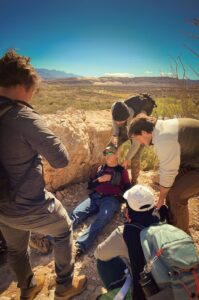
I dutifully dropped to a sitting position before lying back, groaning and breathing irregularly, and complained about chest pain. Immediately, the students descended, asking where it hurt, could I remember where I was, was I hot or cold, was I taking medications, did I have a family history of heart trouble, and so on. I held my breath.
They removed my backpack, did CPR — without the mouth-to- mouth — and pretended to shock me with an Automated External Defibrillator, or AED. Then, they discussed how they were going to get me out. Helicopter? Moore reminded them about the time and trouble that would take.
They decided they would need to carry me, or if I could walk, assist me in walking back down a considerable distance to an ambulance at Rio Grande Village — if they were able to call or radio one to come — and then wait the 30 minutes necessary for the ambulance to arrive.
There was no cell service.
The first group continued their hike and left me there for the next group, about 15 minutes behind, and I repeated the same act. Same conclusion: They had to get me down.
As I was not a faculty member, but merely an observer, a couple of students later told me they initially thought my act might be real. Throughout, I kept thinking about things that were very real. I wasn’t far from where two people, a 14-year-old boy and his stepfather, died the previous summer, overcome by the heat while hiking. I kept thinking about the sheer helplessness they must have felt.
And last year on this same class trip, the group passed a Boy Scout troop going the opposite way. As the last of the class finished the hike, they encountered rangers mobilizing to head back up the trail. One of the scout leaders had suffered a heart attack. He didn’t survive.
Now, there’s a bright yellow emergency AED box posted on the trail that the troop had hiked.
Strength in numbers
Other scenarios during the trip depicted anaphylaxis from a bee sting; high altitude cerebral edema, known as HACE, and high-altitude pulmonary edema, or HAPE; a climbing fall with reported neck and ankle pain; altered mental status with seizure; and a particularly bizarre case of multisystem trauma with gunshot wounds. That one resulted in a femoral artery laceration requiring a tourniquet in addition to treatment for a “sucking chest wound,” or an open hole to the chest. The premise was that the bullets inadvertently came from a hunter’s rifle, as hunting occasionally is used to cull non-native species in the area.
Among the takeaways from students working through this broad range of emergency scenarios: an appreciation of the assessment process required to reach consensus on the best response to life-threatening situations; the sobering reality of the high stakes involved with decisions made; and an understanding of the strength and resolve that can result when you learn to trust and work with others to save lives.
“I had no idea that a course like this existed, but I’m really glad it does,” said Natasha Paul of Austin, who jumped at the chance to take it, even though she plans to specialize in obstetrics and gynecology. She since was matched to Vanderbilt University.
“So much of what we do is in the hospital facility where we have all the resources that we need,” she said. “What do you do without an ER or an operating room right in front of you? And so, I liked that this class gave you the opportunity to learn what medicine might be like without those resources.”
The evolving nature of emergency medicine
While emergency medicine always has been about recognizing someone who needs immediate care and knowing how to resuscitate or save them, much about it has changed and continues to evolve.
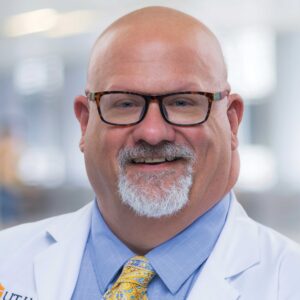
Heat-related emergencies, prevalent in South Texas, are a good example, said Ralph Riviello, MD, MS, FACEP, chair and professor of the Department of Emergency Medicine at The University of Texas Health Science Center at San Antonio.
“Years ago, the notion of using temperature bags with ice water and submerging someone in cold water as a means to treat severe heat illness was thought to be ineffective and too dangerous,” Riviello said. “But as we have seen more cases and are able to test this hypothesis, this has been shown to work, and with good results. So, it has become a best practice.”
Similarly, there are new ways to warm patients in cold-related emergencies. And now, those measures safely can be combined with practices like defibrillation, which uses an electrical current to improve heart rhythms — previously thought too much of a risk for patients while submerged in water to cool or warm them.
“These are the kinds of exciting things we see in emergency medicine, with researchers questioning how we used to approach emergency treatments and testing new ideas to determine better ways to impact patients,” Riviello said.
New technologies include use of an ECMO, an extracorporeal membrane oxygenation machine, to remove blood from a patient and oxygenate it. Care for sepsis patients who develop major infections has changed by giving them a higher-dosage fluid IV to maintain blood flow and support nutrients getting to body tissues, along with early and appropriate IV antibiotics.
In cases of life-threatening blood loss, the university’s emergency department is a national leader in the effort to get blood into the hands of EMS crews, with its model now practiced across the country. The department maintains a close relationship with EMS partners, who Riviello says know how to distribute patients so that no one facility is overly burdened.
Emergency medicine advances also extend to what no longer is done, like administering certain medications to cardiac-arrest patients that since have proven ineffective. Theories of resuscitation likewise are evolving.
With more widespread needs for emergency care — some related to an increasing occurrence of severe weather events — Riviello believes a bigger focus will be on how to handle disasters with new technologies that help locate and get to people faster, or get them to facilities more quickly, along with new techniques and treatments.
As response readiness relates to wilderness or austere medicine, Riviello has this advice for outdoor enthusiasts.
“The key is always to be prepared. Do your research,” he said. “This includes knowing your own limitations if you haven’t done something before so that you can be realistic about what you will need. Have a plan, including letting others know where you are going so that if they don’t hear from you, they can be your cry for help.”