

Longs' gifts ensure student success
Since 2000, Joe R. and Teresa Lozano Long have provided more than $1 million in full scholarships to deserving Health Science Center medical students from South Texas.
In 2007, the Longs contributed a $25 million transformational gift that included endowments for medical student scholarships in perpetuity.
Long Presidential Scholars are selected from throughout South Texas including, Del Rio, Laredo, Harlingen, Corpus Christi, Alamo, Brownsville and San Antonio. The students are excelling in their areas of interest that range from family medicine to internal medicine, emergency medicine and others. Several are participating in volunteer health care clinics. Many of the communities where they volunteer lack sufficient health care resources and are located in the students' hometowns as well as across the world in places such as Honduras, Guatemala, Ecuador and Nicaragua.
 "Throughout my first year, I've been able to maintain a 4.0 GPA and still manage to stay involved in other important activities. I volunteered at a student-run clinic and at diabetes fairs several times over the year. My goals include returning to Laredo to do my part to improve the quality of health care there. Thanks to the Longs' tremendous support, I can now focus my complete attention on achieving what I came here to do - become a great doctor."
-Alfredo Camero Jr., first-year medical student and 2009 Long Presidential Scholar, Laredo
Voelcker Fund sparks new discovery, sustains Health Science Center mission
Established in 2006, the Max and Minnie Tomerlin Voelcker Fund and its trustees have already made transformational gifts of nearly $4 million to biomedical research at the Health Science Center. The trustees continue to honor the legacy of the late Max and Minnie Voelcker by playing a profound role in breakthrough science in San Antonio and South Texas.
$4 million supports outstanding faculty
This year, the Voelcker Fund trustees provided an additional $4 million to fund the research of six outstanding Health Science Center investigators through its Scholar and Young Investigator Awards program. This new gift brings total support from the Voelcker Fund to just under $8.75 million dedicated to advancing medical research in San Antonio through the Health Science Center.
The Young Investigator Awards provide recipients with $150,000 each per year over five years ($750,000). The funds support young scientists who conduct groundbreaking medical research in the following areas: cancer, heart disease, arthritis, muscular dystrophy, retinitis and/or macular degeneration of the retina.
The Scholar Awards provide a one-time award of $500,000 to each recipient. The gift supports the development and productivity of outstanding, established scientists for Voelcker Fund research priorities.
The following are the 2009 Voelcker Fund Scholar and Young Investigator Award recipients.
SCHOLAR AWARDS
Sunil Ahuja, M.D.
Rong Li, Ph.D.
YOUNG INVESTIGATOR AWARDS
Ricardo Aguiar, M.D., Ph.D.
Patricia Dahia, M.D., Ph.D.
David Kadosh, Ph.D.
Merry L. Lindsey, Ph.D.

Voelcker Academy a success
"It was never enough for me. I needed to know more. I'm very passionate about cheerleading - and research," she said. I love my cheerleading team. I think they're great. But this is something I could see myself doing as a career." -Elizabeth Santiago
With a $750,000 grant, the Voelcker Fund established The Max and Minnie Tomerlin Voelcker Biomedical Research Academy at the Health Science Center in July 2009. Twenty-two local high school sophomores participated in biomedical research with sophisticated, hands-on laboratory workshops and field trips, and received mentoring from distinguished faculty. This was the inaugural phase of the three-year pilot program. The purpose of the Voelcker Academy is to prepare students for college while developing the next generation of biomedical scientists for San Antonio.
Voelcker Academy participant, Elizabeth Santiago, (pictured above) will be a sophomore at the International School of the Americas this fall. She is a varsity cheerleader but chose the Voelcker Academy over cheerleading camp this past summer. She developed an interest in science at school.

Appointments and Awards
 Dipen Parekh, M.D., associate professor in the Department of Urology and director of robotic surgery, was named a 2008 Outstanding Reviewer by the American Urological Association (AUA) in the field of prostate cancer. The award was presented at the AUA's annual meeting this past spring in Chicago. Dr. Parekh was one of seven outstanding faculty physicians from across the country honored for his exceptional contributions in reviewing the AUA's official journal The Journal of Urology. Dr. Parekh was selected out of a total of approximately 3,000 reviewers who review for the journal.
He is a member of the AUA, which is the pre-eminent professional organization for urologists, with more than 16,000 members worldwide. Dr. Parekh also holds the Doctors Hospital at Renaissance Distinguished University Chair in Urology at the Health Science Center.
Steven R. Bailey, M.D., chief of the Janey and Dolph Briscoe Division of Cardiology, is the new president of the Society for Cardiovascular Angiography and Interventions (SCAI). A fellow of the SCAI, Dr. Bailey was installed as president at the society's 32nd Annual Scientific Sessions in Las Vegas. The SCAI is the primary professional organization for more than 4,300 invasive and interventional cardiologists, who perform procedures including the placement of coronary artery stents, cardiac catheterization and diagnostic angiography. Dr. Bailey, professor of medicine and radiology in the Long School of Medicine, directs the Janey Briscoe Center of Excellence in Cardiovascular Research and sees patients of the school's UT Health San Antonio, the largest multispecialty medical practice in South Texas. He teaches students, residents and fellows, and conducts research on many topics, including development of new generations of stents. Dr. Bailey also occupies the Janey Briscoe Distinguished University Chair in Cardiovascular Research.

Philip LoVerde, Ph.D., professor of biochemistry and pathology, is a member of an international team of investigators that has sequenced the genome of Schistosoma mansoni, a parasite that infects 200 million in 76 countries through freshwater snails.
The research, said to be the largest genome sequencing of a parasite to date, is the cover article in the July 16 issue of the journal Nature. Dr. LoVerde also co-authored the paper. He has studied the parasite, and its close relatives, for more than three decades and said that knowing the organism's genetic codes will help researchers develop better medication for infections, a diagnostic field test and even a vaccine.

Science Expo 2009 is Nov. 7
High school and college students from throughout Texas are invited to the 2009 Health Professions Fair and Science Expo scheduled for Saturday, Nov. 7, on the campus of the UT Health Science Center San Antonio. The event features interactive, hands-on activities designed to interest students in health care professions including allied health, medicine, dentistry, nursing and biosciences research. For more information or to reserve your spot, call (210) 567-3941 or e-mail: chapai@uthscsa.edu.
HSC/UTSA collaborate with Merck to develop vaccine
The Health Science Center and the University of Texas at San Antonio (UTSA) announced an exclusive license and sponsored research agreement with Merck & Co. Inc. to develop a vaccine for chlamydia, targeting the common sexually transmitted bacterium Chlamydia trachomatis. "The Health Science Center strives not only to make discoveries that improve the quality of life but also to make sure these breakthroughs are rapidly disseminated through the commercialization process so they can help as many people as possible," said Brian Herman, Ph.D., vice president for research at the Health Science Center. "We welcome this opportunity to further advance our already successful collaboration with UTSA."

HSC welcomes accreditation review, students to new nutrition, dietetics program
The Coordinated Program in Dietetics, consisting of a Bachelor of Science degree in nutrition and dietetics and a master's degree in dietetics studies, recently received "candidacy for accreditation" status following an expedited review from the Commission on Accreditation for Dietetics Education. "This means that the program is on track to become fully accredited, and that graduates beginning with this first class will have the same privileges as those graduating from an accredited program," said Carmen Román-Shriver, Ph.D., RD, LD, program director. Currently, 11 students have been accepted at the San Antonio campus and Laredo Campus Extension for the program's first year. The program has the capacity to enroll 72 students overall once it is established.

School of Medicine residency programs gain repeat five-year accreditation
The Accreditation Council for Graduate Medical Education (ACGME) has awarded the Long School of Medicine the best accreditation status (Continued Accreditation) for a maximum cycle length of five years. This is the second five-year institutional accreditation cycle in a row for the Long School of Medicine. The reaccreditation followed a highly positive site visit by ACGME reviewers in August 2008. The Continued Accreditation designation also includes the Long School of Medicine's internal medicine residency program offered at the Regional Academic Health Center in Harlingen, and the family medicine residency program in McAllen.

Nobel Laureate's lecture, STRF highlight collaboration
The scientific discourse that moves discoveries from labs to patients' bedsides was the theme this past spring as the Health Science Center welcomed Nobel Laureate Michael Brown, M.D., for a School of Medicine 40th anniversary lecture and unveiled the cornerstone of the Health Science Center's newest research building, the $150-million South Texas Research Facility (STRF). The lecture highlighted the good ideas and effective innovations that can come when clinicians who treat health problems partner with bench researchers to study the molecules, proteins and genes underlying heart conditions due to high cholesterol. That theme continued in the afternoon at the STRF ceremony, where, as leaders said, the 200,000-square-foot facility will "change the face of biomedical research in San Antonio." The STRF will be one of the largest research buildings ever constructed in San Antonio.
"The South Texas Research Facility's close proximity to the Medical Arts & Research Center (MARC) is certain to fuel translational research, thereby moving discoveries from the lab bench to use in our communities," said William L. Henrich, M.D., MACP, Health Science Center president.
With Greatest Respect: The Cigarroa Presidency
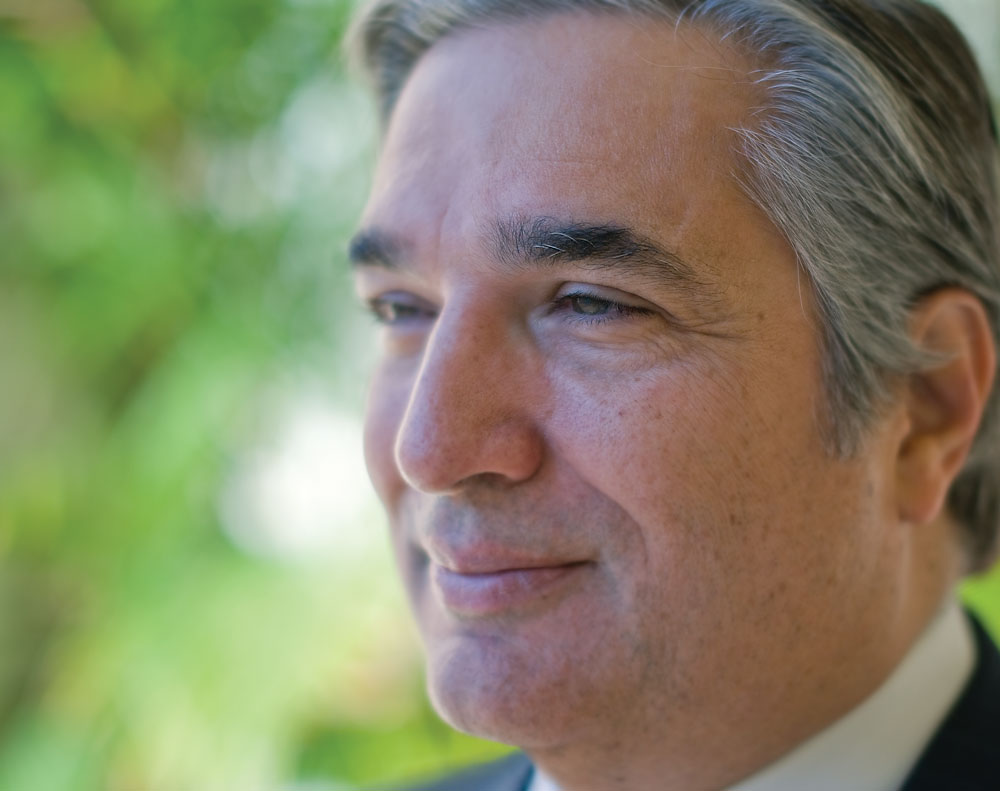
An overwhelming feeling of pride swept across the UT Health Science Center San Antonio campus as faculty, staff, students, donors and community leaders celebrated the Jan. 9 announcement that Francisco G. Cigarroa, M.D., their president and leader for the past eight years, had been named chancellor of The University of Texas System. As Dr. Cigarroa began his new role Feb. 2 in Austin, he left behind a legacy of unparalleled achievement, upward trajectory and hope for the future of this university and its missions in San Antonio and South Texas.
"With greatest respect," the complimentary closing that Dr. Cigarroa often uses in his correspondence, epitomized his leadership style as president - influential, progressive, committed, determined, caring, kind and humble. Dr. Cigarroa treated everyone with the utmost respect and usually offered them his customary, warm Texas-sized abrazo.
As the university and its constituents wish Dr. Cigarroa all the best in his new position, they reflect with admiration, honor and gratitude upon the eight extraordinary years that Dr. Cigarroa and his wife, Graciela, served this institution.
Below is a glimpse of some of the landmark achievements at the Health Science Center during his tenure.
2000
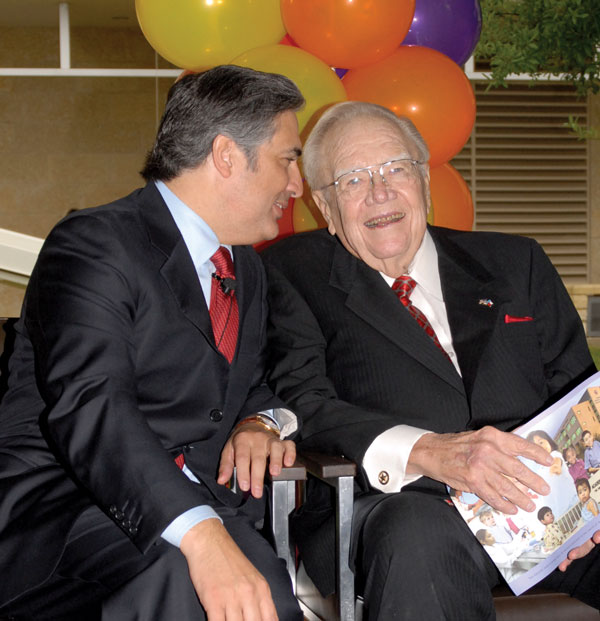
- On Oct. 13, The University of Texas System Board of Regents names pediatric and transplant surgeon Francisco G. Cigarroa, M.D., president of the UT Health Science Center San Antonio. He assumes his new role Oct. 16, 2000. President Cigarroa officially accepts the presidency in a Sept. 7, 2001 investiture ceremony rich with academic tradition and South Texas pride.
2002
- The Regional Academic Health Center (RAHC) is dedicated in Harlingen. Third- and fourth-year medical students can complete part of their medical education at the RAHC and its affiliated clinics and teaching hospitals in the Lower Rio Grande Valley. More than 700 students have either spent a year at the RAHC or completed a rotation there. Twenty-three medical residents also have graduated from the RAHC, and half remain in the Valley to serve the population.
- The Laredo Campus Extension is dedicated. Students in respiratory therapy, occupational therapy, physical therapy, dental hygiene and dentistry experience part of their education at the D.D. Hachar Building. The campus is headquarters for the South Texas Environmental Education and Research (STEER) program and the Laredo office of the Med Ed program that introduces young people to careers in the health sciences.
2004
- The M.D./Ph.D. program is established to improve the pipeline and demographics of clinician/educators. President Cigarroa states that this goal is important to the future and success of all health professions.
- The Health Science Center initiates its Campaign for the Future of Health, the largest campaign in the university’s history. To date, the campaign, including public and private support, has raised more than $283 million, which is 94 percent of the $300 million goal. Since 2000, $353 million has been raised in cash gifts to support the missions of the Health Science Center, with 58 percent, or just under $200 million, raised in the last three years.
- The Children’s Cancer Research Institute is dedicated. Faculty and administrators vow to work diligently toward a future when the words "children" and "cancer" will never be used in the same sentence again.
2005
- The UT System Board of Regents approves the building of the Medical Arts and Research Center in the South Texas Medical Center that will consolidate eight of the Health Science Center’s clinic locations into a single premier medical practice for UT Health San Antonio, the largest multi-specialty practice group in South Texas. Expected completion for the building is September 2009.
- The Sam and Ann Barshop Institute for Longevity and Aging Studies is dedicated at the Texas Research Park. Since 2000, the Barshop Institute has received $83 million in grants from the National Institute on Aging. It is hailed by the National Institutes of Health as the "gold standard of aging research in the United States."
2006
- The Edinburg-RAHC is dedicated. The second building, home of the RAHC Medical Research Division, is located on the campus of UT Pan American in Edinburg. This division provides state-of-the-art laboratory space and equipment for scholars and scientists to conduct research on critical health problems of the South Texas/Border Region.
- The UT System Board of Regents approves the building of the South Texas Research Facility (STRF). The 200,000-square-foot STRF will house the university’s growing research enterprise, including the Institute for Integration of Medicine and Science and the Center for Healthy Aging. Expected completion for the building is 2011.

2007
- The Cancer Therapy & Research Center joins operations with the Health Science Center, making this historic merger the largest gift in the Health Science Center’s history. The union promises to build a world-premier cancer center that, backed by the power of academic research and discovery, provides better lives to cancer patients and their families.
- Bill Greehey and the Greehey Family Foundation donate $25 million to the Health Science Center. In recognition of their historic contribution, the name of the North Campus is changed to the Greehey Academic and Research Campus, spotlighting the Greehey Children’s Cancer Research Institute.
2008
- Philanthropists Joe R. and Teresa Lozano Long donate $25 million to the Health Science Center. In honor of the Longs’ generosity, the university’s central campus is renamed the Joe R. and Teresa Lozano Long Campus.
- The Academy of Master Teachers is established at the Health Science Center to encourage the scholarship of teaching and an ongoing institutional recognition of and commitment to teaching and learning excellence.
- Former Gov. Dolph Briscoe Jr. makes a $5 million contribution to the Health Science Center in support of cardiology and women’s health. The Health Science Center names the Division of Cardiology the Janey and Dolph Briscoe Division of Cardiology. To date, Gov. Briscoe has given $9 million to cardiovascular disease research at the Health Science Center in honor of his late wife, Janey. In February 2009, Gov. Briscoe was awarded the prestigious Santa Rita Award by the UT System Board of Regents, which recognized him for his remarkable support of UT institutions that spans nearly 70 years.
2009
- President Cigarroa is named chancellor of the UT System on Jan. 9. He becomes the first Hispanic to head a major public university system in the country.
During Dr. Cigarroa’s tenure, the UT Health Science Center experienced a surge of growth and success that paved the way for an exciting and promising road ahead.