

NIH awards $1.66 million to increase diversity in neurosciences

The National Institutes of Health (NIH) announced the awarding of a $1.66 million grant to the Health Science Center to encourage individuals of diverse backgrounds to seek doctoral degrees in the neurosciences.
Lead investigators on the grant are Alan Frazer, Ph.D., professor and chairman of pharmacology, and David Weiss, Ph.D., dean of the Graduate School of Biomedical Sciences. The Health Science Center is partnering with local institutions of higher learning, including St. Mary’s University, Trinity University, the University of the Incarnate Word, Our Lady of the Lake University and The University of Texas at San Antonio.

Innovative Sex Education Program receives $10 million

Our culture of excellence
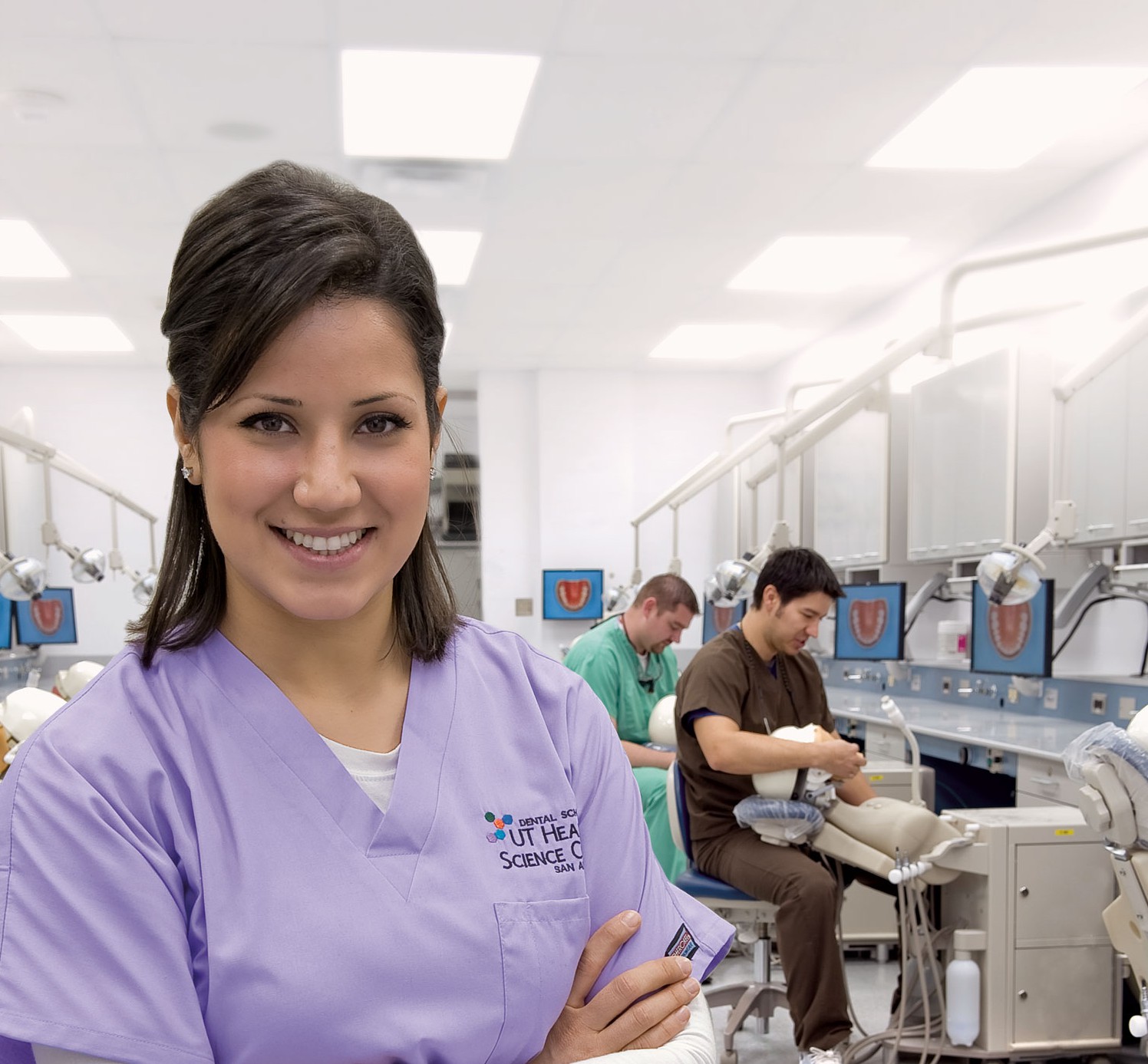
For more than 50 years, The University of Texas Health Science Center at San Antonio has nurtured a culture of excellence in all of its missions. Among its most important priorities - educating the next generation of health care professionals.
About 27,000 students from the Long School of Medicine, Dental School, School of Nursing, School of Health Professions and Graduate School of Biomedical Sciences have graduated to become the faces we trust in clinics, hospital emergency rooms, surgical suites, laboratories and health science centers throughout Texas and the world.
At the root of this success are outstanding faculty, facilities, resources and technology. Together, they are planting the seeds for discovery, service and commitment to humanity.

The MARC of excellence

Medical Arts & Research Center puts patients first
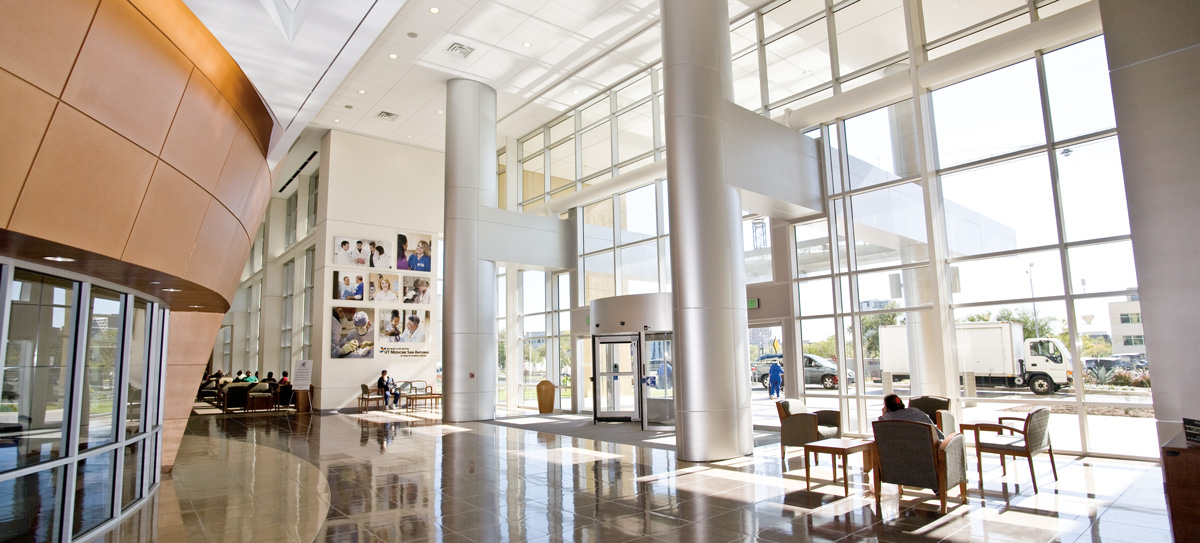
The opening of the striking, eight-story Medical Arts & Research Center (MARC) has brought added visibility to UT Health San Antonio - and to the advantages of academic medicine.
The UT Health San Antonio practice plan has always given patients the opportunity to see the same doctors who teach and conduct world-class research in the Long School of Medicine at The University of Texas Health Science Center at San Antonio.
With more than 200 faculty physicians, the MARC provides a focal point for that expertise. But the benefits of the MARC go beyond the knowledge of its doctors. Convenience and continuity are also part of the MARC experience.
A patient can see general practitioners and specialists, undergo diagnostic testing and have outpatient surgery all in the same building. And UT Health San Antonio is always looking to add new innovations - like patient navigators, who serve as advocates for patients.
"By its very design, the MARC cares for the whole patient," said William L. Henrich, M.D., MACP, president of the Health Science Center. "The faculty-physicians of UT Health San Antonio are at the forefront of their profession, and the MARC makes collaboration among them seamless."
To schedule an appointment or to refer a patient to a UT Health San Antonio physician, call (210) 450-9000. Or, visit UT Health Physicians for more information.
Five-star operation
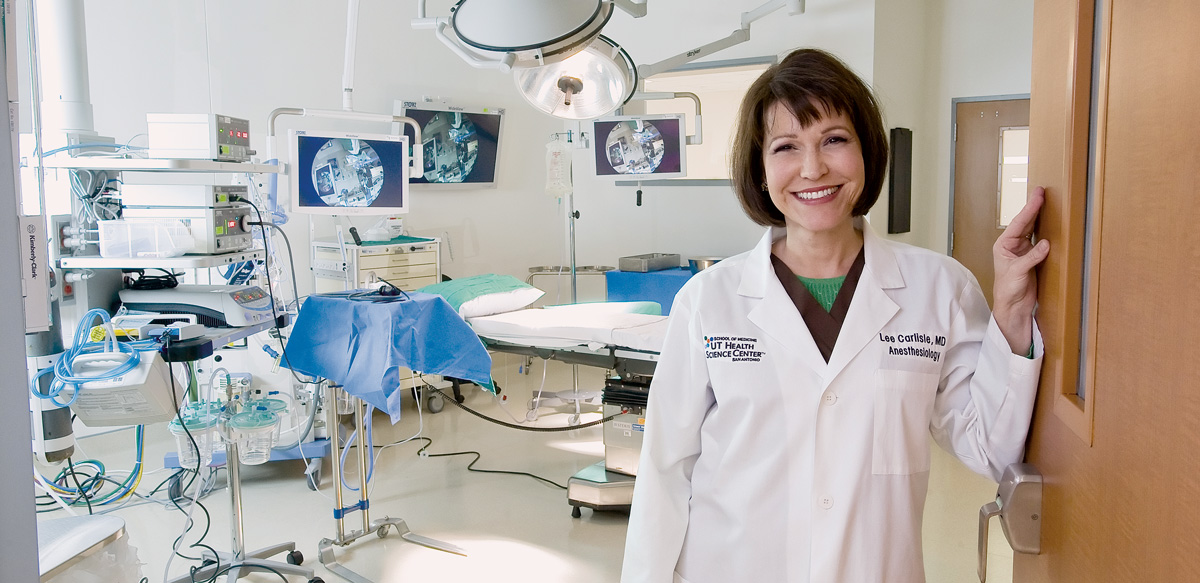
In addition to state-of-the-art clinics and diagnostic imaging, the Medical Arts & Research Center (MARC) now offers outpatient surgery.
The Day Surgery Center, which opened in December, boasts four operating rooms, two endoscopy suites and "impressive technology," said Lee A. Carlisle, M.D., an anesthesiologist and medical director for the day surgery centers at both the MARC and the Cancer Therapy & Research Center.
That technology is instantly visible. The Day Surgery Center has high-definition capabilities to support laparoscopies and endoscopies. All images displayed in an operating room are controlled from a nurse's station by touch screen. The center occupies the entire second floor and offers a private elevator with a separate entrance for surgery patients.
Another benefit: Because the ambulatory surgery center serves an academic medical practice, it offers a full range of surgical specialties.
The Day Surgery Center is one more way the MARC caters to patient convenience. Patients can see their primary care doctors, consult with specialists, get laboratory work and diagnostic testing done, and have an outpatient procedure all in one building.
To schedule an appointment or to refer a patient to a UT Health San Antonio physician, call (210) 450-9000. Or, visit UT Health Physicians for more information.
Patient navigator
From front door to final exam, patient navigator guides patients every step of the way
After giving birth to a daughter a little over a year ago, Adella Guerrero developed carpal tunnel syndrome and nerve problems in her arms. The pain was so bad that Guerrero had difficulty holding her newborn daughter: "It would get to the point where someone had to grab her from my arms before she fell."
Guerrero, of Laredo, drives five hours round trip to see specialists with UT Health San Antonio, the clinical practice of the Long School of Medicine at The University of Texas Health Science Center at San Antonio.
She's pleased with her doctors and speaks admiringly of the new Medical Arts & Research Center (MARC) where they work. But the long drive from the Texas-Mexico border means she must schedule doctors' appointments with great precision. "I have three kids," said Guerrero, who works as the health careers coordinator at the Health Science Center's Regional Campus in Laredo. "I don't have time to be coming and going all the time."
That's where Oscar Burkholder comes in.
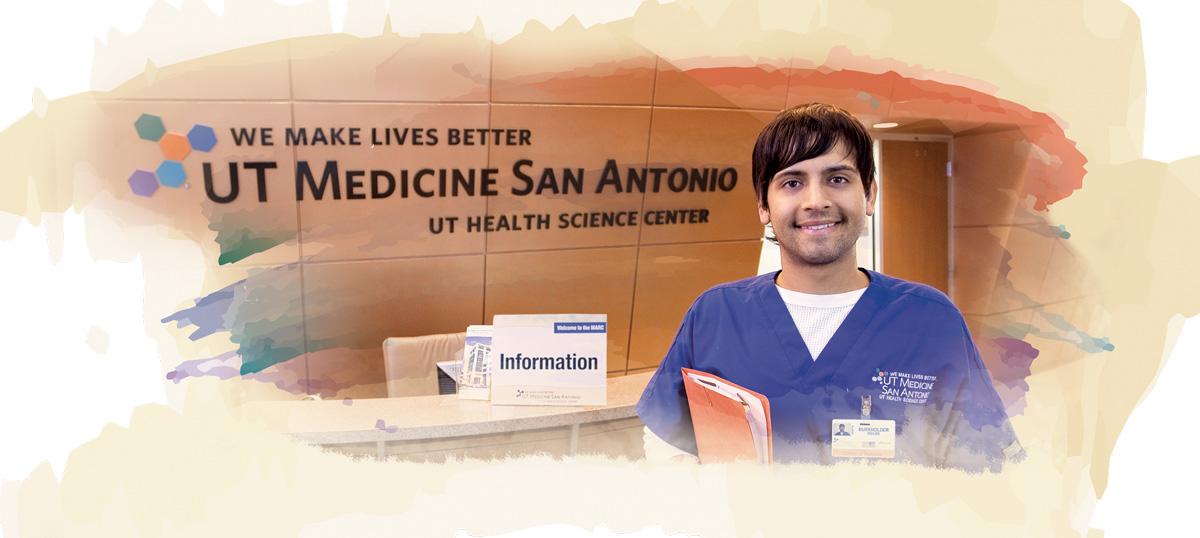
Burkholder is a patient navigator with the MARC's Musculoskeletal Institute, which helps patients with spine, joint and neuromuscular disorders. It includes health care providers in orthopaedics, neurology, neurosurgery, rheumatology and rehabilitation medicine. In the course of his job, Burkholder schedules appointments with the various providers, verifies insurance and coordinates tests.
A fairly recent concept in medicine, patient navigators help chart a course through an ever-more complex health care system and overcome barriers to prompt treatment. Qualifications for the job vary, and so do the duties, which in some places range from scheduling appointments to arranging for rides or a foreign language interpreter.
Burkholder is the MARC's first patient navigator. A second will be hired this year, and more are planned.
Previously, Burkholder held several positions in ophthalmology, from working the front desk to coordinating referrals. When the patient navigator job came up, he was drawn to it: "It was something I could grow in, and I liked the idea of being with the patient from start to end."
Since he began in the position last spring, Burkholder estimates that he has assisted well over 150 patients. He recently earned a master's degree in health care administration, and he's considering additional education. But he loves his job and wants to continue working in it as he takes classes: "The relationship that you have with the patients - that's the best part."
While Guerrero's visits to San Antonio are a whirlwind, Burkholder schedules her appointments for maximum efficiency, limiting the number of trips she must make to San Antonio.
During one trip, Guerrero had already seen her regular doctors - rehabilitation medicine specialist Daniel L. Santa Maria, M.D., and orthopaedist Fred G. Corley, M.D., - when Burkholder asked if there was anything else he could do for her. Guerrero told him that she really needed to see an ophthalmologist.
Despite the fact that Burkholder is assigned to the Musculoskeletal Institute, which does not include ophthalmology, he managed to get Guerrero in with ophthalmologist Carlos A. Rosende, M.D., that same day. With three successive appointments, Guerrero was able to take care of all her doctors' visits before heading back to Laredo.
"You just don't get that kind of service anywhere," she said. "He's a true-to-life angel."
To schedule an appointment or to refer a patient to a UT Health San Antonio physician, call (210) 450-9000. Or, visit UT Health Physicians for more information.
Alzheimer's authorities
UT Health San Antonio physicians are at forefront of Alzheimer's research
UT Health San Antonio patients benefit from having physicians who conduct important research for the Long School of Medicine at the UT Health Science Center. One new study by two UT Health San Antonio doctors seeks to establish how Alzheimer's disease impacts Hispanics.
Psychiatrist Donald R. Royall, M.D., and neurologist Gustavo C. Roman, M.D., are recruiting 500 Hispanics age 59 or older for a longitudinal study that will attempt to determine the prevalence of Alzheimer's in the Hispanic population and pinpoint risk factors.
Volunteers will be recruited out of a previous longitudinal study that stretched a quarter-century. As a result, researchers will have extensive medical histories on each recruit.
Drs. Royall and Roman will be joined by epidemiologist Helen P. Hazuda, Ph.D.
The study began after the Health Science Center became the fifth member institution of the Texas Alzheimer's Research Consortium (TARC) last fall.
TARC is funded by the Texas Legislature. Researchers also receive support from the Institute for Integration of Medicine and Science, which oversees the $26 million Clinical and Translational Science Award that the Health Science Center received from the National Institutes of Health.
To schedule an appointment or to refer a patient to a UT Health San Antonio physician, call (210) 450-9000. Or, visit UT Health Physicians for more information.

Roots of achievement
At first, third-year dental student Emily Whittington was a little confused. Her patient, an elderly gentleman, complained of a stinging sensation in his mouth.
"I didn't see any signs of bacteria or allergens, but he was definitely feeling discomfort," Whittington said. "I just wanted to help him as quickly as I could."
She called on her faculty supervisors, who rushed in from oral medicine and prosthodontics, for assistance. After reviewing her patient's medical history and symptoms again, and prudently listening to her patient, Whittington determined that it was his type 2 diabetes that was contributing to his pain.
"After we made some adjustments to his dentures, the patient was very pleased. His pain was gone and he could eat and even talk better," Whittington said. "I learned a lot about how disease can affect every aspect of a patient's well-being. And, it was an amazing feeling to see my patient smile again."
Whittington's experience is just one example of hundreds of distinct cases she and her fellow dental students have had and will have in clinics at the Dental School at The University of Texas Health Science Center at San Antonio. The state-of-the-art curriculum, rigorous and abundant training opportunities the Health Science Center offers have duly granted the Dental School a reputation as one of the top in the nation.
Each year, 94 students are accepted into the four-year dental education program at the Health Science Center. William W. Dodge, D.D.S., professor and vice dean for patient care in the Dental School, said students focus on biomedical and preclinical science during their first and second years. Students' course loads consist of dental anatomy, histology, microbiology, pharmacology and gross anatomy.
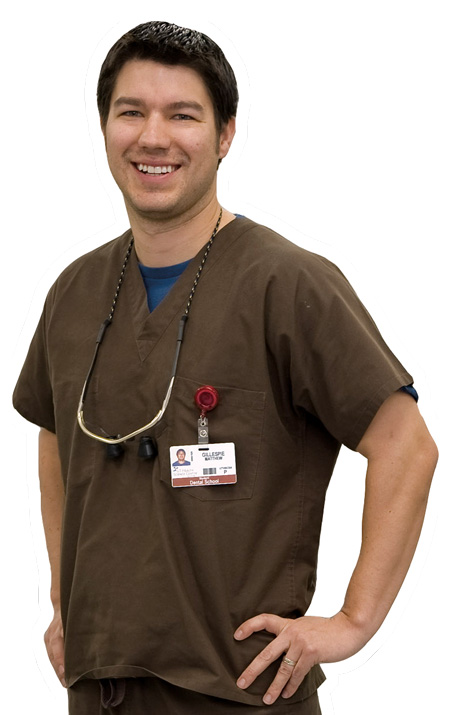
"I'm fortunate to be able to work with world-renowned educators who love to teach. My professors are leading-edge, and our Dental School is known for being on the forefront of evidence-based dentistry."
- Matthew Gillespie is a fourth-year dental student at the UT Health Science Center San Antonio.
"During their third year, they practice dentistry on manikins in our simulation labs," Dr. Dodge said. "Students don't begin treating patients under faculty supervision until they've practiced, practiced, practiced, and demonstrated that they have the necessary knowledge and skills."
By the second semester of year two, students begin to see patients on a limited basis. By the third year, students spend about 70 percent of their time in the clinics providing comprehensive care to a caseload of about 25 patients. Fourth-year students spend 80 percent of their time providing care to approximately 45 patients who make up their clinical practice. Both third- and fourth-year students are assigned to group practices where they treat their patients under the close supervision of faculty from the departments of General Dentistry, Prosthodontics and Restorative Dentistry. Some students' initial experiences in areas such as endodontics and oral surgery take place in specialty clinics.
More than 50,000 patient visits occur each year. An additional 52,000 visits are handled by residents who practice in the specialty clinics including periodontics, oral surgery, endodontics, orthodontics, prosthodontics, radiology and pediatric dentistry.
Student rotations are also available through the school's Mobile Dental Van and at community clinics located in underserved regions of the city as well as in Laredo, Harlingen and other South Texas sites.
Dr. Dodge notes that because all care provided by students is supervised by faculty members, procedures tend to take longer than usual. "A procedure that may normally take 45 minutes to complete in a private dental office, may take up to two hours in our clinics. But that's because our students stop to consult with their faculty supervisors and to ensure that everything meets the standard of care before they send their patients home."
Dr. Dodge added that the lower fees in the student clinics are intended to compensate patients for their time.
"Fees for care provided by dental students are discounted up to two-thirds in the student clinics and up to one-third in the resident clinics as compared to what a private practice might charge," Dr. Dodge said. "Students gain top-notch training while patients receive optimum care and savings. It's a win-win situation for both students and patients."
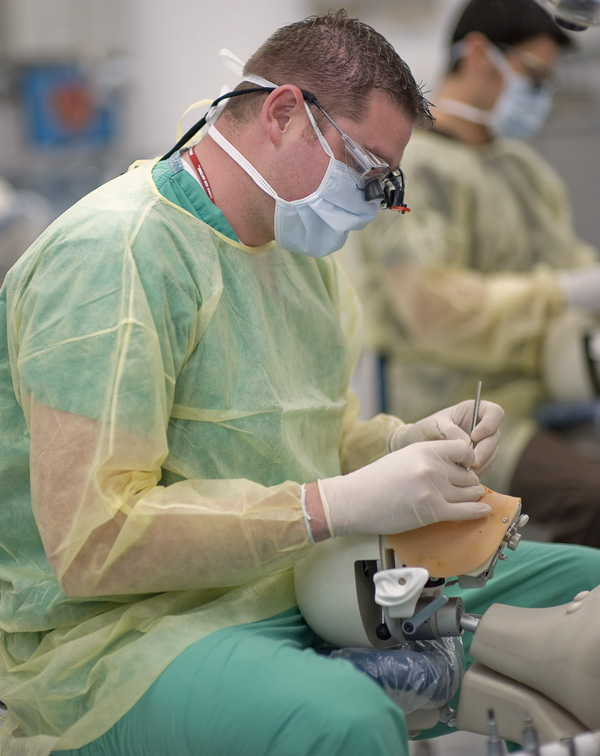
Each clinic is equipped with the latest technology and equipment. Dr. Dodge said the Dental School maintains approximately $12 million in treatment equipment and training technology at the San Antonio campus alone. At each station, students can log onto their laptops to review patients' medical histories and records and can share these with clinic faculty and staff via the electronic medical records system. Students can also quickly reference their textbooks online if they have questions about a specific case.
Whittington said she was particularly excited about learning to work with images produced by Cone Beam Computed Tomography. In 2004, the Dental School was the first institution in the country to obtain a J. Morita USA Inc. 3-D Accuitomo Cone Beam CT imaging system. Today, the Dental School is the only school in the nation to have four of these types of machines on site.
"This technology is remarkable because it creates three-dimensional views of a patient's jaw or entire head, for example," she said. "It's extremely efficient in detecting all kinds of cystic, tumoral or inflammatory bony lesions, and in accurately determining the height and width of the alveolar bone of a potential dental implant patient."
Students interested in specializing in oral surgery can gain experience in the school's Oral Surgery Suite. Dr. Dodge said the Dental School is one of only a handful of Dental Schools in the nation to have a suite of its kind. On any given day, the Oral Surgery Suite, nestled on the second floor of the Dental School, is staffed by three faculty supervisors, five residents, a clinic nurse supervisor and an anesthesiologist. Here, students observe some of the most complex oral surgery cases in San Antonio.
Shannon L. Nunnelly, the clinic nurse supervisor, said the collaboration she witnesses between students, faculty and residents in all departments helps make each case successful.
"When a student identifies a patient who requires surgery, the student walks the patient over to our clinic so we can immediately plan for the procedure," Nunnelly said. "It takes great teamwork and I see it here every day."
Dr. Dodge noted one of the biggest advantages of dental student training at the UT Health Science Center.
"We provide everything our students need to receive the best training right here in the Dental School," Dr. Dodge said. "We prepare them so they can practice independently as soon as they graduate."
More than 2,700 students have graduated from the Dental School since the school opened its doors in 1971. Dr. Dodge said between 30 and 40 percent each year choose to continue advanced and specialty training. About 90 percent remain in Texas to practice.
"This year, we're proud to say that one of our graduates, Dr. Matt Roberts of Crockett, Texas, was elected president of the Texas Dental Association," Dr. Dodge said. "Most of the leadership posts in the San Antonio District Dental Society are also held by our graduates. It's great to see that our alumni are not only skilled clinicians, but are also engaged in issues that affect the health and well-being of our community."
Matt Roberts, D.D.S., a 1981 graduate of the Dental School, agrees. "Leading an organization requires listening, reasoning, compromise when needed and quick decision making. The Health Science Center's Dental School is a training ground for any future leadership position. I expanded and refined these skills daily during my four years in San Antonio."
For more information about enrolling in the Dental School, call (210) 567- 2667 or send an e-mail to DSProspect@uthscsa.edu.
To become a patient in the UT Health Science Center Dental Clinic, call (210) 567-3217 or visit www.dentalscreening.com.
The Dental School is celebrating its 40th anniversary. For more information about the May 7 Anniversary Gala, call (210) 567-6536.

Dental School celebrates 40th anniversary
 Join us as we celebrate the 40th anniversary
of our UT Health Science Center San Antonio Dental School
at the
40th Anniversary Gala
May 7, 2010
Marriott Plaza Hotel, 555 South Alamo, 78205
For information, call (210) 567-6536
School of Nursing illustrates the benefits of service learning
Unlike community service work, service-learning activities incorporate curriculum objectives, as well as student planning, critical thinking and reflection, into a continuing project that benefits the community.
The School of Nursing's service-learning projects during fiscal year 2008-2009:
- Contributed $7.4 million worth of uncompensated care
- Benefited 200 community agencies
- Represented a $951,985 increase in uncompensated care over the previous academic year
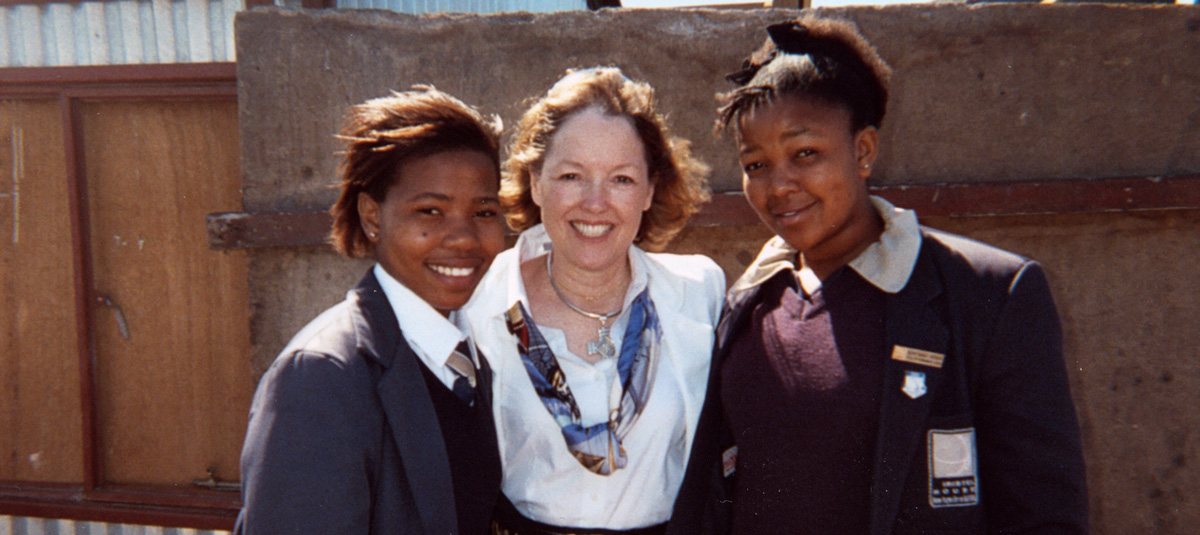
 Although most of the School of Nursing service-learning projects are in San Antonio, the school has offered a summer international nursing elective for four years led by Janice Rice, M.S.N., RN, and Lyda Arevalo-Flechas, Ph.D., M.S.N., RN. Working through nonprofit organizations and with other U.S. health care professionals, the faculty and students set up temporary surgical units providing non-stop procedures in Mexico and Guatemala. In summer 2009, one of the elective sections was moved to Cochabamba, Bolivia, with a focus on community health. The nursing students taught preventive health practices and first-response emergency procedures to police officers, firefighters, nurses and doctors.
(Top photo) The School of Nursing will soon be placing more emphasis on regional and international service learning with the arrival in September 2009 of Julie Novak, D.N.Sc., RN, CPNP, FAANP, the Thelma and Joe Crow Endowed Professor and associate dean for practice and engagement. Formerly professor and head of the Purdue University School of Nursing and director of service-learning innovation and scholarship in Purdue's Center for Instructional Excellence, Dr. Novak has developed and implemented international projects in Russia, Estonia, Mexico, the Philippines and South Africa. She plans to continue a service-learning project she began at Purdue in South Africa with UT Health Science Center students in August.