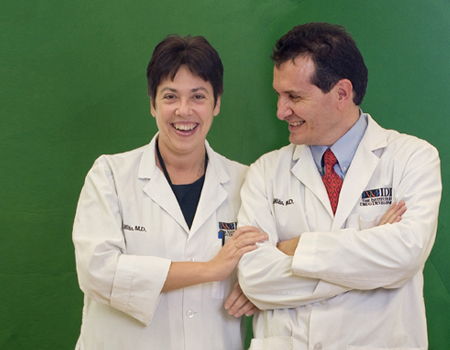
You’ll find many husbands and wives who both work at the UT Health Science Center. But you won’t find any like Drs. Monica and Alain Mita.
They share the same specialty - medical oncology - with offices at the Cancer Therapy & Research Center (CTRC) at the UT Health Science Center San Antonio. They traveled the same career path, attending the same schools in Romania and France, earning the same degrees and completing the same fellowships. They hold the same academic appointments and as a result, they tackle the same variety of assignments. They see patients while at the same time teaching residents and fellows at four locations - the CTRC, University Hospital, Audie L. Murphy Division of the South Texas Veterans Health Care System, and CHRISTUS Santa Rosa Medical Center. They manage 30 clinical trials between them, write scientific papers and give lectures at national and international meetings.
Married for 18 years, the Mitas’ personal life revolves around their three children. Stephane, age 7, was born during their fellowship in Toulouse, France. Marianne, 5, arrived the year after they accepted a fellowship at the CTRC Institute for Drug Development (IDD). Adrienne, 2, was born the year they joined the Health Science Center faculty.
Secrets to success
When commenting on the Mitas, a colleague, Christopher Takamoto, M.D., Ph.D., who worked with the Mitas before he moved to private industry, said, "What strikes me as unique is their balanced commitment to their professional careers and to their lovely family. Most working couples end up compromising one spouse’s job in favor of the other’s. For Alain and Monica, this is not the case. Of course this is not an easy thing to do, but they seem to have solved this complex equation exceedingly well."
One factor that seems to balance the equation is a shared profession. "On days when I’m drained and down, watching kids in their 20s dying, Alain understands exactly what I’m going through," Monica said. Familiarity not only helps the couple empathize, but advise. "We can be each other’s toughest critic," Alain said. "It helps to see another person’s perspective. One nurse told us that our marriage lasts because we agree to disagree."
Monica adds with a smile, "But it’s a sweet victory if we can change the other person’s mind."
Another factor is friendship. "Monica has told me that the only reason she made it through the rigors of medical school, residency, fellowships and her career is that she and Alain are best friends," said Jerry Medina, a research nurse supervisor. "They are successful because they are together."
Friendship produces a willingness to share responsibilities. "If we get a call from the day care that one of the kids is sick, we have to decide who will pick up the child and who will cover the work," says Monica. They alternate routine pickup from day care, cooking, going to teachers’ meetings and shopping. On weekends, they have fun with their kids. "We ride bikes, visit the zoo, walk around the botanical center and the parks, and go to museums," Alain says. Once a year, Monica and Alain take a one-week vacation without the children.
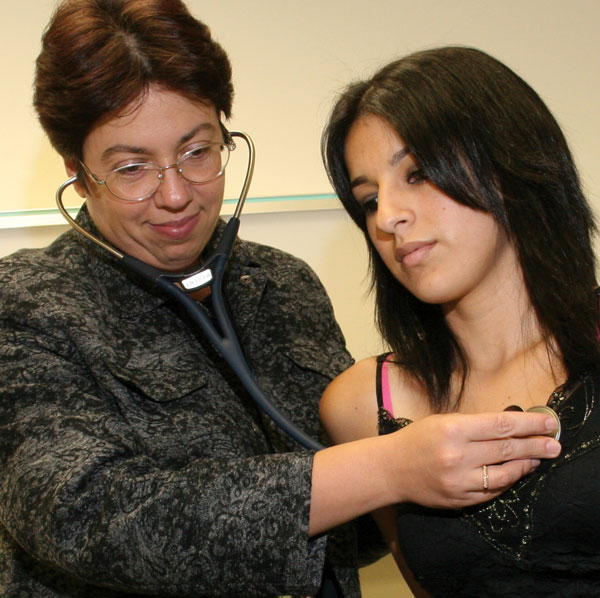
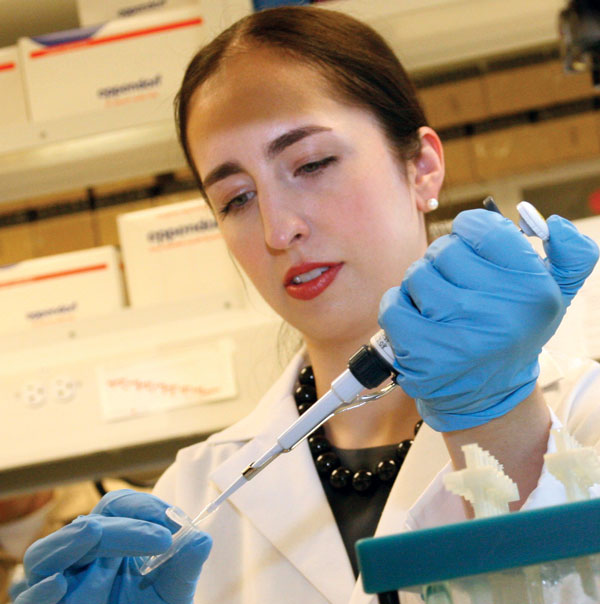
Dr. Monica Mita examines 24-year-old cancer patient, Martha Arredondo.
A passion for the cure
At the core, Alain and Monica share a passion for the work of curing cancer.
"They live every patient’s life in their heart," said CTRC patient referral coordinator, Epp Goodwin. Goodwin schedules patients who are taking Phase I drugs, those shown in the laboratory to be well-tolerated, but still need to be evaluated for safety, effectiveness and side effects. Because the CTRC has one of the largest oncology Phase I clinical drug studies programs in the world, it can offer drugs that are unavailable even in many large cancer centers. Patients come from many states and often arrive with little or no hope, because they have failed conventional treatments.
"I have the utmost respect for these two doctors," Goodwin said. "They always do what’s right for the patient." She recalls a patient, a middle-aged woman with lymphoma, who came to the CTRC three years ago. "To qualify for a trial you have to meet certain criteria," she explained. "When I screened the patient’s records, I knew she didn’t qualify. But Alain didn’t turn her away. He prescribed some things he hoped would make her stronger. Three weeks later, she looked much better and she qualified for a trial. In fact, she ended up taking part in two different studies. We knew we couldn’t cure her cancer, but we could give her time and the best quality of life possible."
Giving patients hope is what drives the Mitas. "There’s nothing worse than telling a patient there’s nothing we can do," Alain said. "People with cancer are fighters. They need us to help them."
The opportunity to work with promising new cancer agents was what lured the Mitas from Paris to San Antonio in 2002. "We knew about San Antonio from reading about clinical trials," Alain said. "The IDD and CTRC were on the same level as M.D. Anderson and other top cancer centers."
Seven years later, the Mitas have tested about 50 anti-cancer drugs. At least 17 were deemed worthy of further testing. Because of the Mitas’ rigorous training and experience, they epitomize the latest generation of leaders in developmental therapeutics, according to IDD director Francis Giles, M.D.
"We now look to our IDD investigators to understand the molecular lesions in cancer and to use these lesions as targets for novel approaches," Dr. Giles said. "We expect them to follow a promising agent from the laboratory to potential regulatory approval - a very complex journey." He adds that for physician-scientists to be effective across such a broad scientific spectrum, they need to be both experts in early phase drug development and in a specific tumor type. Monica specializes in sarcoma and breast tumors; Alain in tumors of the lung.
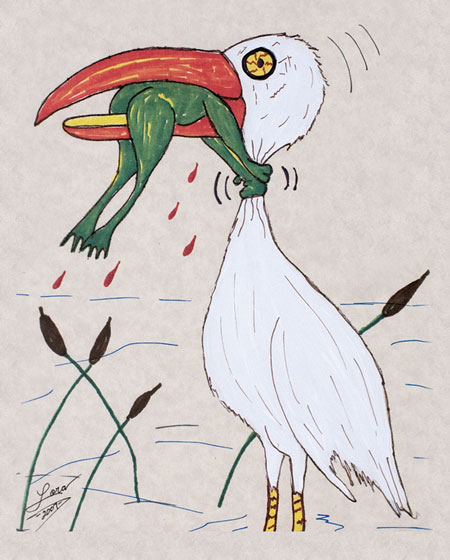
Dr. Monica Mita keeps this drawing, given to her by a former patient, in her office as a source of inspiration and encouragement.
A partnership with patients
Monica and Alain insist their partnership in medicine, science and life remains incomplete without patients.
"Without patients willing to participate in clinical trials to test new drugs, we risk being in the same place in 10 years that we are now," Monica warns. "Ninety percent of cancer patients are never told of the option to enter a clinical trial. Their doctors prescribe conventional treatment, and if it fails, they tell patients there’s nothing else they can do."
It is precisely these patients who enter CTRC’s Phase I trials. "It’s a great feeling to have the power to help a patient," Monica says. "It’s great to be able to give them a drug and see a good response. Of course, not all patients will respond. But when it works, it’s worth every effort."
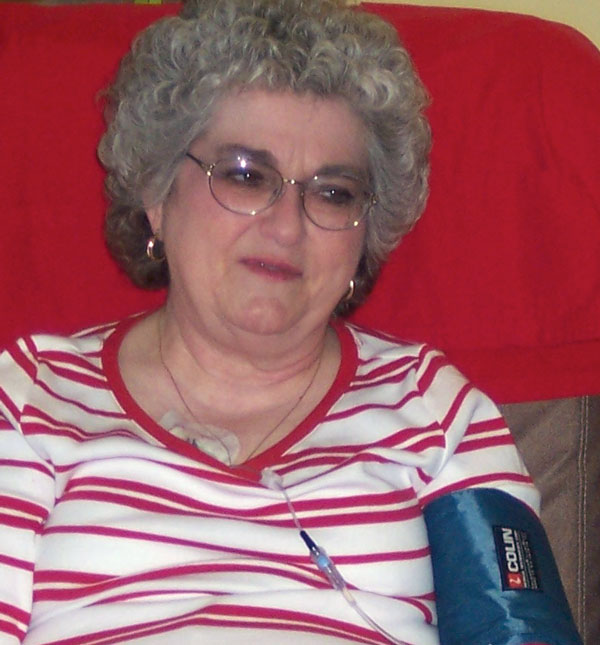
Carolyn Boone travels from Dallas to the CTRC every three weeks for intravenous treatment. "I continue to live life one day at a time."
In 2003, after Dallas resident Carolyn Boone had her hysterectomy, doctors discovered a huge and fast-growing tumor, diagnosed as mullerian sarcoma. It spread to her liver and lungs. Her oncologist’s prognosis: The cancer would not respond to chemotherapy or radiation and Boone had maybe a year to live. He referred her to the CTRC at the UT Health Science Center San Antonio for an experimental study.
Five years later, Boone is still alive, and a patient of Dr. Monica Mita. The drug that stabilized her cancer is known as Agent AP23573, which regulates normal cell growth and slows or stops the growth of cancer cells. The drug has progressed to the third of four phases of testing.
"Carolyn Boone’s story is an inspiration for other patients and care providers," Dr. Mita said. "Her experience is what we would like to see for all patients with advanced cancer - significant and durable response with a normal quality of life."
South Texas prepares professionals to serve its own
He likes to say that he was the first medical resident to graduate from the Regional Academic Health Center in Harlingen.
Three other residents graduated alongside Nolan Perez, M.D., in that first class back in 2004, but he jokingly claims the distinction as the first to cross the stage.
Dr. Perez, who returned to Harlingen to open a gastroenterology practice after completing a fellowship at Wayne State University, might have been the first, but he’s hardly alone. A growing community of doctors in the Rio Grande Valley received training at the Long School of Medicine’s Regional Academic Health Center (RAHC).
One treats patients at Su Clinica Familiar, the largest community health care center in the Valley. Another helped fill a tremendous need for mental health professionals in Brownsville by becoming the city’s second full-time psychiatrist last fall. Of 10 hospitalists at Valley Baptist Medical Center in Harlingen, six came out of the RAHC’s residency program.
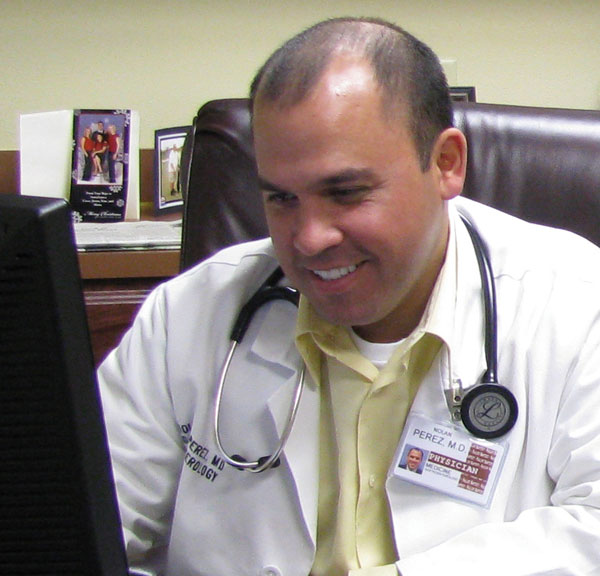
Nolan Perez, M.D.
"You know what you’re dealing with when you’re dealing with one of the graduates here," Dr. Perez said. "You know that they’re at the cutting edge of evidence-based medicine. They’ve been well-trained, and there’s that camaraderie that you share."
The RAHC is just one sign of The University of Texas Health Science Center at San Antonio’s commitment to training doctors and other health professionals who will serve communities along the U.S.-Mexico border. The Laredo Campus Extension is adding to the ranks of health professionals there, while the Med Ed Program encourages middle school, high school and college students in South Texas to pursue careers in the health sciences.
The professionals who come out of Health Science Center programs will be important to addressing disparities in border communities. In Texas, two-thirds of the population within 62 miles of the border lives in a primary care Health Professional Shortage Area (HPSA), according to a 2003 report by the federal Health Resources and Services Administration. That’s compared with a third of the statewide population.
"I have a firm belief that the way we help solve the health care problems in South Texas is by recruiting heavily there - and training there," said J. Dennis Blessing, Ph.D., PA-C, chair of the Department of Physician Assistant Studies and associate dean for South Texas programs in the School of Health Professions. "And we do."
The Regional Academic Health Center
"That’s a medical school campus right there."
- Leonel Vela, M.D., M.P.H., RAHC regional dean
A native of Port Isabel, Dr. Perez always knew he wanted to return to the Rio Grande Valley, and he also knew that many doctors end up practicing where they train.
But he never thought it would be possible to complete any part of his training in the Valley until Mario Ramirez, M.D., the Health Science Center’s longtime vice president for South Texas and border initiatives, told him about the RAHC opening.
Dr. Perez initially had reservations about taking part in a brand-new residency program. But the more he learned about the RAHC, the better it sounded: "Everyone I talked to said what great support it was receiving from the state and the local community in Harlingen."
Since it opened in the summer of 2002, the RAHC has housed a residency in internal medicine and educated third- and fourth-year medical students.
Leonel Vela, M.D., M.P.H., regional dean of the RAHC since its inception, said the Harlingen campus uses a community-based model and emphasizes the uniqueness of its academic setting. Students learn about environmental and public health, and about diseases that disproportionately affect the border region, including certain birth defects, diabetes and re-emerging infectious diseases rarely seen elsewhere in the United States.
Dr. Vela hopes seeing the campus will inspire younger students, who may someday practice medicine in the Valley: "You can point to the RAHC and say, ‘That’s a medical school campus right there.’ It motivates students in this medically underserved region to want to study medicine."
Returning to the Valley appealed to James Castillo, M.D., who had lived there as a child. When it came time to apply for the match, he spotted the RAHC program on the Electronic Residency Application Service and went for it. His wife agreed to the move without ever having seen the Valley, aside from photos Dr. Castillo took during his interview.
By the time he finished his residency, neither wanted to leave. Dr. Castillo now directs the hospitalist program at Valley Baptist Medical Center and is on the RAHC faculty.
While he is part of a thriving medical community in Harlingen, Dr. Castillo sees a need for more doctors in the Valley.
"The thing about the Valley, it’s a lot of people, but it’s very spread out," Dr. Castillo said. "So to say that there’s plenty of doctors in this one ZIP code is fine, but there’s not so much around. Everything’s close enough that you still have access to some big medical centers, but for primary care you don’t have that so much."
There’s also a need for specialists, and RAHC alumni can be part of the solution. Dr. Perez, the gastroenterologist, is one example; another is Cesar H. García, M.D., a third-year resident at the RAHC. In July, Dr. García will begin a geriatric fellowship in San Antonio. Afterward, he is seriously considering working in the Valley.
"With the community here, I really feel like I’d be a good fit," said Dr. García, who grew up in San Antonio. He attended the Health Science Center’s School of Medicine in San Antonio, and he first learned about the RAHC when he rotated there during his third- and fourth-year clerkships.
Dr. García does not see himself in private practice and instead plans to work in indigent care: "I feel like it’s my privilege. I’m looking forward to it."
Laredo Campus Extension
"I’m from here, so I wanted to come back and contribute."
- Irene Moreno, PA-C, physician assistant program alumna
The first building of the Laredo Campus Extension was dedicated in 2002. Since then, the campus has trained students in dentistry and other health professions including respiratory care, clinical laboratory science and physician assistant studies.
Dr. Blessing said the campus is a perfect complement to his P.A. program, whose mission is "to prepare primary health care providers who will contribute to the improvement of the mental, social, and physical well-being of the underserved and vulnerable people of South Texas."
Those words resonated with Irene Moreno, PA-C, who completed the Health Science Center’s three-year Physician Assistant Studies Program and now works at Gateway Community Health Center in her hometown of Laredo: "When I saw the mission statement, right away I was like, ‘Oh my gosh - I have to get in!’"
She always intended to return to Laredo, so the P.A. program’s emphasis on South Texas made it a good fit for her. "I’m from here," she says, "so I wanted to come back and contribute."
But Moreno went through the program before it was offered at the Laredo campus. She did as many rotations as possible in Laredo, but her classes were in San Antonio.
Now six students from each class of 30 can complete the first and third years of the program in Laredo, coming to San Antonio for only two semesters. Moreno believes that will bring more Laredo natives into health professions.
Said Moreno: "I’ve heard more and more people wanting to go into the P.A. program now."
Med Ed Program
"It opens possibilities, and it opens your mind."
- Andrea García, School of Medicine second-year student
When the Med Ed Program was just starting out, Andrea García became one of its earliest members.
She had known that she wanted to be a doctor long before she moved from Puebla, Mexico, to Laredo for her last two years of high school. But the Med Ed Program showed her how to reach her goal. "I think that really helped me," García said, "because right when I went into undergrad in Corpus Christi, I already had an idea of what I needed to do."
Through the program, she volunteered at Doctors Hospital of Laredo and visited the Health Science Center in San Antonio. "It opens possibilities," she said, "and it opens your mind."
García finished her undergraduate studies in three years and is now a second-year medical student at the Health Science Center at San Antonio. She’s thinking about becoming a pediatric endocrinologist, and she sees opportunities for herself in Laredo.
The Med Ed Program serves about 1,400 students in Laredo and the Valley. It recruits South Texas students with an interest in the health sciences and provides advice and encouragement as they make their way toward graduate or professional programs.
"Itmaynot be that all of those kids end up at the Health Science Center," said David Jones, Ph.D., associate dean for admissions in the Long School of Medicine, which sponsors the Med Ed Program. "But what is important is that they’re mentored and they’re encouraged in their interests."
Med Ed works closely with teachers and parents to create a supportive environment for the students. The primary goal is student success, but Dr. Jones also hopes that these students will someday be the ones providing health care in their hometowns.
"I think it demonstrates the commitment of the Health Science Center to the success of students from South Texas," Dr. Jones said. "This is a substantial financial commitment to student success in the Valley and Laredo. It’s a great credit to the institution to continue to support it in this fashion."
For the first time in its history, the Health Science Center has eclipsed the $200 million mark in grants, contracts and other awards. Despite increasing competition for research dollars awarded by federal agencies, the Health Science Center experienced a jump of 28 percent in funding from the National Institutes of Health during the 2008 state fiscal year ($107.2 million). "The horizon for upcoming years continues to look bright," said then President Francisco G. Cigarroa, M.D. "I am extremely grateful to our faculty for their leadership in our research mission, as these are the individuals who are the principal investigators of these important grants."
The Cancer Therapy & Research Center (CTRC) at the UT Health Science Center San Antonio has been awarded a $150,000 grant from LeukemiaTexas to develop novel therapies for patients with leukemia who do not benefit from existing treatments. Francis Giles, M.D., deputy director of the CTRC and director of the CTRC’s Institute for Drug Development, and Jennifer Carew, Ph.D., assistant professor in the Division of Hematology and Medical Oncology, are the principal investigators of the project. LeukemiaTexas awards grants for research to enhance the understanding of leukemia and its causes, to develop new and improved methods of treatment, and, ultimately, to find a cure.
A national movement away from the term "allied health" led to the renaming of one of the five schools of the Health Science Center. The School of Allied Health Sciences is now the School of Health Professions in recognition of its mission. The renaming does not affect existing accreditations within the school. "Respiratory therapists, clinical laboratory scientists and other professionals educated in our school perform indispensable functions in the care of patients. This name is a new way to express that," said Marilyn S. Harrington, Ph.D., dean of the School of Health Professions.
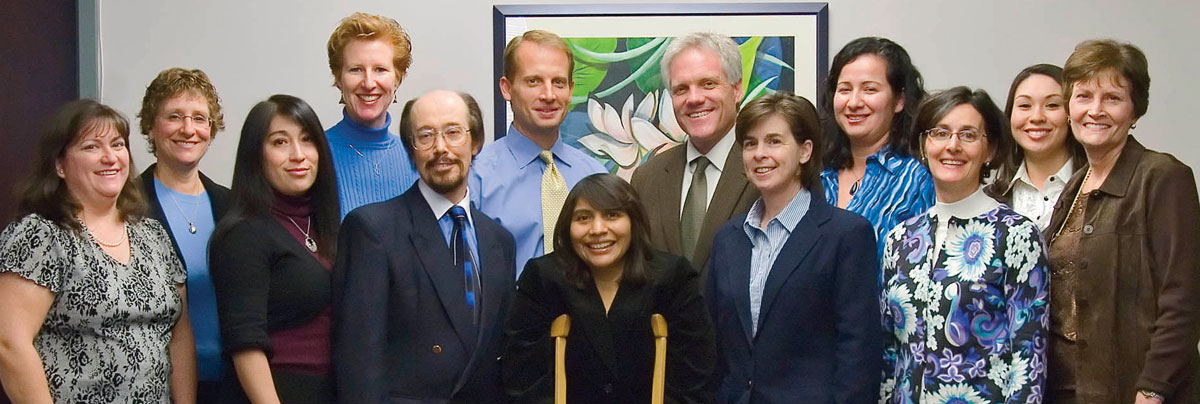
The founding faculty members of the Department of Physical Therapy’s first doctoral in physical therapy degree program are pictured with their support staff. Front Row (L-R): Michelle Barnes, Jacqueline Lopez, Dr. Giovanni De Domenico, Dr. Yolanda Rangel, Professor Ann Newstead, Professor Patricia Rodriguez, Dr. Martha Acosta. Back Row (L-R): Dr. Patricia Brewer, Dr. Julie Barnett, Dr. Michael Geelhoed, Dr. Gregory Ernst, Dr. Catherine Ortega, Annette Zavala.
This past fall, 40 students were recruited to begin the School of Health Professions’ first doctoral degree: a doctorate in physical therapy. Converting the current master’s degree program to a three-year doctoral program brings the university in line with a national trend to offer a doctoral degree in this growing field. The move is based on the American Physical Therapy Association’s (APTA) recommendation that a doctoral degree be the entry-level professional degree for physical therapists. APTA is the national professional organization for physical therapists and provides accreditation to those wishing to enter the field.
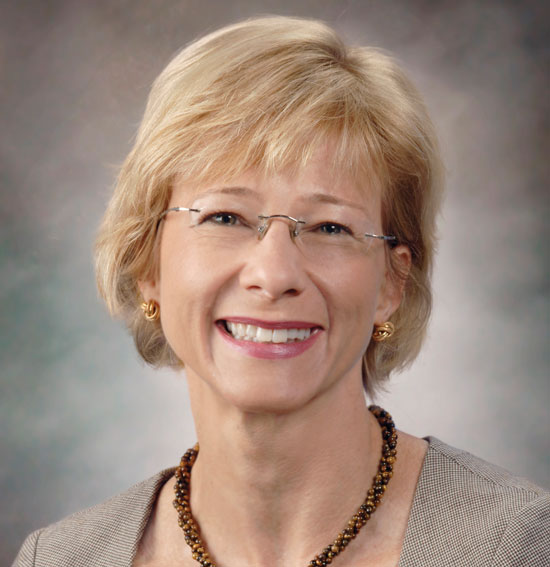
Ruth Berggren, M.D., is director of the Center for Medical Humanities & Ethics.
Three Health Science Center medical student and resident education programs are among only six programs statewide to receive 2008 teaching grants from The University of Texas System. The programs will develop a case-based virtual education resource; augment community service learning activities of the Center for Medical Humanities & Ethics; and create an educational interdisciplinary intervention that trains residents and students in palliative care. The goal is to produce physicians who are educationally outstanding, compassionate and service oriented.
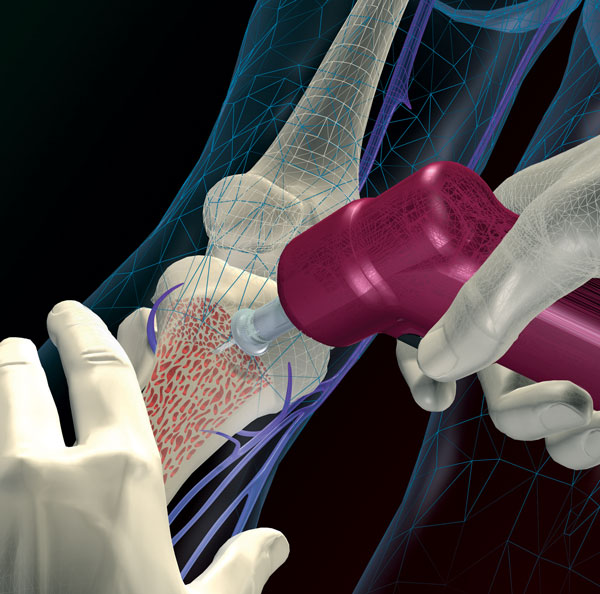
The EZ-IO provides access through the bone marrow cavity to quickly infuse blood, medications and fluids into critically ill patients who might die waiting for traditional IV lines.
The EZ-IO, developed by Vidacare Corporation of San Antonio with research assistance from faculty members at the Health Science Center, won the medical devices category in the Wall Street Journal’s eighth annual Technology Innovation Awards.
We are grateful to all of our donors for their continued support and generosity. We recognize just a few of the gifts that enable the university to provide the best in health care careers education, biomedical research, patient care and community service to San Antonio and the South Texas/Border Region. Thank you for helping us make lives better!
A $500,000 gift from Ricardo G. Cigarroa, M.D., establishes the L. David Hillis, M.D. Endowed Chair in Medicine. Dr. Hillis is chair of the Department of Medicine and holds the Dan Parman Distinguished Professorship. (Pictured above) Ricardo G. Cigarroa, M.D., and his wife, Lisa (third and fourth from left), honored Dr. David Hillis by creating the L. David Hillis, M.D. Endowed Chair in Medicine. Joining Dr. and Mrs. Cigarroa were (L-R) UT Health Science Center President Francisco G. Cigarroa, M.D., and William L. Henrich, M.D., MACP, dean of the Long School of Medicine and vice president for medical affairs. (Also pictured L-R) Don Seldin, M.D., professor of internal medicine at UT Southwestern Medical Center in Dallas; David Hillis, M.D., chair of the Department of Medicine at the UT Health Science Center San Antonio; and Richard A. Lange, professor and executive vice chair of medicine within the Department of Medicine, also attended the celebration, along with numerous faculty and community leaders.
Through the American Heart Association and the generous support of theMax and Minnie Tomerlin Voelcker Fund, seven grants totaling $980,000are supporting the research of faculty members in the Long School of Medicine and the Graduate School of Biomedical Sciences. The scientists are studying a variety of problems associated with heart disease including aging and hypertension; infections of the heart; blood loss in trauma patients; chronic sustained hypoxia; heart attacks and diabetic kidney disease. Their goal is to develop enhanced therapies.
A gift of $18,110 from David and Jennifer Spencer in memory of Mrs. Nancy Blumer, mother of Jennifer Spencer, will support ovarian cancer research led by Tyler Curiel, M.D., M.P.H. Dr. Curiel, executive director of the Cancer Therapy & Research Center at the UT Health Science Center San Antonio, is developing new methods to eradicate the defense mechanisms of cancer cells. His innovative work is being tested in human clinical trials.
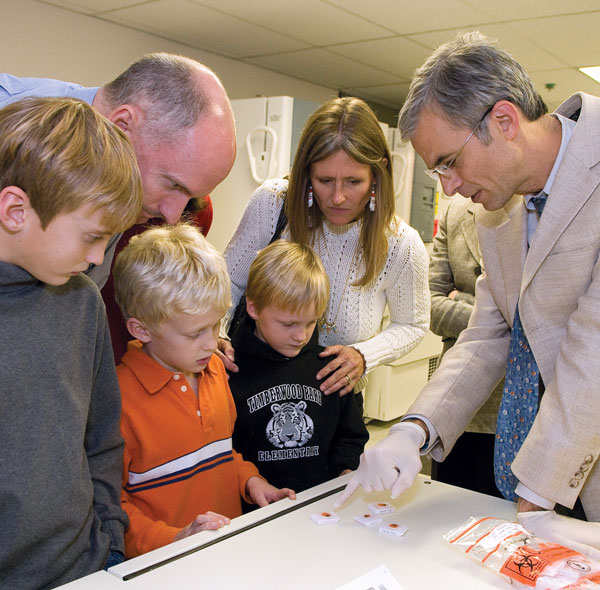
Dr. Tyler Curiel (right) demonstrates his research for the Spencer family in his lab at the CTRC.
The Baptist Health Foundation has provided more than $700,000 to support the research of Michael Escamilla, M.D., titled "Early Interventions for Bipolar Disorder and Schizophrenia in at-Risk Youth" and to continue the program "Diabetes Risk Reduction via Community-based Telehealth: Project DiRReCT" led by Daniel Hale, M.D. Dr. Escamilla is the Mary Weir Professor in Psychiatry and Dr. Hale is professor of pediatrics and chief of the Division of Pediatric Endocrinology and Diabetes. Their gift also provides scholarships to deserving students in all five schools at the Health Science Center.
The 17th annual San Antonio Express-News Book & Author Luncheonheld in October 2008 in San Antonio raised more than $170,000 to support the Phase I Clinical Research Program at the CTRC. Over its history, since 1991, the event has raised a total of $2 million in gifts.
A gift of $42,500 from the Shelby Rae Tengg Foundation and the Helen Freeborn Kerr Charitable Foundation through Bank of America is funding research to enhance targeted therapies to treat multiple myeloma, brain tumors and other cancers of the head and neck. The researchers are Joseph K. Agyin, Ph.D., and Luiz O. Penalva, Ph.D., of the Department of Cellular and Structural Biology, and Randal A. Otto, M.D., professor and the Thomas W. Folbre, M.D., Endowed Chair in the Department of Otolaryngology and physician in chief of the Cancer Therapy & Research Center at the UT Health Science Center San Antonio.
John Booth, a native of Laredo, has contributed $40,000 to the President’s Council. This is the largest single gift from an individual to the President’s Council. His donation will support the priorities of the president for the Health Science Center.

 You’ll find many husbands and wives who both work at the UT Health Science Center. But you won’t find any like Drs. Monica and Alain Mita.