
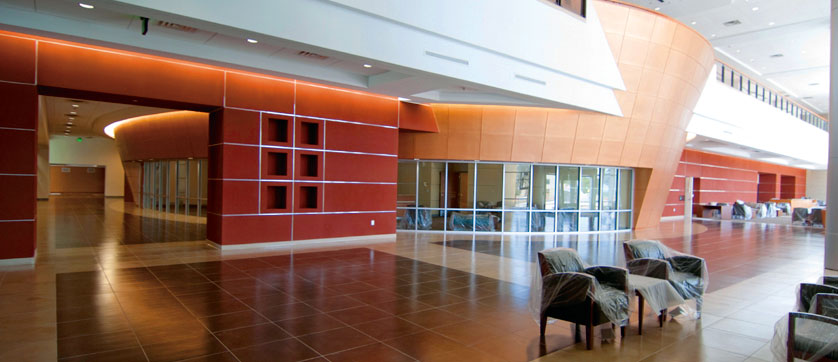
Inside the MARC
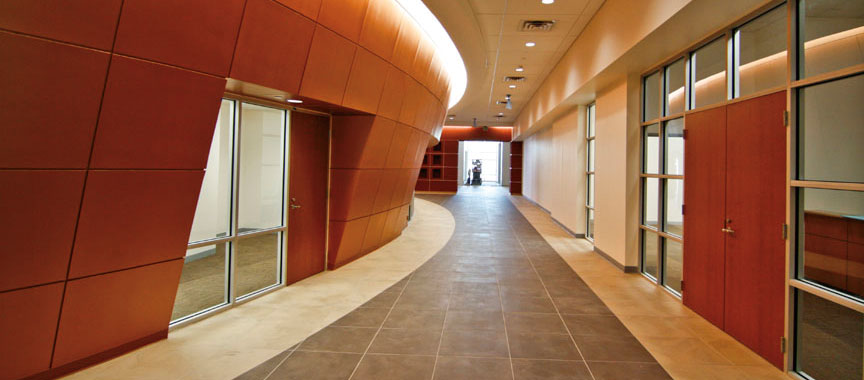 World-class facility
At 250,000 square feet, the MARC features state-of-the-art clinics, diagnostic imaging, an ambulatory center, endoscopic suites, operating rooms, physician offices, a pharmacy and comfortable patient waiting and eating areas.
From front door to final exam, the MARC promises patients integrated health care with UT Health San Antonio specialists under one roof. Ultimately, patients will be able to park on site, visit their physicians, have blood tests, get X-rays and eat lunch while they wait to pick up their prescriptions. The environment is designed to consolidate services, simplify the process and put patients at ease.
Concierge-like service
The new Electronic Medical Records system will allow physicians, whether they're working in the building or on the other side of town, to access, monitor and update patient records and histories quickly and easily. To enhance the communication process further, new Clinical Information Systems software will enable members of the health care team to communicate with one another and with patients quickly and effectively from anywhere in the building.
Community investment
The MARC will complement community physicians who will be invited to refer complex cases to UT Health San Antonio specialists and subspecialists.
Patient services
- Family Medicine
- Geriatric Medicine
- Internal Medicine
- Musculoskeletal Institute
- Rehabilitation Medicine
- Physical and Occupational Therapy Services
- Cardiology
- Cardiothoracic Surgery
- Heart Station
- Plastic & Reconstructive Surgery
- Pulmonary Medicine
- Pulmonary Lab
- Vascular & Endovascular Surgery
- Vascular Lab
- Orthopaedics
- Center for Wound Healing
- Podiatry
- Imaging Center
- Bone Density
- CT
- MRI
- Ultrasound
- X-ray

"We aren't competing with private practice. We're complementing it. Our success in meeting our missions of education, research and clinical care are crucial to the people of San Antonio and South Central Texas.
Thomas C. Mayes, M.D., M.B.A.,
UT Health San Antonio
president and CEO
- Gastroenterology/Digestive Diseases
- General Surgery
- Neurology
- Infectious Diseases
- Nephrology
- Rheumatology
- Travel Medicine
- Urology
- Pelvic Floor Center
- Nephrology
- Renal Stone Center
- Center for Women's Health
- Ob/Gyn
- Fertility Center
- Ophthalmology
- Otolaryngology/Ear, Nose & Throat
- Audiology
- Speech Therapy
Other features
- Ambulatory Surgery Center
- includes four operating rooms
- Two endoscopic suites
- Two café/eating areas
- Pharmacy
- Parking garage with more than 600 spaces
To schedule an appointment or to refer a patient to a UT Health San Antonio physician, call (210) 450-9000. Or visit UT Health Physicians for more information.
The MARC of complementary care
Physicians team to make lives better
When José Lopez, M.D., examined his patient, 51-year-old Christopher Orth, in late spring, Orth was recovering from a severe bout of pneumonia. He'd been improving nicely with treatment. So when Orth began to complain of high fevers, swelling in his legs and painful joints, Dr. Lopez became concerned. "The symptoms didn't add up," he said. "I knew something else was wrong."
Dr. Lopez, a family physician at the Castillo Medical Group in San Antonio, immediately referred Orth to cardiology specialists with UT Health San Antonio, the practice plan of the Long School of Medicine at The University of Texas Health Science Center at San Antonio.
Shadi Tolaymat, M.D., assistant professor of cardiology at the Health Science Center, performed an echocardiogram that revealed a large mass on Orth's aortic heart valve. He informed Dr. Lopez that same day. Further tests would be required.
After a heart catheterization test to rule out artery blockages, nurses had a sandwich and cold soft drink ready for Orth as Dr. Tolaymat delivered the news. An infection had damaged Orth's valve, and he would need heart valve replacement surgery as soon as possible.
Dr. Tolaymat called on V. Seenu Reddy, M.D., M.B.A., assistant professor and director of thoracic aortic surgery at the Health Science Center. On June 22, Dr. Reddy, along with Jeffrey McNeil, M.D., assistant professor of cardiothoracic surgery at the Health Science Center, performed the intricate three-hour operation at University Hospital. The minimally invasive procedure required a small four-inch incision on Orth's chest.
"I was up and walking around the same day of my surgery," Orth said. By the fourth day, Orth was recovering at home with his family.
Dr. Lopez said he couldn't be more pleased with the outcome. "The specialists of UT Health San Antonio communicated with me directly and were efficient and effective. Mr. Orth is doing well because they acted swiftly and skillfully," he said.
A 2005 graduate of the Health Science Center's School of Medicine, Dr. Lopez said he's witnessed firsthand the university faculty physicians in action.
"It's evidence-based medicine in teaching facilities with the highest levels of technology and resources. Not only that, they emphasize compassionate care. They practice what they teach. I knew my patient would be in good hands."
Dr. Lopez said he looks forward to continuing his partnership with the UT Health San Antonio physicians and says the
newly opened Medical Arts & Research Center (MARC) is an added bonus.
"I think the MARC will make things even more efficient and effective for both physicians and patients. We need to continue working together because we can learn much from one another. In the end, patients benefit the most."
Christopher Orth couldn't agree more.
"The doctors listened and knew exactly what to do. They're heroes. When you're sick, it can be traumatic. But when you have good doctors it's a big relief because you can trust in the care you get."
A heavy-equipment operator by trade, Orth said he plans to get back to work soon. "It's great to feel better and to be home with my wife and son. But I'm sending out résumés now. With prayers from my family, I know I can do it."

Never too old
The oldest old - those over 85 - are the fastest-growing segment of the U.S. population, according to recent reports. Their numbers are expected to more than quadruple between 2000 and 2050, rising from 4 million to 18 million.
For researchers, health care providers and students at The University of Texas Health Science Center at San Antonio, time is of the essence.
In pursuit of new answers to age-old ailments, they travel across the world, from the South Pacific to the quiet bedsides of patients in local nursing homes and hospitals. Our faculty and students are making profound discoveries that are vastly changing and improving the way we age.
For both patients and caregivers, these findings suggest that one can never be too old to embrace an exciting and ever-evolving era in elderly care.
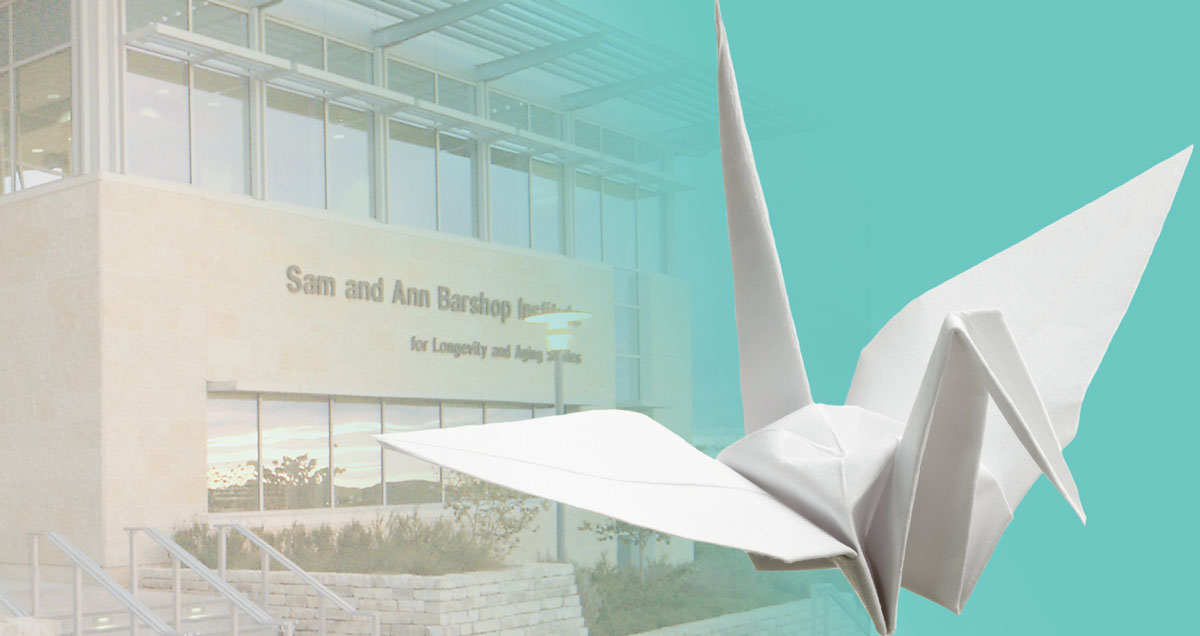
A precise pattern among bats, rats and origami
Earlier this year, Barshop Institute scientists published papers that provide clues as to how two types of extremely long-lived mammals, bats and naked mole-rats, seem to beat the sands of time.
The secret rests in the lifelong good health of their cells' proteins, both studies observed. "Proteins do everything that goes on in cells," said Asish Chaudhuri, Ph.D., associate professor of biochemistry, who co-authored both studies. "Proteins make all the chemical reactions go, such as energy production and waste disposal, and provide the cell's structure."
"Proteins need very precise folding to work correctly," said Barshop Institute faculty member Steven Austad, Ph.D., professor of cellular and structural biology. "The animals that are the best at maintaining this precise origami-like folding are the ones that are going to live a long time."
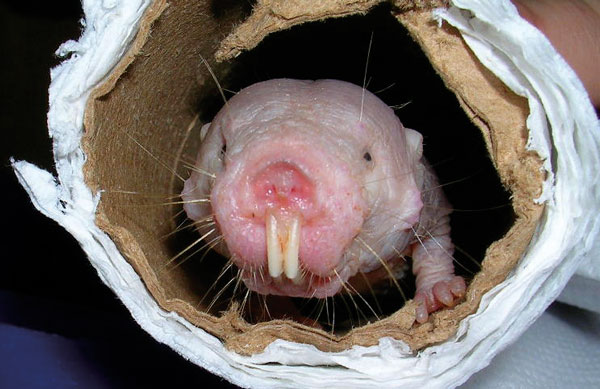
Naked mole-rats, native to East Africa, resemble pink, wrinkly, saber-toothed sausages. They are the champs of longevity among rodents, living 30 years, or nine times longer than similar-sized mice, said Rochelle Buffenstein, Ph.D., professor of physiology at the Barshop Institute.
Like exquisite pieces of folded paper made in the Japanese art of origami, proteins fold and unfold on a continuous basis over the life of the cell.
The bats under study are two types commonly found in Texas, and one of the species has been reported to live as long as 30 years in the wild.
The Barshop Institute set up a comparative biology program in aging a few years ago. This program studies species that are both short lived (such as mice) and long lived (such as mole-rats and bats). The scientists compare and contrast cellular, molecular and biochemical traits to reveal mechanisms that might contribute to prolonged good health and long life.
Viviana Perez, Ph.D., postdoctoral fellow, was the first author of the mole-rats study in Proceedings of the National Academy of Sciences. Adam Salmon, Ph.D., postdoctoral fellow, was the first author of the bats study in the Journal of the Federation of American Societies for Experimental Biology.

The road less traveled
As graduations go, it was low key: About a dozen graduates, joined by professors and well-wishers, gathered in a lecture hall one weekday morning this summer. Remarks were made and certificates distributed before everyone hurried back to work.
Pomp was in short supply, but passion was evident. The graduates - each of whom had completed training in geriatrics, palliative medicine or chaplaincy at The University of Texas Health Science Center at San Antonio - spoke with great enthusiasm about their work.
"I personally chose geriatrics because I feel like seniors are very wise," said Neela Patel, M.D., one of three graduating fellows in geriatric medicine. "I want to make the end of the journey very peaceful, comfortable and happy for them."
And their professors were thrilled to see them entering these professions.
"There are unbounded opportunities for people who want to go into these fields," said Michael Lichtenstein, M.D., M.Sc., chief of the Division of Geriatrics, Gerontology and Palliative Medicine.
The "oldest old" - those over 85 - are the fastest-growing segment of the U.S. population, according to the President's Council on Bioethics. Their numbers are expected to more than quadruple between 2000 and 2050, going from 4 million to 18 million. Meanwhile, the number of doctors who specialize in treating the elderly isn't growing and may be declining.
One reason is pay. Geriatricians earn much less than other specialists. They even fall short of their primary care colleagues, despite training at least one year longer.
"It's paradoxical. It's frightening to students. And, of course, it's a major factor keeping students from going into the field," said Jerald Winakur, M.D., a clinical professor of medicine and associate faculty member in the Center for Medical Humanities & Ethics.
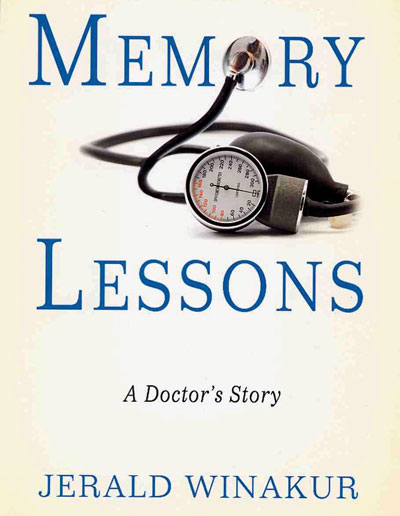
Dr. Winakur recently authored a book, "Memory Lessons: A Doctor's Story," on his experiences as a geriatrician who witnessed his own father's struggle with disability and dementia.

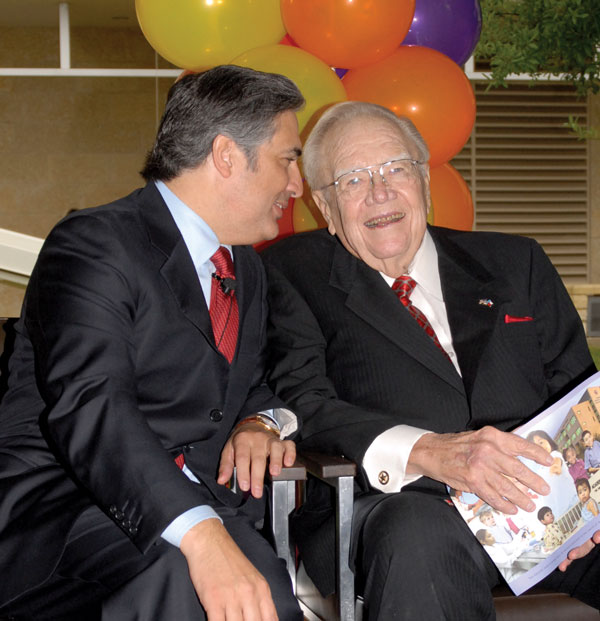
 Dr. Jerald Winakur, pictured left with his late father, Leonard, draws on his experiences with his father's disability and dementia to interest students in the field of geriatrics.
As Dr. Winakur notes in his book, geriatricians face another inescapable truth: There is no triumph over aging. While many medical specialties focus on saving or prolonging lives, a geriatrician's day might involve explaining why a medical procedure would take too great a toll on an aging body, finding strategies to cope with a patient's loss of function or helping a family decide when the time has come for palliative care.
Yet, despite the challenges, a 2002 survey found that geriatricians have the highest job satisfaction of any medical specialty.
Many geriatricians appreciate the intellectual challenge of treating multiple conditions in a patient while taking into account the differing capabilities of an aging body, as well as a patient's environment.
A geriatrician might ask whether a patient is eating properly, needs help with medications and can keep up with grooming They are interested in whether patients can accomplish tasks with multiple steps, like cooking a meal or paying bills. They want to know who helps that patient.
"Geriatricians are in this counterculture, asking different questions," said Liliana Oakes, M.D., co-director of the Health Science Center's geriatric fellowship program.
Many young doctors who are interested in geriatrics were greatly affected by a loved one who went through a difficult illness or dementia. That was the case with Dr. Oakes, who describes how her grandfather would disappear for hours after going out to buy bread. "It didn't occur to us that it was a disease," she said.
For certification in geriatric medicine, a year of training is required. The Health Science Center fellowship offers an optional second year for those interested in teaching or research. It typically accepts three fellows a year, but has taken up to five.
Among the program's strengths are its strong focus on cultural aspects of aging and tremendous interaction between fellows and their counterparts in other disciplines, including palliative medicine and geriatric psychiatry, dentistry and nursing.
Nationwide, the number of geriatric fellowships has grown, but the total number of applications has not. In contrast, the Health Science Center attracts a few more applicants each year.
"I think outreach to our own students and residents has been more and more successful," said Laura K. Chiodo, M.D., who was the program's first fellow after it came into existence in 1987. She took over as director of the program a decade ago.
The John A. Hartford Center of Excellence in Geriatrics Education at the Health Science Center not only provides support to fellows but also exposes medical students and residents to geriatrics. And the Health Science Center is one of three universities involved in the Medical Student Training in Aging Research (MSTAR) program, in which medical students spend eight to 12 weeks during the summer conducting aging research.
"It takes a special person to come into geriatrics," said Sandra Sanchez-Reilly, M.D., palliative medicine section chief and co-director of the San Antonio MSTAR program. "Identifying them early is the key."

Center for Medical Humanities & Ethics' new Web site helps ease end of life
A bioethicist at The UT Health Science Center San Antonio began having end-of-life discussions not in a classroom or hospital but around the dinner table when he was a boy.
Craig M. Klugman, Ph.D., an assistant director at the Center for Medical Humanities & Ethics, is the son of an estate attorney and a nurse. Dinnertime conversations in his childhood home regularly touched on end-of-life issues.
Then, at age 16, he witnessed his grandmother dying in a nursing home. The woman was tied down with restraints because she kept trying to pull out her feeding tube, and Dr. Klugman's father demanded that it be removed. Staff at the nursing home refused. "And my father said, 'You're going to remove it, or I'm going to stand over her and yank it out myself,'" Dr. Klugman recalled. "This made a big impression on a 16-year-old."
Inspired by these experiences, Dr. Klugman has created a Web site to ease the end of life for the dying and their families. The Web site - www.TexasLivingWill.org - not only has the forms needed to complete an advance directive but also walks Texans through the process.
"Our goal is to help people give a gift that enables families to know what loved ones would have wanted and to take away any guilt about making a wrong decision," Dr. Klugman said.
TexasLivingWill.org is available in English and Spanish, and it includes a number of forms to help Texans in their health care planning. While the forms use the required legal language, the interactive Web site explains in plain language how to fill them out.
With Greatest Respect: The Cigarroa Presidency
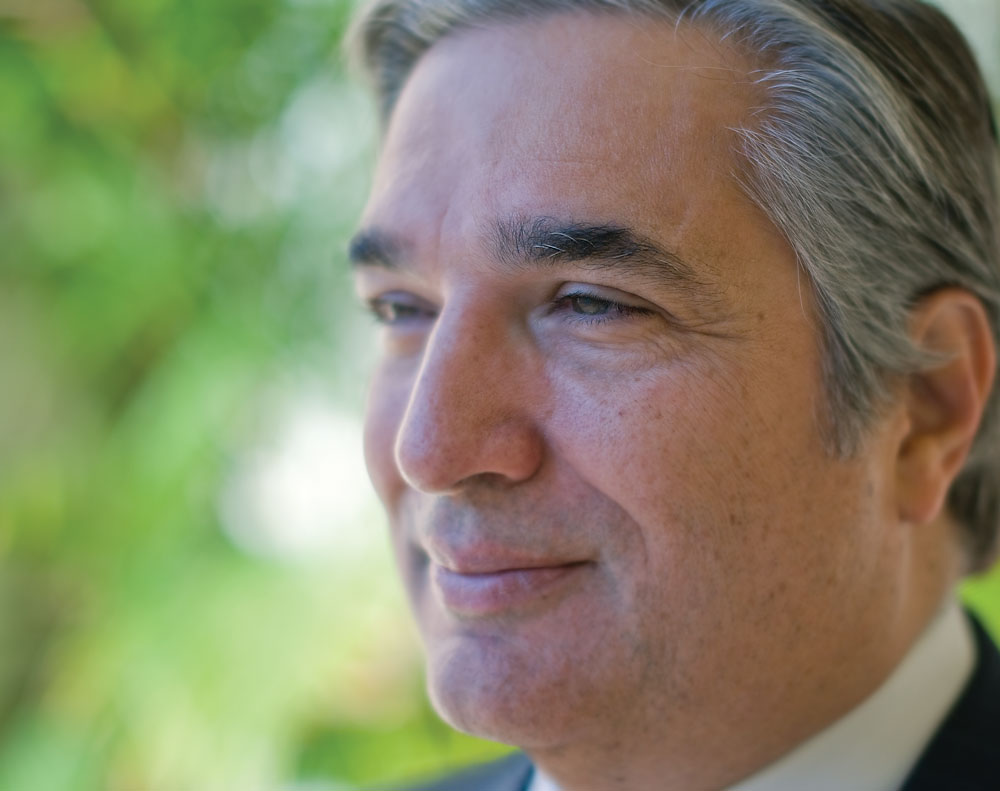
An overwhelming feeling of pride swept across the UT Health Science Center San Antonio campus as faculty, staff, students, donors and community leaders celebrated the Jan. 9 announcement that Francisco G. Cigarroa, M.D., their president and leader for the past eight years, had been named chancellor of The University of Texas System. As Dr. Cigarroa began his new role Feb. 2 in Austin, he left behind a legacy of unparalleled achievement, upward trajectory and hope for the future of this university and its missions in San Antonio and South Texas.
"With greatest respect," the complimentary closing that Dr. Cigarroa often uses in his correspondence, epitomized his leadership style as president - influential, progressive, committed, determined, caring, kind and humble. Dr. Cigarroa treated everyone with the utmost respect and usually offered them his customary, warm Texas-sized abrazo.
As the university and its constituents wish Dr. Cigarroa all the best in his new position, they reflect with admiration, honor and gratitude upon the eight extraordinary years that Dr. Cigarroa and his wife, Graciela, served this institution.
Below is a glimpse of some of the landmark achievements at the Health Science Center during his tenure.
2000
- On Oct. 13, The University of Texas System Board of Regents names pediatric and transplant surgeon Francisco G. Cigarroa, M.D., president of the UT Health Science Center San Antonio. He assumes his new role Oct. 16, 2000. President Cigarroa officially accepts the presidency in a Sept. 7, 2001 investiture ceremony rich with academic tradition and South Texas pride.
2002
- The Regional Academic Health Center (RAHC) is dedicated in Harlingen. Third- and fourth-year medical students can complete part of their medical education at the RAHC and its affiliated clinics and teaching hospitals in the Lower Rio Grande Valley. More than 700 students have either spent a year at the RAHC or completed a rotation there. Twenty-three medical residents also have graduated from the RAHC, and half remain in the Valley to serve the population.
- The Laredo Campus Extension is dedicated. Students in respiratory therapy, occupational therapy, physical therapy, dental hygiene and dentistry experience part of their education at the D.D. Hachar Building. The campus is headquarters for the South Texas Environmental Education and Research (STEER) program and the Laredo office of the Med Ed program that introduces young people to careers in the health sciences.
2004
- The M.D./Ph.D. program is established to improve the pipeline and demographics of clinician/educators. President Cigarroa states that this goal is important to the future and success of all health professions.
- The Health Science Center initiates its Campaign for the Future of Health, the largest campaign in the university’s history. To date, the campaign, including public and private support, has raised more than $283 million, which is 94 percent of the $300 million goal. Since 2000, $353 million has been raised in cash gifts to support the missions of the Health Science Center, with 58 percent, or just under $200 million, raised in the last three years.
- The Children’s Cancer Research Institute is dedicated. Faculty and administrators vow to work diligently toward a future when the words "children" and "cancer" will never be used in the same sentence again.
2005
- The UT System Board of Regents approves the building of the Medical Arts and Research Center in the South Texas Medical Center that will consolidate eight of the Health Science Center’s clinic locations into a single premier medical practice for UT Health San Antonio, the largest multi-specialty practice group in South Texas. Expected completion for the building is September 2009.
- The Sam and Ann Barshop Institute for Longevity and Aging Studies is dedicated at the Texas Research Park. Since 2000, the Barshop Institute has received $83 million in grants from the National Institute on Aging. It is hailed by the National Institutes of Health as the "gold standard of aging research in the United States."
2006
- The Edinburg-RAHC is dedicated. The second building, home of the RAHC Medical Research Division, is located on the campus of UT Pan American in Edinburg. This division provides state-of-the-art laboratory space and equipment for scholars and scientists to conduct research on critical health problems of the South Texas/Border Region.
- The UT System Board of Regents approves the building of the South Texas Research Facility (STRF). The 200,000-square-foot STRF will house the university’s growing research enterprise, including the Institute for Integration of Medicine and Science and the Center for Healthy Aging. Expected completion for the building is 2011.

2007
- The Cancer Therapy & Research Center joins operations with the Health Science Center, making this historic merger the largest gift in the Health Science Center’s history. The union promises to build a world-premier cancer center that, backed by the power of academic research and discovery, provides better lives to cancer patients and their families.
- Bill Greehey and the Greehey Family Foundation donate $25 million to the Health Science Center. In recognition of their historic contribution, the name of the North Campus is changed to the Greehey Academic and Research Campus, spotlighting the Greehey Children’s Cancer Research Institute.
2008
- Philanthropists Joe R. and Teresa Lozano Long donate $25 million to the Health Science Center. In honor of the Longs’ generosity, the university’s central campus is renamed the Joe R. and Teresa Lozano Long Campus.
- The Academy of Master Teachers is established at the Health Science Center to encourage the scholarship of teaching and an ongoing institutional recognition of and commitment to teaching and learning excellence.
- Former Gov. Dolph Briscoe Jr. makes a $5 million contribution to the Health Science Center in support of cardiology and women’s health. The Health Science Center names the Division of Cardiology the Janey and Dolph Briscoe Division of Cardiology. To date, Gov. Briscoe has given $9 million to cardiovascular disease research at the Health Science Center in honor of his late wife, Janey. In February 2009, Gov. Briscoe was awarded the prestigious Santa Rita Award by the UT System Board of Regents, which recognized him for his remarkable support of UT institutions that spans nearly 70 years.
2009
- President Cigarroa is named chancellor of the UT System on Jan. 9. He becomes the first Hispanic to head a major public university system in the country.
During Dr. Cigarroa’s tenure, the UT Health Science Center experienced a surge of growth and success that paved the way for an exciting and promising road ahead.

Soldiers of fortitude
Statistics show that more than half of amputations in the United States each year are caused by diabetes and its complications. With diabetes on the rise, the number of amputations is expected to increase.
Additionally, amputees are returning home from conflicts in Iraq and Afghanistan. As of Aug. 1, 2008, Operation Iraqi Freedom and Operation Enduring Freedom in Afghanistan had resulted in amputations for more than 1,200 service members, according to the U.S. Department of Defense.
Almost 75 percent had major limb amputations. In the Iraq War alone, the rate of limb loss for U.S. troops reportedly is higher than in any conflict of the previous century except Vietnam.
A soldier’s story
As a squad leader and truck commander for the U.S. Army’s 10th Mountain Division for Operation Iraqi Freedom, Staff Sgt. Shilo Harris led reconnaissance missions every day to gain information about the enemy and to ensure the roads were safe for travel by his fellow soldiers. On one particular day in 2007, as Staff Sgt. Harris and his squad navigated the desolate desert roads, their convoy was suddenly rocked by a deafening explosion. Of the four Humvees in the convoy, Staff Sgt. Harris’, the third in line, was tossed in the air like a toy truck by a bomb hidden beneath the road they were traveling on. They’d been ambushed.
Staff Sgt. Harris’ memory of the ordeal is hazy as he drifted in and out of consciousness.
"I could hear what I thought was gunfire. As I looked down, I saw my body smoking," he said. "It hurt." His uniform and body armor had melted to his skin.
Staff Sgt. Harris was burned over more than 30 percent of his body. He lost three fingers and both of his ears. He also lost three members of his platoon on that fateful day. But what remained intact were the courage, determination and faith the 34-year-old husband and father of four is famous for.

After waking from a 48-day-long coma in a hospital in Germany, Staff Sgt. Harris was flown to Brooke Army Medical Center in San Antonio, where he received treatment at the U.S. Army Institute of Surgical Research Burn Center. It was there that he met Dr. Wolf.
Historic trial
Steven Wolf, M.D., is professor of surgery and the Betty and Bob Kelso Distinguished Chair in Burn and Trauma Surgery at the UT Health Science Center San Antonio, chief of clinical research for the U.S. Army Institute of Surgical Research and director of the Pediatric Burn Program at University Hospital. Dr. Wolf is working with several high-profile U.S. researchers in the field of tissue regeneration, including Stephen Badylak, D.V.M., Ph.D., M.D., of the University of Pittsburgh; Anthony Atala, M.D., of Wake Forest University; and C. Mauli Agrawal, Ph.D., of The University of Texas at San Antonio. The researchers are studying a substance derived from pig bladders that has the potential to regrow human tissue.
The substance Dr. Wolf calls "Regenerative Medicine Extracellular Matrix" has been nicknamed "Pixie Dust" by Dr. Wolf’s colleagues at Brooke Army Medical Center because of its seemingly magical abilities. When tested in animal models, the powdery substance grew an entire organ. "Researchers took a uterus out of a dog, made one in the lab, put it back in and had puppies," Dr. Wolf said. "The powder seems to work by attracting stem cells to a particular region of the body. It then has the potential to stimulate the growth of all types of tissue including bone, muscle and skin. It’s very exciting," he said.
While a patient at Brooke Army Medical Center, Staff Sgt. Harris learned about Dr. Wolf’s work with this technology. He was quickly intrigued and although he had already undergone seven surgeries for his injuries, Staff Sgt. Harris valiantly volunteered to have the Pixie Dust piloted on him.
"I figured that if this is something that might help me as well as others, then it’s definitely worth trying," Staff Sgt. Harris said.
In May 2008, Staff Sgt. Harris became the first human in the world to have the Extracellular Matrix surgically implanted in his body. Dr. Wolf placed it on Staff Sgt. Harris’ left hand where he was missing two fingers. Dr. Wolf concentrated the powder on the area where Staff Sgt. Harris’ index finger used to be. After a second procedure in October 2008, Staff Sgt. Harris’ index finger has grown about half an inch.
Dr. Wolf said he has plans to enhance the process. "We may need to do some pre-seeding of the powder by taking the cells out of the human subjects, isolating them with the Extracellular Matrix and then putting them back in the body. This will provide a much higher concentration and potential for growth." He also hopes to grow tissue that is structurally supported by bone for better functionality. "We’ll need to monitor patients with X-rays to ensure that bone growth is occurring," he said.
Potential of Extracellular Matrix
More than 30 additional wounded soldiers from Brooke Army Medical Center have been identified as possible candidates for trials with the Extracellular Matrix. Dr. Wolf said the substance could have potential with patients who have lost limbs to diabetes as well as those with birth defects and organs affected by cancer. He also hopes to make the surgery available in the near future to children in the Pediatric Burn Program at University Hospital.
"I have one word for Dr. Wolf and his team, and that’s, ‘wow,’ " Staff Sgt. Harris said. "I actually have more sensation in my finger now. It’s pretty amazing." Staff Sgt. Harris said he hopes his finger will continue to grow long enough to someday support a prosthesis. "I plan on seeing my kids go to college and get married," he said. "I want to be able to hold my grandkids someday."
Thanks to the courage of patients like Staff Sgt. Harris and the outstanding research of Dr. Wolf, those who suffer limb loss, whether from injury or illness, may someday have the chance to regain some or possibly all of what’s missing.
"What is most satisfying is to see these soldiers partake in and benefit from our research that could someday benefit all mankind," Dr. Wolf said.
Staff Sgt. Harris agrees. "I feel I have a new calling," he said. "I want to help others. I love being able to serve my country."
Together, they’re on a mission to assess, test and hope for the best that this "magic" dust might bring to so many in need.

Sleep apnea: Nothing to snore at
 Imagine choking and gasping for air every time you fall asleep. Between 18 million and 20 million people in the United States suffer from these frightening symptoms because of a common disorder called sleep apnea. Because of a lack of awareness among both health professionals and the public, up to 90 percent of sufferers aren’t diagnosed or treated, and that could prove deadly.
People with sleep apnea literally stop breathing hundreds of times a night. Sufferers experience snoring, drowsiness during the day, lost productivity at work and much more: changes in lipid metabolism, high blood pressure, insulin resistance and increased risk of stroke.
Four out of five sleep apnea cases involve a physical obstruction of the upper airway during sleep, while in the remaining cases the drive to breathe is reduced during sleep.
Indeed sleep apnea, estimated to affect as many as one in every four adults, is a major national health issue.
Researchers in the Dental School and the Graduate School of Biomedical Sciences are conducting studies to better understand the mechanics of the disorder with the goal of enhancing therapies. Their work is directly benefiting patients.
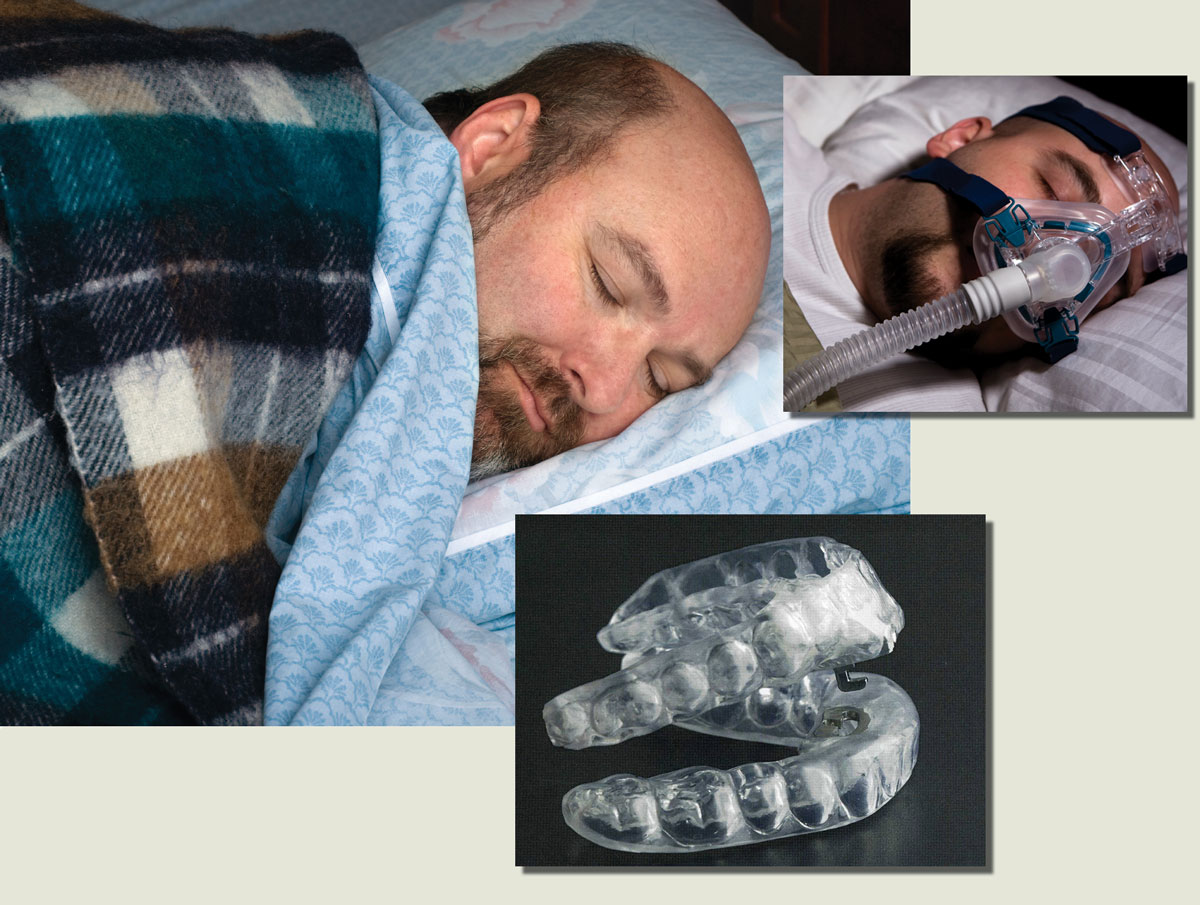
Small device helps sleep apnea sufferers in a big way
Paul McLornan, B.D.S., assistant professor in the Department of Prosthodontics, is the lead investigator of an 18-month study involving sleep apnea patients at the South Texas Veterans Health Care System, Audie Murphy Division. Researchers used an oral appliance called the Thornton Adjustable Positioner (TAP) to treat those suffering from moderate to severe sleep apnea.
"What we found was that many of our patients with moderate to severe sleep apnea were not adhering to standard treatment with a Continuous Positive Airway Pressure (CPAP) machine," Dr. McLornan said. Although the CPAP is considered to be the gold standard in treating sleep apnea and is very effective, Dr. McLornan said compliance by patients is well below 50 percent.
"Some patients say the machine (which consists of a face mask connected to tubes) that blows air down a patient’s throat during sleep to keep the airway open is cumbersome or noisy," Dr. McLornan said. "Some said it was uncomfortable or that it bothered their spouses, or that they were just too embarrassed to use the machine."
Dr. McLornan’s study proved that the TAP device, which is much smaller and fits in a patient’s mouth, is now an option for patients with severe sleep apnea.
"It was previously thought that treatment for patients suffering from severe sleep apnea was limited to use of the CPAP or surgery," Dr. McLornan said. "Our study added to the body of medical and dental research literature by showing that oral appliances can be effective in treating people with severe sleep apnea. As an added advantage, the device is less cumbersome, is better tolerated by patients, and is much less invasive and costly than the CPAP or surgery."

Patients in the study were fitted with the TAP appliance and given a tiny key that fits in the front of the device. The patient was instructed to wear the appliance every night and to insert and turn the key several millimeters before bedtime. By turning the key, the patient pulls his lower jaw forward, thus creating an open airway in the throat.
"We asked the patients to tell us when they reached a point in the adjustments that felt comfortable and when they felt they were able to sleep without snoring or gasping," he said. "We then evaluated patients using standard sleep studies to determine whether or not their sleep had indeed improved."
Dr. McLornan explained that patients in his study improved significantly using the TAP. "We saw patients who began the study with severe sleep apnea end the study with very mild or no sleep apnea. They reported sleeping better, feeling more rested in the morning and altogether healthier."
Sandra Langelier said she could barely keep her eyes open during the day. "I was exhausted all the time," she said. "I had absolutely no energy." One morning, as Langelier drove her usual 70-mile route to work, her car swerved off the road. She’d fallen asleep at the wheel. "Luckily, I wasn’t hurt and neither was anyone else," she said. Langelier said she suffered from fatigue and drowsiness nearly every day since she was in high school. "I knew something was wrong, but never knew what it was."
After undergoing a standard sleep study in 2004, Langelier was diagnosed with moderate sleep apnea. She tried the CPAP machine, and although it worked, she said she found the TAP appliance a better alternative because of its smaller size, transportability and ease to operate and wear at night.
"I’m thrilled the TAP is an option. I’m sleeping better, I have more energy and I just feel better than I ever have," she said. "Sleep apnea is a real problem and now there are more solutions for everyone. It’s better to catch it early before it gets out of hand."
Dr. McLornan said this research is vital to both the medical and dental communities.
"Sleep apnea is a growing and serious problem for people of all ages and all ethnic groups," Dr. McLornan said. "If left untreated, it becomes progressively worse. People suffering from sleep apnea are at increased risk for high blood pressure, heart attacks, strokes, obesity and diabetes. It takes both dentists and medical professionals working together to control this potentially deadly disorder. The TAP gives patients another viable treatment alternative."
Dr. McLornan said patients who think they may suffer from sleep apnea should consult their family physician and undergo a standard sleep study in a lab. Costs are normally covered by medical insurance.
The American Academy of Sleep Medicine, the professional society that sets the standards for and promotes excellence in sleep medicine, now recommends that oral appliances can be the first line of treatment for people with mild to moderate sleep apnea. Dr. McLornan’s study demonstrates it can be used for patients with severe problems as well.