

RAHC’s first endowment pays tribute to Col. Card
One of the hardest-working and tenacious advocates for a medical school in Harlingen was the city’s own mayor, the late Colonel H. William "Bill" Card Jr.
Col. Card was known as "one of the greatest mayors in Harlingen’s history" who had a passion for the city and its people. His friends and colleagues called him a "great mediator and a true hero to his country and the city." He was among the city’s longest-serving mayors, in office from 1987 to 1998.
A born leader, Col. Card retired as a decorated veteran after 29 years of military service that included action aboard the USS Pennsylvania where he participated in the defense of Pearl Harbor on Dec. 7, 1941; the Roi-Namur Islands Operation of the Marshall Islands campaign in 1944; the Saipan Island campaign and Tinian Island, Mariana Islands and Iwo Jima. During the Korean War, he took part in the landing at Inchon and fought in the liberation of Seoul. After making the landing at Wonson, he participated in the fight north to the Chosin Reservoir.
After retirement from the U.S. Marine Corps, Col. Card was named commandant of the Marine Military Academy and in 1975 began his career as a banker, eventually becoming president of First National Bank of Harlingen. He is remembered as a dynamic individual who "never retired from making Harlingen a better city."
Leonel Vela, M.D., M.P.H., regional dean of the RAHC, knew Col. Card well and worked with him closely.
"With the RAHC’s 10th anniversary observances approaching this summer, we saw this as the perfect opportunity to pay tribute to our dear friend and advocate Col. Card and permanently recognize his role in the establishment of the RAHC." Dr. Vela said. "I look forward to celebrating the creation of the RAHC’s very first academic endowment - The Colonel H. William Card, Jr. Endowed Professorship."
Dr. Vela is leading the fundraising campaign that will ensure Col. Card’s legacy of advocacy for education and support of health care for the citizens of the Rio Grande Valley.
"Because of Col. Card’s leadership, the landscape of medical education and health care in the Lower Rio Grande Valley is changed for the better forever."
Dr. Vela and his wife, Alicia, initiated the campaign with a personal leadership gift and are encouraging RAHC faculty to match the gift. Members of the greater Harlingen community, friends of Col. Card and the entire community are invited to participate.
The campaign completion date is scheduled for June 2012.
For more information or to make a gift to the campaign, contact Kim Warshauer at 210-567-0242 or e-mail Warshauer@uthscsa.edu. To donate online, visit makelivesbetter.uthscsa.edu/rahc.
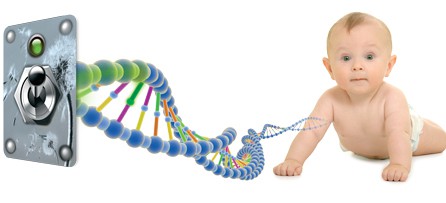
Triggering the switch
Researchers study how the environment affects genes in the womb

"The genome era is over. We are now in the epigenome era, when it will be important to consider gene-environment interactions - not the gene alone - as the basis of health."
So says Peter Nathanielsz, M.D., Ph.D., who knows well The Eagle pub in Cambridge, England, where the genome era began. There, on Feb. 28, 1953, Francis Crick strode in at lunchtime, declaring that he and James Watson had "found the secret of life." They had identified DNA’s double-helix structure.
That was followed by efforts to understand how DNA is encoded and sequence entire genetic codes - or genomes - of living creatures. By 2003, the 50th anniversary of Watson and Crick’s discovery, the full human genome was sequenced.
"Conceptually, we’ve passed the genome era," Dr. Nathanielsz declares. "We are now in the post-genome era, when we need to understand how the environment modifies - switches on and off - genes."
The new frontier, called epigenetics, is the study of lasting change in how genes are expressed without alteration to DNA’s underlying sequence. In many cases, these new traits can be passed to future generations. Although the term was coined in 1942, epigenetics has attracted intense scientific interest only in the last decade.
Dr. Nathanielsz and his collaborators at the Center for Pregnancy and Newborn Research, in the Department of Obstetrics and Gynecology in the Long School of Medicine of the UT Health Science Center, are well positioned to contribute to this emerging field.
For decades, they have studied how conditions in the womb and immediately after birth impact health and susceptibility to disease throughout life and across successive generations. This is called "developmental programming" or "fetal origins of disease." Compelling evidence suggests these phenomena have an epigenetic basis.
"You are born with a deck of cards from your mother and father," Dr. Nathanielsz says, "then, from the moment the sperm hits the egg, that deck of cards is modified.
Environmental influences such as poor maternal nutrition instruct your genome, telling you that you can’t play the ace of spades - because it has been suppressed by environmental influences. That gene is just not going to work, or at least it’ll work much less. Another gene may be switched on too much. It is the gene-environment interactions that are fundamental."
Dr. Nathanielsz’s personal story intertwines with the emergence of epigenetics. He studied at Cambridge University, where Sir Joseph Barcroft realized decades earlier that a fetus is not merely a small adult but lives by a distinct set of rules. Cambridge, as a result, was the birthplace of fetal physiology, a precursor to developmental programming.
Immersed in this tradition, Dr. Nathanielsz earned his Ph.D. studying fetal sheep. He left Cambridge for the UCLA and then Cornell, where he met three members of the current team: Thomas McDonald, Ph.D.; Cun Li, M.D., Ph.D.; and Mark Nijland, Ph.D.No one grasped how significant such research would become. "We were just doing pure basic science," Dr. Nathanielsz said. "There’s a real lesson here. Pure basic science is incredibly important."
Then British physician David Barker showed that low birth rate raises heart disease risk - termed "the Barker hypothesis" by the British Medical Journal in 1995. The idea that challenges faced in the womb could have lifelong effects was greeted with skepticism but now has widespread acceptance.
Dr. Nathanielsz was at the forefront, authoring a book for general audiences, "Life in the Womb: The Origin of Health and Disease," in 1999. After a stint at New York University, he arrived in 2004 at the UT Health Science Center, where he led a team with a nearly unparalleled ability to study developmental programming across species: rats, sheep, non-human primates and, in translational research, humans.
At the Health Science Center, Dr. Nathanielsz works with Drs. McDonald, Li and Nijland, as well as Leslie Myatt, Ph.D.; Thomas B. Jansson, M.D., Ph.D.; Alina Maloyan, Ph.D.; and Theresa Powell, Ph.D. They collaborate with others, including Laura Cox, Ph.D., at the Southwest National Primate Research Center in San Antonio; Elena Zambrano, Ph.D., of the National Institute of Nutrition, Mexico; Matthias Schwab, M.D., Ph.D., of Friedrich Schiller University, Germany; and Stephen Ford, Ph.D., of the University of Wyoming.
This spring, Dr. Nathanielsz will receive the top honor of the leading organization in his field, the Society for Gynecologic Investigation. He stepped down as director of the Center for Pregnancy and Newborn Research on Jan. 1, handing the reins to Dr. Myatt, but has no intention of leaving research: "This is too important, and too exciting an area to leave."
$7.7 million awarded from CPRIT
Seven researchers in the Long School of Medicine were awarded grants from the Cancer Prevention & Research Institute of Texas (CPRIT).
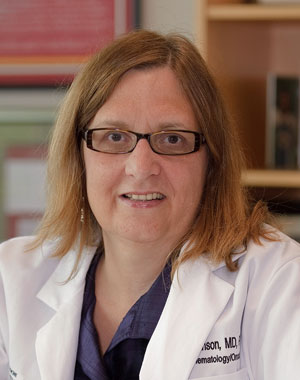
Gail Tomlinson, M.D., Ph.D., interim director of the Greehey Children’s Cancer Research Institute and professor of pediatrics, received $2.7 million to help health care providers map out their patients’ cancer risks, and to share information with the community about the importance of understanding family history. The grant also will support screening services for people at high risk who might not otherwise have access.

Cynthia Mojica, Ph.D., assistant professor of epidemiology and biostatistics
at the Institute for Health Promotion Research, received $2 million to partner with community organizations to offer breast, cervical and colorectal cancer screenings to San Antonio residents unable to afford them.

Andrew Hinck, Ph.D., professor of biochemistry, was awarded $1 million to fund instrumentation that will help researchers develop new cancer-fighting drugs and take screening capabilities to a new level.

LuZhe Sun, Ph.D., professor of cellular & structural biology and urology, received $875,252 for his work targeting the hedgehog pathway in prostate cancer.
Brad H. Pollock, M.P.H., Ph.D., professor and chairman of epidemiology and biostatistics, was awarded $767,107 to investigate environmental influences in hepatocellular liver cancer in South Texas. Ricardo Aguiar, M.D., Ph.D., associate professor of hematology and medical oncology, was awarded $200,000 for a next-generation sequencing strategy in B-cell malignancies, and Sunil Sudarshan, M.D., assistant professor of urology, received $199,902 for the study of oncometabolites in renal cancer.

Free exercise center for cancer survivors launched
A new fitness center for cancer survivors opened in the fall at the Cancer Therapy & Research Center. Stacey Young-McCaughan, RN, Ph.D., AOCN, professor of psychiatry, crafted the program based on her 12 years of work with hundreds of cancer survivors at Brooke Army Medical Center. In that time she has built the evidence showing that all people, regardless of type of cancer, stage of disease, treatment, or previous experience with exercise, can benefit from an exercise program tailored specifically for them. The fitness center is free and open to all cancer patients in the area, regardless of where treatment is sought. For more information, visit CTRC.
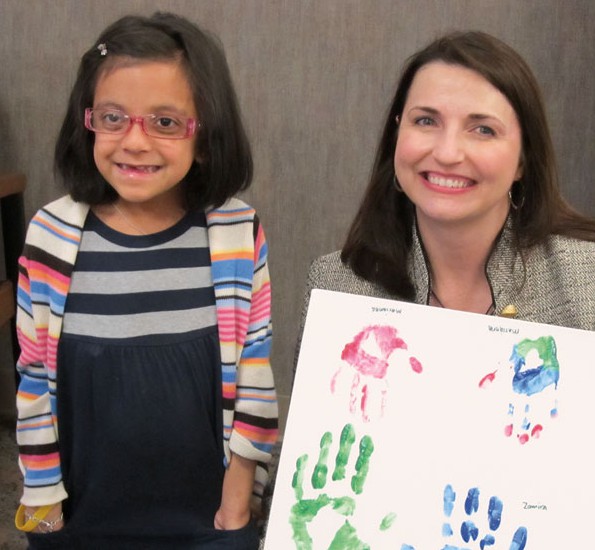
Hyundai awards $100,000 for childhood cancer research
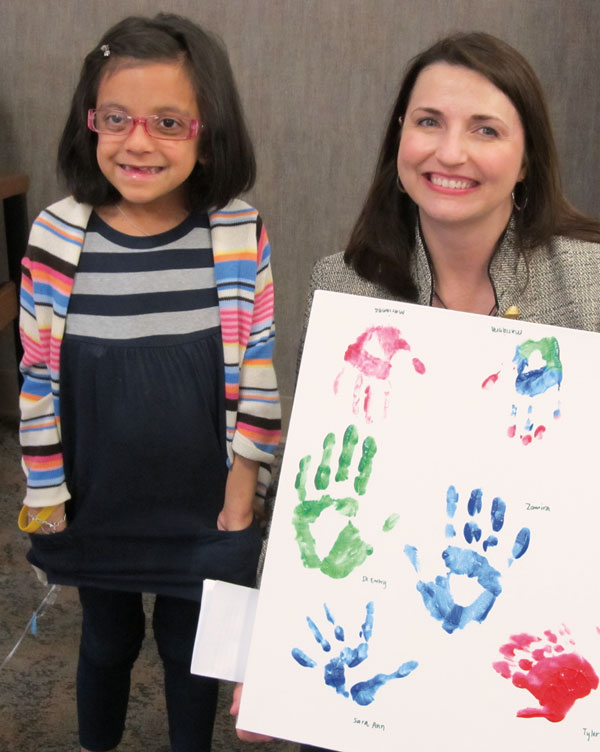
The funds will support translation and psychology services for children with cancer. Since the program began in 1998, Hope on Wheels has committed more than $43 million in donations to pediatric cancer research nationwide.

Nursing Advisory Council is at heart of School of Nursing success
"The Nursing Advisory Council members (pictured above) are the bridge-builders who go out into our community, spread the word and draw attention and much-needed support for our vital missions. We would not be where we are today if it were not for their leadership and advocacy."
– Eileen Breslin, Ph.D., RN, FAAN, School of Nursing dean
The nursing profession is one of the most critical and respected professions in the health care industry. Today, the nurse’s role is more important than ever, particularly because of the increase in the aging population and the health care needs the elderly require. By 2030, persons 65 and older will number more than 72 million, which is twice their number in 2000. As a result, the shortage of and demand for nurses in the United States is expected to increase.
In addition, with the national move toward health care reform, nursing schools across the country, according to the American Association of Colleges of Nursing, are struggling to expand educational programs and training to meet the rising demand for top-notch professionals.
Thanks to the leadership of Eileen Breslin, Ph.D., RN, FAAN, School of Nursing dean, with support from the School of Nursing Advisory Council (NAC), the UT Health Science Center’s School of Nursing is excelling at a rapid pace in preparing nurses for the changing landscape and future of health care.
In 2009, Dean Breslin began a bold $15 million initiative "Transforming the Future of Nursing Care" focused on the school’s unique missions of education, research community service and clinical care, with the following goals:
- Increase enrollment of outstanding students;
- Recruit, retain and educate distinguished faculty
- Expand nursing research excellence;
- Broaden nursing curriculum and innovative teaching approaches; and
- Update the academic environment, including facilities, technology and laboratories.
"Today, our blueprint for nursing education is becoming a reality," Dean Breslin said. "Through the leadership and vision of our Nursing Advisory Council, the generosity of individuals, foundations and corporations and the scholarly efforts of our faculty, we have achieved phenomenal success."
Dean Breslin reported the School of Nursing’s endowment portfolio has grown to more than $5 million, the highest it has ever been. Program and capital gifts grew to more than $7 million over the past two years, and living endowment funds grew to more than $355,000 for student scholarships since 2004.
Through a partnership with and support from University Health System and the Economic Development Administration, and gifts nearing $3 million from local foundations, corporations, individual donors, the Nursing Advisory Council and from federal funding, the School of Nursing, in 2010, embarked on construction of a state-of-the-art clinical skills and simulation center for use by nursing, medical and other health care students and professionals.
"The Nursing Advisory Council members are at the heart of our school’s success," Dean Breslin said. "They are the bridge-builders who go out into our community, spread the word and draw attention and much-needed support for our vital missions. We would not be where we are today if it were not for their leadership and advocacy."
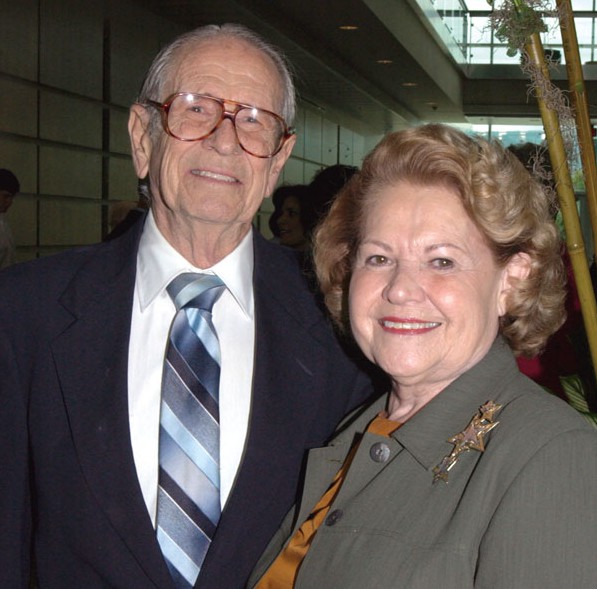
Spotlight on Betty Halff
NAC member since 2003 and member of the NAC Development Committee

Established with eight members in 1983, the Nursing Advisory Council (NAC) has grown to more than 50 active members who are distinguished leaders from throughout San Antonio and the South Texas community. Their focus is to promote excellence in educational and nursing care programs through fundraising activities and by establishing partnerships with local organizations toward increased community visibility for the School of Nursing.
Every member of the NAC plays an integral role in the success of the School of Nursing. One of the hardest-working members of the NAC is Betty Halff.
In 2010, the Halff family made a personal commitment of $100,000 to establish the Howard and Betty Halff Endowed Professorship in Nursing Excellence for Patient Care through the estate of Betty’s late husband, Howard. An additional gift of more than $44,000 was made to fund scholarships for faculty in the School of Nursing to pursue a doctorate in nursing degree. The Halffs have also funded numerous scholarships for nursing students through the establishment of a living endowment.
Betty Halff was also instrumental in establishing a long-standing partnership between the School of Nursing and Methodist Healthcare Ministries of South Texas Inc. (MHM). In 2010, MHM awarded $3.9 million to the School of Nursing for technology enhancements and student and faculty support.
"Betty Halff is one of our most steadfast supporters," said Eileen Breslin, Ph.D., RN, FAAN, School of Nursing dean. "Being a former nurse herself, Betty personally understands the importance of educating and training future nurses. She is a passionate and generous visionary who is making it possible for us to further educate nurses in our graduate programs so we can accommodate more students in our undergraduate programs."
Mickey Parsons, Ph.D., RN, is the holder of the Howard and Betty Halff Endowed Professorship in Nursing Excellence for Patient Care. She is a faculty member in the Graduate Administration Program in the Department of Health Restoration and Care Systems Management, and coordinator of the Doctor of Nurse Practitioner Organizational Systems for Executive Nurse Leaders program.
"I am honored and indebted to the Halffs for their dedication to the future of nursing leadership, education and patient care," Dr. Parsons said. "Because of their support, I am able to focus my career in academia on the development of future nursing leaders who are ready to lead within the complex, oftentimes tumultuous and ever-changing health care environment locally, regionally and nationally."

School of Nursing receives 10-year reaccreditation
The School of Nursing at the UT Health Science Center has received reaccreditation from the Commission on Collegiate Nursing Education for its baccalaureate and master’s degree programs. The reaccreditation period is for 10 years — the maximum granted by the commission.
"I am very proud of the entire School of Nursing," said Health Science Center President William L. Henrich, M.D., MACP. "They have worked diligently to ensure that the four key standards were met. I am especially grateful to Dean Breslin (Eileen T. Breslin, Ph.D., RN, FAAN) for her exemplary and steady leadership since her arrival as dean in the spring of 2008. Our students will continue to receive a superior education and be better prepared to address the many challenges they will encounter in their careers due to these efforts."

New Doctor of Nursing Practice degree offered
Nurses in South Texas will have the opportunity to earn a Doctor of Nursing Practice (DNP) degree at the Health Science Center beginning in fall 2012. The Texas Higher Education Coordinating Board approved the new degree this year. "The purpose of the DNP program is to prepare nurse practitioners, nurse executives and public health nurse leaders to provide health care at the highest level of their specialty," said Eileen Breslin, Ph.D., dean. "Our graduates will have specialized knowledge to address the needs of our populations for the 21st century."
For more information, contact the School of Nursing admissions office at
sonadmission@uthscsa.edu, 210-567-5805 or (toll free) 877-235-0341.
$3.7 million NIH program targets Hispanics with bipolar disorder
Mental health professionals with UT Health Physicians and collaborating institutions are designing bipolar disorder treatments that will be relevant and culturally sensitive to Hispanics, thanks to a $3.7 million grant from the National Institutes of Health. "We will test for specific cultural factors that affect the response and engagement of Hispanics who have bipolar disorder," said Charles L. Bowden, M.D., principal investigator of the study. Dr. Bowden leads a large group of experienced psychiatrists, psychologists and other scientists who will conduct the comprehensive program of research during the next five years.