
Breast cancer survivor Antonina Duridanova wants women navigating the diagnosis to know they don’t have to fight alone.
Near the end of a summer spent traveling through Europe, author and healthy lifestyle advocate Antonina Duridanova discovered an unfamiliar lump in her left breast.
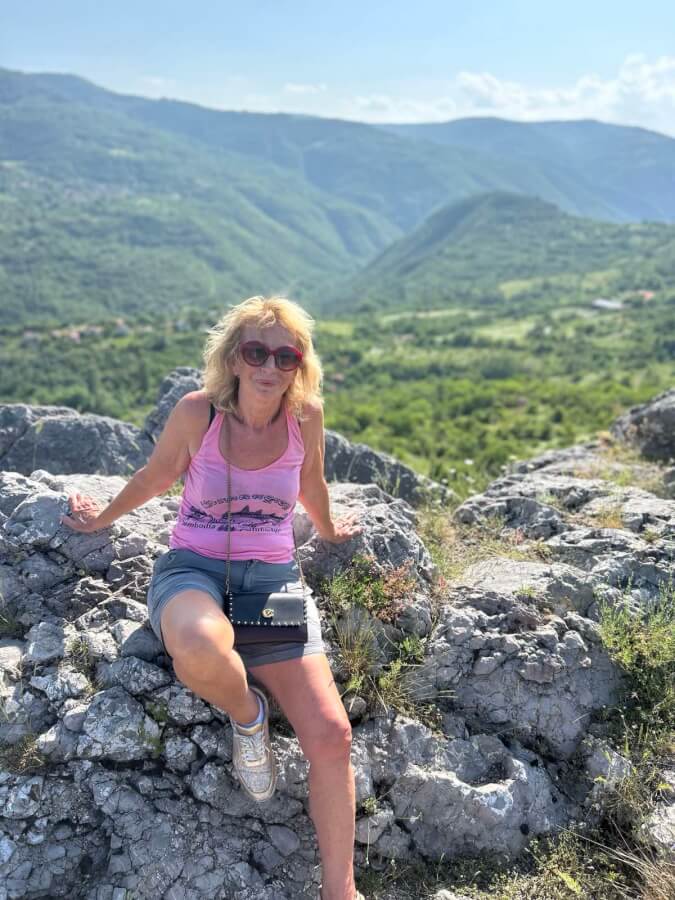
She was only days away from returning home, with a calendar already filled with speaking engagements, meetings and plans waiting for her there. Travel had always enriched her, and an active life and nutritional diet made her feel healthy and strong. Feeling well at 75, Duridanova had allowed four years to pass without a mammogram, never imagining that breast cancer could grab hold of her amid all that motion.
Once home, she sought medical care. A biopsy confirmed the news she was praying against: invasive breast cancer.
Duridanova decided to keep all her scheduled commitments because she wanted to remain surrounded by ordinary life rather than let the diagnosis take it over. Beneath that determination, however, she was processing the uncertainty of change and waiting to learn what treatment would require of her.
“I wanted to keep living my life,” Duridanova said. “I wanted to be surrounded by life. I did not want cancer to define me.”
A diagnosis that changed the plan
Duridanova soon met with Carissia Calvo-Strube, MD, FACS, a fellowship trained breast surgical oncologist at UT Health San Antonio’s Mays Cancer Center. Calvo-Strube explained that Duridanova had invasive lobular breast cancer, a type that can be difficult to measure fully with a mammogram or ultrasound alone.
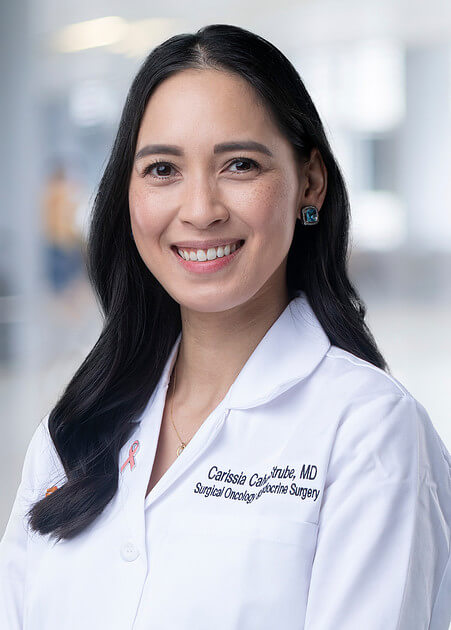
An MRI gave the team a clearer picture that showed the cancer extended farther than initially thought and included a small satellite lesion. Calvo-Strube said that Duridanova was a candidate for breast-conserving surgery, sometimes called a partial mastectomy or lumpectomy, followed by radiation. But removing all the affected tissue would require a wider operation and could leave significant changes to the shape of her breast.
Another option was a total mastectomy with reconstruction. For eligible patients, survival and recurrence outcomes are generally equivalent between breast-conserving therapy and mastectomy, Calvo-Strube said. Ultimately, the decision had to account for Duridanova’s priorities and the life she wanted after treatment.
“Breast surgery is very personal,” Calvo-Strube said. “Your breasts as a woman are part of your womanhood. They’re part of your body image and sexual satisfaction. They’re part of your identity.”
Rather than dictate a choice, Calvo-Strube reviewed the risks, benefits, recovery and likely cosmetic results of each option with Duridanova, who chose a total mastectomy with reconstruction.
The decision was significant, but Duridanova remembers her physicians making it feel manageable. She felt that she was being treated as a whole person, not simply as a diagnosis.
“Their medical and surgical expertise was superb, but there was also something beyond the medicine,” Duridanova said. “There was compassion. They made me feel safe, secure and never alone.”
Reconstruction as part of recovery
Before the mastectomy took place, Duridanova met Oriana Haran-Anschel, MD, a double fellowship-trained plastic and reconstructive surgeon at Mays Cancer Center. The center brings breast and reconstructive surgeons together before treatment begins, allowing cancer treatment to be planned as one coordinated course of care.
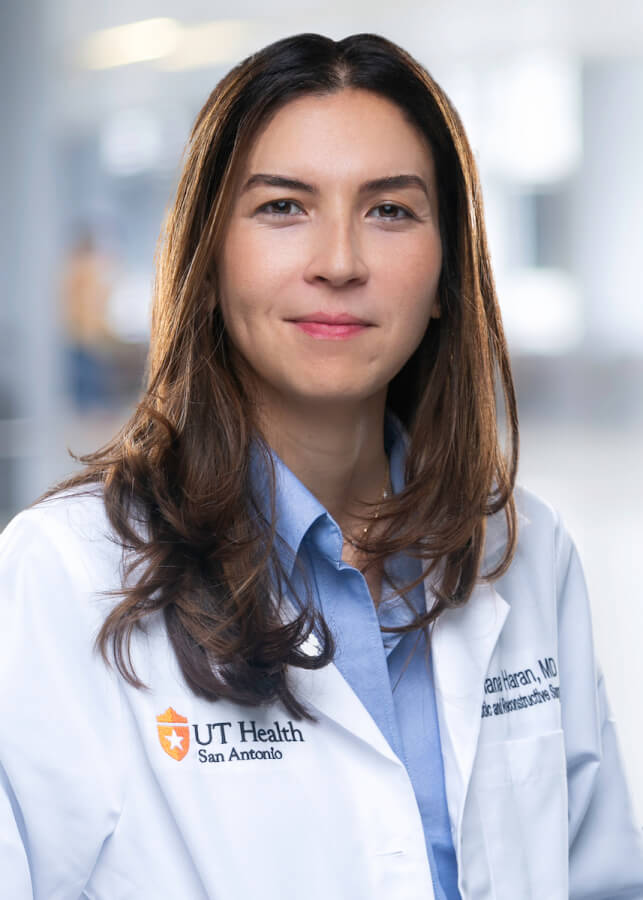
During the mastectomy, Haran-Anschel worked behind Calvo-Strube to place a temporary tissue expander to preserve the breast skin while Duridanova healed. The team then waited for post-operative testing to confirm that the cancer had been completely removed and determine whether Duridanova would need radiation. When everything came back clear, Haran-Anschel was able to then replace the expander with tissue from Duridanova’s abdomen to reconstruct her breast.
That staged approach placed cancer treatment first while preserving options for Duridanova’s breast afterward.
“Breast reconstruction cannot erase the experience of cancer, but for many women, it helps restore a sense of wholeness and normalcy,” Haran-Anschel said. “It improves their body confidence and allows them to move forward without being constantly reminded of what they’ve lost.”
Haran-Anschel stressed that reconstruction is not an obligation. Some patients choose implant-based reconstruction, some use tissue from another part of the body and others choose to remain flat, she said. The right decision depends on the person’s health, cancer treatment, anatomy and preferences.
“I tell patients that I’m not there to make a decision for them, but to help them make an educated decision based on what’s best for them,” Haran-Anschel said. “They know their body and themselves better than any doctor.”
Reconstruction became central to Duridanova’s emotional recovery.
“My body had changed in a way that made me happy,” Duridanova said. “It was more like being reborn. It gave me the strength to move forward.”
Soon she was traveling again. She returned to Europe, including her native Bulgaria, and went swimming during a trip to Mexico after receiving medical clearance. Haran-Anschel remembers Duridanova returning from one journey with a tan, radiating happiness and embracing her body and the life ahead of her.
“If the patient is happy, and she’s back to herself and back to life, then you know you have accomplished your purpose,” Haran-Anschel said.
Care built around one patient
Duridanova’s care drew on breast surgery, plastic and reconstructive surgery, radiology and pathology, with other cancer specialists available as her results clarified what she needed. At Mays Cancer Center, those clinicians work closely to collaborate on shared patients and meet in a weekly multidisciplinary tumor board.
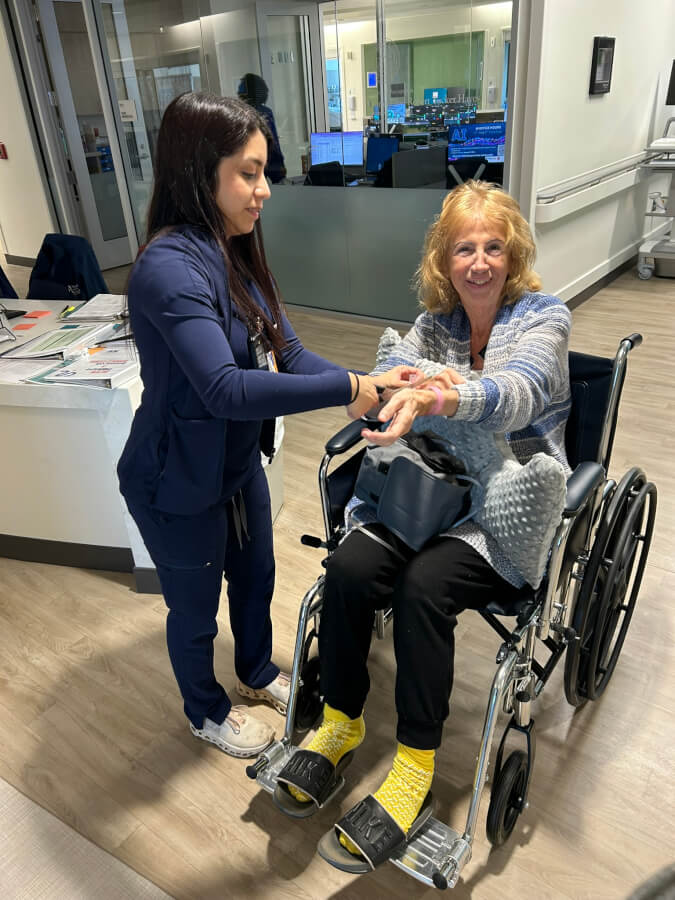
“I think that’s the biggest strength of the Mays Cancer Center,” Calvo-Strube said. “Our breast cancer team members and providers are all housed within the same building. We work as a team, and we talk to each other daily. It takes a team of people to treat and cure breast cancer,” she said.
That team extends beyond physicians, Calvo-Strube said. Genetic counselors, social workers, nurse navigators, behavioral health professionals and a survivorship clinic help address needs that can continue after a patient’s active treatment ends.
For many patients, Calvo-Strube said all that support adds to the confidence that begins to return after surgery, when test results are available and the next steps become clearer.
“There was a significant shift in her perspective and in feeling more like she was on the other side, as a survivor,” Calvo-Strube said of Duridanova. “That’s where she could feel empowered to tell her story.”
“I’m so grateful to my surgeons, the doctors, the nurses and every person who helped me,” Duridanova said. “They gave me the support to move forward from this.”
Now is better than never
Duridanova now speaks openly about her journey and the mammograms she postponed. Her experience taught her that feeling well cannot replace recommended screening.
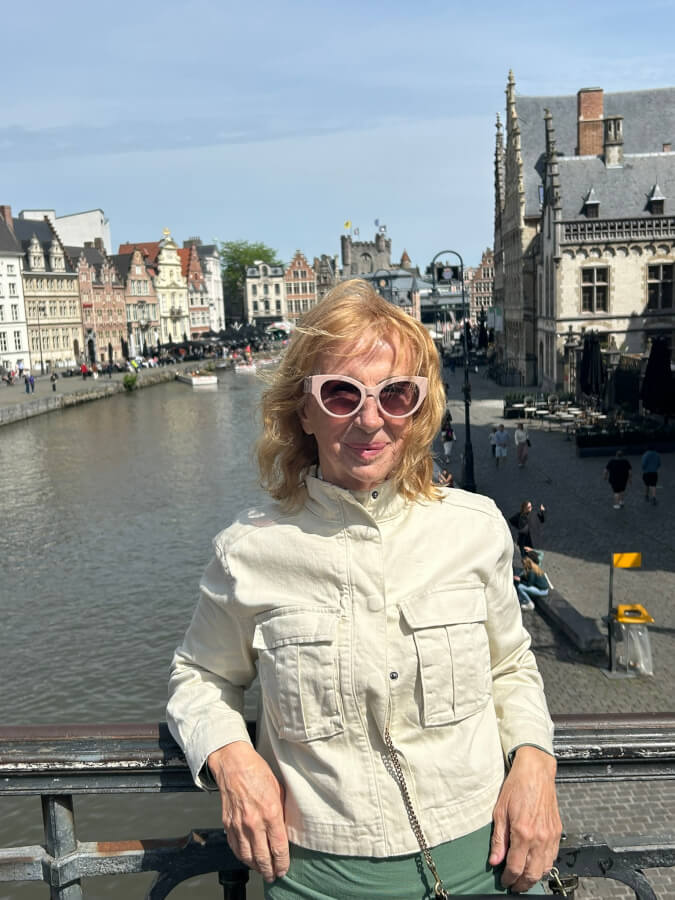
“I was healthy, active and vibrant, and I thought I would never get cancer,” Duridanova said. “Now I tell women to be vigilant and make mammograms part of their preventive care.”
Calvo-Strube said breast cancer is most treatable and curable when found early.
“Small tumors may not be felt, particularly in dense breast tissue, and mammography can reveal calcifications, distortions and other abnormalities that cannot be detected through self-exams or clinical exams alone,” she said.
Mays Cancer Center recommends annual mammograms beginning at age 40 for women at average risk. Those with a family history of breast or ovarian cancer, previous abnormal breast biopsies or other risk factors should speak with a primary care provider about an individualized risk assessment and whether earlier or additional screening is appropriate.
Anyone who feels a new lump or notices another breast change should contact a primary care provider or gynecologist, regardless of when the last mammogram occurred. The provider can perform an exam and order diagnostic imaging. A person without symptoms may also be able to schedule a screening mammogram directly, depending on insurance requirements.
And for women who are overdue, Calvo-Strube’s message carries no judgment.
“Now is better than never,” she said. “We’re just happy that you are coming through the door.”
Duridanova has turned the experience into another chapter of her active life. She is writing a book about cancer, courage, faith and new beginnings in hopes that women facing a cancer diagnosis will know they are not alone. Cancer, she believes, should never become the main character in anyone’s life.
“As women, we must take responsibility for our health,” Duridanova said. “If cancer does enter your life, do not let it become your identity; you are not alone. Cancer is not the end of our story.”
Learn more about Mays Cancer Center’s Breast Cancer Program or schedule an appointment by calling 210-450-1000 or requesting one online.